
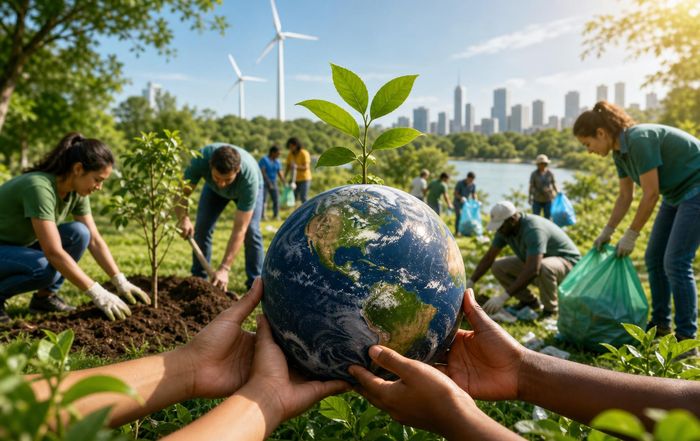
Building Environmental Awareness Through Community Action
Introduction: Why Community Action Matters Now
Environmental awareness has moved from the margins of public debate into the center of business strategy, public policy and daily life, yet the gap between what societies know and what they collectively do remains uncomfortably wide. Global reports from organizations such as the Intergovernmental Panel on Climate Change (IPCC) and the United Nations Environment Programme (UNEP) continue to show that while scientific understanding of climate risks has never been stronger, the pace of practical change still lags behind what is needed to keep global warming within safer limits. Against this backdrop, community-led initiatives are emerging as one of the most powerful mechanisms to transform awareness into measurable impact, because they operate at the intersection of lived experience, local trust and shared responsibility.
For YouSaveOurWorld, which is dedicated to advancing sustainable living, responsible business and informed environmental choices, community action is not a peripheral theme but a central pathway to change. Environmental awareness becomes durable and actionable when it is rooted in local realities, translated into daily habits and reinforced through peer networks, and it is precisely this local, human-centered dimension that community-based efforts can unlock. As businesses, civic leaders and citizens look for credible, effective and trustworthy approaches to climate and sustainability in 2026, understanding how to design, support and scale community action has become an essential competency rather than a niche concern.
From Awareness to Action: The New Sustainability Imperative
The last decade has seen an unprecedented rise in environmental information, from real-time climate dashboards on platforms like NASA's Global Climate Change portal to the extensive resources of the World Resources Institute (WRI), yet information alone rarely changes behavior in a sustained way. Environmental awareness becomes transformative when individuals and organizations are given clear, locally relevant pathways to act, when they can see tangible results and when they feel part of a collective effort rather than isolated actors. Community action bridges this critical gap between knowledge and implementation by embedding sustainable choices in social norms, shared projects and common spaces.
Businesses that once treated sustainability as a compliance requirement are now integrating it into core strategy because clients, regulators and investors demand it, and because the economic case has become compelling. Reports from the World Economic Forum and OECD show that climate and environmental risks consistently rank among the top global business risks, while resource efficiency, circular economy models and low-carbon innovation are increasingly recognized as drivers of competitiveness and resilience. When companies collaborate with local communities on projects such as urban greening, renewable energy cooperatives or circular waste systems, they not only reduce their environmental footprint but also strengthen their social license to operate and build deeper stakeholder trust. Folks can learn more about sustainable business practices to see how this shift is reshaping corporate strategy worldwide.
The Role of Local Communities in a Global Climate Context
Although climate change is a global phenomenon documented by organizations such as NOAA Climate.gov and the World Meteorological Organization (WMO), its impacts are experienced locally, whether through urban heatwaves, flooding, air pollution or ecosystem degradation. Local communities are uniquely positioned to recognize these impacts early, to understand the social and cultural context in which they occur and to mobilize tailored responses that resonate with residents' values and daily routines. Community-based environmental initiatives can align global science with local priorities, making abstract climate models concrete through neighborhood energy retrofits, local food systems, nature-based flood defenses and other practical interventions.
For daily updated site like this, which explore the intersection of global environmental trends and local realities, this localization of climate action is central to building genuine environmental awareness. When communities organize tree-planting programs, citizen science air-quality monitoring, plastic-free markets or neighborhood composting, they do more than reduce emissions or waste; they create visible symbols of change that anchor environmental narratives in shared spaces and lived experience. These initiatives help translate the insights of institutions such as the International Energy Agency (IEA) or UNFCCC into concrete steps that households, schools, small businesses and local governments can implement collaboratively.
Sustainable Living as a Community Practice
Sustainable living is often framed as a set of individual choices, such as reducing energy consumption, minimizing waste, eating more plant-based diets or choosing low-carbon transport modes. While these decisions are important, experience shows that individuals are far more likely to adopt and maintain sustainable habits when they are supported by community structures, social norms and enabling infrastructure. Community gardens, repair cafés, local sharing platforms and neighborhood solar cooperatives all demonstrate how sustainable living becomes easier, more attractive and more resilient when it is embedded in collective practices.
The concept of sustainable living is presented not as a restrictive lifestyle but as an opportunity to align personal well-being, financial prudence and environmental responsibility. Community initiatives can amplify this alignment by reducing barriers to entry, such as cost, information gaps or social isolation. For example, community bulk-purchasing programs for energy-efficient appliances, organized by local associations or forward-thinking municipalities, can lower prices, provide trusted guidance and normalize sustainable choices. Similarly, neighborhood walking groups, cycling collectives and local wellness programs can connect environmental goals with personal well-being, reinforcing the message that sustainable living is not about sacrifice but about improving quality of life.
Plastic Recycling and Community-Level Circularity
Plastic pollution remains one of the most visible symbols of unsustainable consumption, with rivers, coastlines and urban spaces across the world bearing the burden of mismanaged plastic waste. While global regulations, such as extended producer responsibility schemes and international agreements under discussion at the UN Environment Assembly, are essential, community action plays a critical role in making plastic management effective and credible. Local recycling programs, zero-waste stores, deposit-return schemes and citizen clean-up campaigns all contribute to building a culture of responsibility and transparency around plastic use.
For readers of YouSaveOurWorld.com, the page on plastic recycling emphasizes that effective recycling is not just a technical issue but also a social and organizational challenge. Communities that succeed in reducing plastic waste often combine clear information, convenient infrastructure and strong social engagement, for example by partnering with schools, local businesses and municipal authorities to harmonize collection systems, labeling and incentives. International resources from organizations such as the Ellen MacArthur Foundation and OECD Environment Directorate provide frameworks for designing circular plastics systems, but their success depends on local implementation, monitoring and feedback, which only community-level collaboration can provide.
Sustainable Business and Community Partnerships
The boundaries between business and community are increasingly porous, as companies recognize that their long-term viability depends on the resilience and prosperity of the communities in which they operate. Sustainable business strategies now commonly include community engagement components that go beyond philanthropy to encompass co-created projects, shared infrastructure and participatory decision-making. This shift reflects the rise of environmental, social and governance (ESG) expectations from investors, regulators and customers, as documented by organizations such as the Sustainability Accounting Standards Board (SASB) and the Global Reporting Initiative (GRI).
On YouSaveOurWorld.com, the focus on sustainable business and business innovation highlights how companies can integrate environmental awareness into product design, supply chains and corporate culture while collaborating with communities to test solutions, share data and build mutual trust. Examples include industrial symbiosis projects where local industries exchange by-products, community-owned renewable energy projects with corporate off-takers and urban logistics pilots that reduce congestion and emissions through shared infrastructure. These models demonstrate that when businesses treat communities as partners rather than passive stakeholders, environmental initiatives become more grounded, innovative and socially legitimate.
Climate Change Education and Environmental Awareness
Effective environmental action depends on a deep, nuanced understanding of ecological systems, climate dynamics and socio-economic interdependencies, and education is therefore a cornerstone of any long-term strategy for environmental awareness. In 2026, climate and sustainability education is expanding across formal and informal settings, from primary schools and universities to corporate training programs and community workshops. Organizations such as UNESCO and UNICEF have developed guidance on integrating climate literacy into curricula, while universities worldwide are increasing interdisciplinary programs in sustainability, environmental science and green innovation.
For the community around YouSaveOurWorld.com, building environmental awareness involves not only presenting reliable information but also fostering critical thinking, systems perspectives and practical skills. Local initiatives such as citizen science projects, participatory mapping of climate vulnerabilities, school eco-clubs and public lectures can translate global knowledge into locally relevant learning experiences. Readers interested in the educational dimension of climate action can explore the site's resources on education for sustainability, which emphasize experiential learning, collaboration and the integration of environmental topics into disciplines ranging from economics and design to technology and public health.
Innovation, Technology and Community-Driven Solutions
Technological innovation is often portrayed as a top-down process driven by large corporations, research institutions and governments, yet community-based initiatives are increasingly demonstrating that local actors can be powerful innovators in their own right. Open-source hardware, low-cost sensors, community energy platforms and digital tools for local decision-making are enabling neighborhoods and municipalities to design, test and scale environmental solutions that reflect local needs and constraints. Organizations such as MIT's Climate CoLab and the Open Source Ecology movement have helped catalyze this trend by providing tools, knowledge and collaborative frameworks.
On YouSaveOurWorld.com, the themes of innovation and technology are closely linked to community empowerment, highlighting how digital platforms, data analytics and emerging technologies such as the Internet of Things can support local environmental management. For example, community air-quality networks using low-cost sensors can provide granular data to complement official monitoring, enabling residents to advocate for cleaner transport or industrial controls. Similarly, digital marketplaces for second-hand goods, shared mobility or community-supported agriculture can reduce waste and emissions while strengthening local economies. As global organizations like the International Telecommunication Union (ITU) explore standards for smart sustainable cities, local communities remain essential partners in testing and refining these technologies in real-world conditions.
Waste, Design and the Circular Economy at Community Scale
Waste management is one of the most tangible arenas in which community action can rapidly improve environmental outcomes, public health and urban quality of life. Poorly managed waste contributes to greenhouse gas emissions, plastic pollution, toxic exposure and social inequality, while well-designed systems can recover valuable materials, create green jobs and reduce environmental burdens. The emerging circular economy paradigm, championed by organizations such as the Ellen MacArthur Foundation and the World Bank, emphasizes designing out waste, keeping materials in use and regenerating natural systems.
For the audience of YouSaveOurWorld.com, the pages on waste and design underscore that effective waste reduction begins with thoughtful design of products, services and local systems. Community repair events, tool libraries, refill stations and neighborhood composting hubs all demonstrate how design thinking can be applied at local scale to extend product lifetimes, minimize packaging and close material loops. By involving residents, local entrepreneurs and designers in co-creating these solutions, communities can build systems that are not only environmentally efficient but also culturally appropriate and economically viable. This approach aligns with the broader circular economy strategies promoted by the European Environment Agency (EEA) and other regional bodies, while grounding them in the everyday realities of households and small businesses.
Lifestyle, Economy and the Human Dimension of Change
Environmental awareness is ultimately about people, their aspirations, identities and daily choices, and any effective sustainability strategy must therefore engage with lifestyle and economic realities. In many communities, the perception persists that sustainable choices are more expensive, less convenient or incompatible with modern lifestyles, even though evidence from organizations such as the International Labour Organization (ILO) and World Health Organization (WHO) shows that green transitions can create new jobs, improve health outcomes and reduce long-term costs. Community action can challenge these perceptions by showcasing practical examples of low-carbon, low-waste lifestyles that are aspirational, inclusive and economically sensible.
Within YouSaveOurWorld.com, the focus on lifestyle and economy highlights the importance of integrating environmental goals with financial planning, career development and everyday convenience. Local initiatives such as car-free days, community-supported agriculture, shared workspaces and green entrepreneurship incubators can demonstrate that sustainable lifestyles are compatible with modern aspirations for mobility, connectivity and prosperity. By involving local businesses, educators and health professionals, communities can also emphasize the co-benefits of environmental action, such as improved air quality, reduced noise, enhanced public spaces and stronger social cohesion, which in turn support mental and physical well-being.
Building Trust, Credibility and Long-Term Commitment
Experience across multiple sectors shows that environmental initiatives succeed when they are built on trust, transparency and long-term commitment. Communities are more likely to support projects when decision-making is inclusive, when benefits and costs are fairly distributed and when progress is communicated honestly, including setbacks and lessons learned. Organizations such as the OECD and Transparency International have highlighted the importance of good governance and stakeholder engagement in environmental policy, and these principles apply equally at community scale.
For YouSaveOurWorld, which positions itself as a trusted guide for individuals, businesses and communities navigating environmental choices, building trust means curating reliable information, highlighting credible case studies and encouraging realistic, evidence-based expectations. Community leaders, whether they are local officials, business owners, educators or volunteers, can draw on these resources to design participatory processes, set measurable goals and establish feedback mechanisms that allow residents to track progress and suggest improvements. By combining global best practices with local knowledge, communities can create environmental programs that are resilient to political changes, economic fluctuations and shifting public attention, ensuring that awareness translates into enduring transformation rather than temporary campaigns.
The Path Forward = Connecting Local Helpful Kind Actions to Global Impact!
As the world moves deeper into the critical decade for climate and biodiversity action, the importance of aligning local initiatives with global goals becomes ever more evident. International frameworks such as the Paris Agreement and the UN Sustainable Development Goals (SDGs) provide overarching targets and indicators, but their realization depends on countless decisions made in cities, towns and villages across the globe. Community action is therefore not a secondary supplement to national and international policy; it is a primary engine of implementation, experimentation and learning.
Readers who engage with us are already part of a growing network of individuals and organizations committed to bridging the gap between environmental awareness and concrete action. By exploring resources on climate change, environmental awareness, business innovation and personal well-being, they can identify opportunities to collaborate with neighbors, colleagues and local institutions on projects that reflect their community's unique context and aspirations. Whether through neighborhood energy cooperatives, circular economy hubs, educational programs or digital platforms for citizen engagement, the path forward lies in weaving environmental considerations into the fabric of everyday life.
The evidence is clear that communities which embrace environmental awareness as a shared responsibility are better prepared for climate risks, more attractive for investment and talent, and more capable of fostering inclusive prosperity. By combining the insights of leading global institutions with the practical wisdom of local actors, and by leveraging hubs such as ours to share knowledge and inspiration, community action can transform environmental awareness from a passive state of concern into a dynamic, collaborative force that shapes a more resilient, equitable and sustainable future.
