
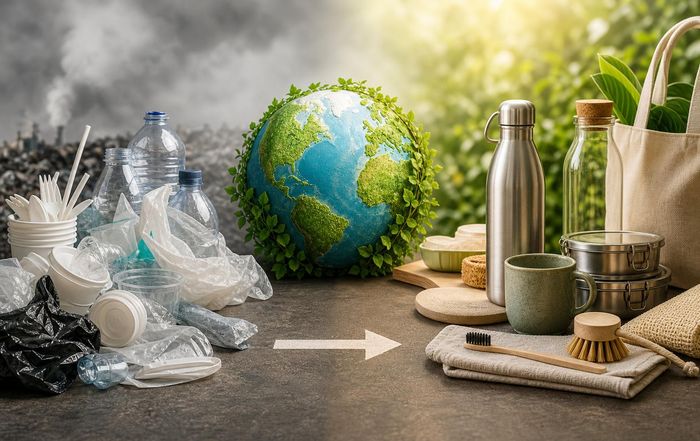
Choosing Durable Household Products Over Disposable Ones
Households around the world are full of items designed to be used once and thrown away. From paper towels and plastic razors to flimsy gadgets that fail after a year, disposability has been built into everyday life-and into the business models that supply it. Yet as concerns about climate change, waste, and resource use intensify, more people are asking whether this throwaway culture still makes sense. Choosing durable household products instead of disposable ones is one of the most practical ways individuals and families can reduce their environmental footprint, save money over time, and support a more sustainable economy.
This article explores why durability matters, where durable options make the biggest difference, how to evaluate products that truly last, and what trade-offs to consider. It also looks at how consumer choices interact with policy, business models, and global waste challenges.
Why durability is a climate and waste issue
Durable products do more than keep items out of the bin. They change how many resources are extracted, how much energy is used, and how much pollution is released across a product's entire life cycle. Every disposable product typically requires raw materials, manufacturing, packaging, transport, and, eventually, waste management. Organizations such as the United Nations Environment Programme highlight that material extraction and processing already account for a large share of global greenhouse gas emissions and biodiversity loss, and these impacts are amplified when products are designed for short lives and frequent replacement. When a durable alternative replaces many disposables, the initial impact of making that durable item is spread across years of use rather than days or minutes.
This life-cycle perspective is central to many circular economy strategies promoted by groups such as the Ellen MacArthur Foundation, which argue that designing products to last, be repaired, and reused is one of the most effective ways to decouple economic activity from resource use. Even when durable products are made from heavier materials such as stainless steel or glass, the overall environmental balance can be positive if the product genuinely displaces dozens or hundreds of single-use equivalents. For example, analyses by agencies like the European Environment Agency show that reusable packaging and textiles often outperform disposables when used enough times and when washing or maintenance is efficient.
Waste is another critical dimension. Municipal waste systems are under pressure in many countries, and plastic pollution is now found from the deepest ocean trenches to Arctic ice. The OECD estimates that only a small fraction of plastic waste is effectively recycled globally, with the rest incinerated, landfilled, or leaked into the environment. Reducing the flow of disposable items at the source is therefore at least as important as improving recycling infrastructure. Durable products help by preventing waste generation in the first place, aligning with the top tiers of the waste hierarchy: prevention, reduction, and reuse. For readers interested in how this connects to broader lifestyle changes, the sustainable habits discussed on our sustainable living page offer useful context.
Where durable products make the biggest difference at home
Not every disposable item has an obvious or practical durable replacement, but many do. Focusing on categories where consumption is frequent and alternatives are mature can yield significant environmental and financial benefits.
In the kitchen, reusable options can replace a wide range of single-use items. Dishcloths, washable sponges, and microfiber cloths can substitute for large volumes of paper towels, especially when combined with good hygiene practices such as regular washing at appropriate temperatures. Beeswax wraps, silicone lids, and durable food containers can reduce or eliminate the need for plastic wrap and many single-use bags. Glass or stainless-steel containers are more resource-intensive to produce than thin plastic film, but when used for years they can dramatically cut plastic waste and make food storage safer and more organized. Refillable water bottles and coffee cups are now widely accepted in many cafés and workplaces, reducing the billions of disposable cups and bottles that organizations such as Greenpeace and the World Wildlife Fund (WWF) warn are contributing to global plastic pollution.
In the bathroom and cleaning cupboard, razors, menstrual products, and cleaning tools are key areas to rethink. Safety razors with replaceable blades, electric razors, and high-quality manual handles can replace packs of plastic disposable razors that are difficult to recycle. Menstrual cups and reusable pads, when appropriate and safe for the user, can replace hundreds or thousands of tampons and pads over their lifespan; health bodies such as the World Health Organization (WHO) and national health services provide guidance on menstrual hygiene that can help inform safe use. Concentrated cleaning products in refillable bottles, or solid cleaning bars, can reduce the number of plastic containers entering waste streams. Readers exploring broader waste-reduction strategies may find additional ideas in our section on waste.
Textiles and everyday household goods also offer opportunities. High-quality towels, bedding, and clothing that can withstand many washing cycles reduce the need for frequent replacements and help address issues related to fast fashion and microfibres. Durable tools such as metal food graters, cast-iron pans, and solidly built brooms or mops often outlast cheaper plastic versions. While the upfront cost can be higher, the cost per use is frequently lower over time, especially when items are maintained and repaired rather than discarded. This connects closely to the themes discussed on our lifestyle page, where comfort, cost, and environmental impact intersect in daily choices.
Cost, convenience, and the economics of durability
One of the main barriers to adopting durable products is the perception that they are more expensive and less convenient. At the point of purchase, this is often true: a stainless-steel water bottle or a sturdy mechanical broom usually costs more than a pack of disposable bottles or a flimsy plastic alternative. However, when considering total cost of ownership-the sum of purchase, use, maintenance, and disposal-durable products can be significantly cheaper.
Consumer organizations and government agencies such as the U.S. Environmental Protection Agency (EPA) and the UK's Money and Pensions Service have long encouraged people to consider lifetime costs in purchasing decisions. A simple way to think about this is cost per use: if a reusable coffee cup costs the equivalent of twenty disposable cups but is used several hundred times, the cost per use is a fraction of the disposable option. When cafés offer discounts for bringing your own cup, the payback period can be even shorter. Similarly, a durable razor handle and replacement blades might cost more in the first month but less over a year compared with packs of disposable razors.
Convenience is more complex. Disposable products are often marketed on the promise of saving time and effort, and in some cases they genuinely do. For example, single-use wipes may be handy in some care settings or for people with limited mobility. However, many "convenience" products simply shift effort from one place to another: instead of washing a cloth, the user spends time buying more disposables, taking out the trash more often, and contributing to overburdened waste systems. When routines are adjusted-such as having a dedicated place to hang and dry dishcloths, or washing reusable items as part of regular laundry-the extra effort can be minimal.
There is also a broader economic dimension. When consumers buy durable goods, they signal demand for quality and longevity, which can encourage businesses to invest in better design and after-sales service. This aligns with emerging models of sustainable business that focus on value over volume, including repair services, leasing, and take-back schemes. At the same time, policymakers in regions such as the European Union are exploring regulations on durability, repairability, and green claims, which could gradually shift the market away from built-in obsolescence. Organizations like the European Commission and advocacy groups such as Repair Café International and the Right to Repair movement are influential in this space, promoting policies and community initiatives that make it easier and more affordable to keep products in use longer.
How to recognize truly durable products
Not every item advertised as "eco-friendly" or "reusable" is genuinely durable or sustainable. Some products are only marginally better than disposables, and others may have hidden drawbacks. Evaluating durability requires looking beyond slogans and considering materials, design, repairability, and the company's practices.
Material choice is a starting point but not the whole story. Metals such as stainless steel, cast iron, and aluminum, as well as borosilicate glass and certain hardwoods, can be robust and long-lasting when properly used. However, they also have environmental impacts in extraction and processing, so their advantages depend on long service lives. High-quality plastics can be durable too, especially when designed for repair and eventual recycling, but many low-cost plastic products are thin, brittle, and prone to failure. Independent testing organizations and consumer magazines, including groups like Consumer Reports, can be useful for comparing durability across brands and materials.
Design features matter at least as much as materials. Products with replaceable parts-such as vacuum cleaners with accessible filters and belts, or lamps with standard bulbs-are more likely to stay in use. Simple mechanical designs often last longer than complex electronic ones, especially in wet or high-heat environments like kitchens and bathrooms. Look for warranties that go beyond the legal minimum, as they signal confidence in product longevity, and check whether spare parts and repair instructions are available. The iFixit community, for example, has popularized repair scores for electronics, highlighting which devices are easier to fix and which are effectively disposable.
Labels and certifications can sometimes help but should be interpreted cautiously. Eco-labels from reputable organizations or schemes backed by governments or recognized NGOs may indicate that certain environmental criteria have been met, but they do not always guarantee durability. Greenwashing-marketing that exaggerates or misrepresents environmental benefits-remains a problem, as regulators such as the U.S. Federal Trade Commission (FTC) and the European Commission have noted. When in doubt, independent reviews, repair forums, and user communities can provide insight into how products perform over several years, not just on day one.
Health, hygiene, and when disposables still make sense
Durability is not always the right answer. In some contexts, especially medical settings, food safety, and certain hygiene-critical situations, single-use products play a legitimate role in preventing infection and cross-contamination. Organizations like the WHO and national public health agencies emphasize that sterile, single-use equipment is essential for many medical procedures. Similarly, in emergency situations or humanitarian responses, disposable items can be crucial when water, energy, and infrastructure for cleaning and sterilizing are limited.
At home, the balance is more nuanced. Reusable items such as cloth nappies, menstrual cups, and cleaning cloths can be safe and hygienic when cleaned properly, but they require reliable access to water, energy, and time. For some individuals-such as people with certain disabilities, chronic illnesses, or caregiving responsibilities-disposable products may be necessary or simply more feasible. Sustainable living should not become a source of guilt or exclusion; rather, it should offer options and support that recognize different circumstances.
Where durable alternatives are adopted, hygiene practices need to adapt accordingly. This may mean washing reusable items at appropriate temperatures, drying them thoroughly to prevent mould, and replacing them when they show signs of wear that could compromise safety. Guidance from health authorities and reputable organizations can help users understand safe cleaning practices. For instance, many national health agencies provide advice on safe food storage in reusable containers and proper handling of reusable bottles and cups to prevent microbial growth.
The key is to prioritize durability where it clearly makes sense-such as in food storage, cleaning tools, and many personal care items-while recognizing that some single-use products remain necessary. A pragmatic approach focuses on the largest and easiest reductions in disposable use first, then considers more complex areas as knowledge, infrastructure, and personal circumstances allow. Our personal well-being section explores how to balance environmental goals with health, comfort, and mental load.
The role of innovation, design, and business models
Shifting from disposable to durable products is not only a consumer choice; it is also a design and business challenge. Many companies have built their profitability on selling high volumes of low-cost, short-lived products. Transitioning to durability often requires rethinking revenue models, supply chains, and customer relationships. At the same time, it opens opportunities for innovation in materials, product-service systems, and digital tools that support maintenance and repair.
Designers and engineers are increasingly embracing concepts such as design for disassembly, modularity, and upgradeability. For example, some electronics manufacturers are experimenting with modular smartphones and laptops where components such as batteries, cameras, or storage can be replaced or upgraded without discarding the entire device. Organizations like the Ellen MacArthur Foundation and design schools at universities such as MIT and TU Delft promote circular design principles that prioritize longevity, repair, and reuse. These ideas are not limited to high-tech products; they can apply equally to furniture, kitchenware, and household tools.
Business models are changing as well. Subscription and leasing services for appliances, clothing, and even furniture are emerging in several markets. In these models, companies retain ownership of products and are incentivized to design them for durability and easy refurbishment, since they bear the cost of repair and replacement. When implemented thoughtfully and transparently, such services can align commercial interests with environmental goals, though they also raise questions about affordability, data privacy, and consumer rights. Our pages on innovation and technology explore these shifts in more depth, especially where digital tools intersect with sustainable living.
Policy and regulation are beginning to support this transition. Right-to-repair laws in parts of Europe and North America aim to ensure that consumers and independent repairers can access spare parts, manuals, and diagnostic tools. Extended producer responsibility (EPR) schemes require manufacturers to take greater responsibility for the end-of-life management of their products, which can encourage more durable design. International bodies such as the OECD and UNEP are studying and promoting such policies as part of broader efforts to reduce waste and emissions.
Practical strategies for households
For individuals and families, the shift toward durability can feel overwhelming if approached as an all-or-nothing transformation. In practice, incremental and targeted changes are often more effective and sustainable. A useful starting point is to observe which disposable items fill the rubbish and recycling bins most quickly. These high-volume items-coffee cups, food packaging, cleaning wipes, or bathroom products-are prime candidates for durable alternatives.
Once a priority area is identified, it helps to test one or two durable options rather than replacing everything at once. For instance, someone who uses many plastic food bags might start with a set of glass containers for leftovers and a few silicone bags for freezing. After a few weeks, they can assess what works, what doesn't, and what adjustments are needed. Similarly, a person interested in reducing paper towel use could introduce a stack of washable cloths and reserve paper towels for specific tasks where they are genuinely needed. Over time, these experiments can become new habits, and the remaining disposables can be evaluated case by case.
Sharing experiences with friends, neighbours, or online communities can make the process easier and more enjoyable. Community repair events, swap meets, and local sustainability groups-often supported by municipalities or NGOs-provide spaces to learn about product care, discover reliable brands, and access repair skills. Educational resources, including those from organizations like UNEP, WWF, and national environment agencies, can help households understand the broader environmental context and avoid common pitfalls. For readers seeking a broader framing of these changes in relation to climate impacts and global trends, our pages on climate change and environmental awareness provide additional background.
It is also important to align durable choices with personal values and constraints. Some households may prioritize reducing plastic waste, others may focus on saving money, and others may be most concerned with indoor air quality or ethical sourcing. Durability interacts with all these concerns. A well-made wooden broom, for example, may reduce plastic consumption, last for years, and avoid some of the chemical additives found in certain synthetic materials. By clarifying what matters most, households can choose durable options that deliver multiple benefits rather than simply adding more stuff.
How individual choices connect to systemic change
On their own, individual purchases of durable products will not solve climate change or end the global waste crisis. Large-scale change depends on policy, infrastructure, corporate behaviour, and international cooperation. Yet everyday choices do play a meaningful role, particularly when they signal demand for better products and support broader shifts in norms and expectations.
When consumers consistently choose durable goods and support companies that offer repair and take-back services, they help make these models commercially viable. This, in turn, can influence competitors and supply chains, especially when combined with regulation and public procurement policies that favour durability. Schools, hospitals, and government agencies, for example, can amplify these effects by specifying long-lasting products and service-based contracts in their purchasing, setting a standard that ripples through markets.
Culturally, valuing durability can help counter the narrative that new is always better and that convenience justifies constant waste. Repairing a toaster, proudly owning a decade-old pan, or refilling the same bottle every day are small acts, but they challenge the assumption that products are meant to be short-lived. Media, education, and community initiatives all have a role in normalizing these practices. Our education content frequently highlights how schools and universities are teaching design, business, and engineering students to think beyond disposability.
At the same time, it is essential to maintain a realistic and compassionate perspective. Not everyone has equal access to durable products, repair services, or the up-front funds needed to buy higher-quality items. Addressing these inequalities requires policy measures such as supporting repair training, subsidizing efficient appliances for low-income households, and ensuring that sustainable options are available in mainstream retail outlets, not just niche boutiques. Internationally, development agencies and organizations like the World Bank and UNEP are exploring how circular economy strategies can support jobs and resilience in low- and middle-income countries, where informal repair and reuse sectors are already significant.
Ultimately, choosing durable household products over disposable ones is both a practical step and a symbolic one. It reduces waste, often saves money, and can improve daily life by replacing flimsy, frustrating items with tools that feel solid and reliable. It also expresses a different vision of prosperity-one grounded not in constant consumption but in care, maintenance, and respect for the resources that sustain us. For those looking to align home life more closely with environmental values, durability is a powerful place to start, and it connects naturally with wider themes across our awesome educational content, from global environmental challenges to the evolving economy of sustainable products and services.
