
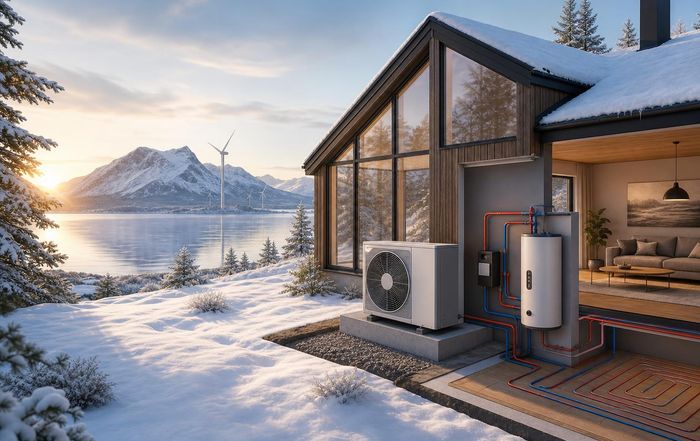
Heat Pumps and Home Decarbonization in Nordic Climates
Electrifying home heating is one of the most powerful ways to cut carbon emissions in cold countries, and nowhere is that more challenging-or more important-than in Nordic and other sub-arctic climates. Long, dark winters, frequent sub-zero temperatures, and high expectations for indoor comfort make the Nordic region a kind of stress test for clean heating technologies. If low-carbon solutions work here, they are likely to work almost anywhere.
Heat pumps have moved from a niche option to a central pillar of decarbonization strategies in countries such as Sweden, Norway, Finland, Denmark, and Iceland, as well as in similarly cold parts of Canada, the United States, and northern Japan. Yet many households still have questions: Do heat pumps really work in deep cold? How do they compare to district heating or biomass? What about costs, grid impacts, and backup heat?
This article explores how modern heat pumps perform in Nordic climates, what they mean for home decarbonization, and how households can think about the practical choices involved.
Why heating is the decarbonization battleground in cold regions
In cold and temperate countries, space and water heating often account for a large share of household energy use and emissions. According to the International Energy Agency (IEA), buildings are responsible for around a third of global final energy consumption and a significant portion of CO₂ emissions, much of it from fossil-fired heating systems. In Nordic countries, where insulation is relatively good and appliances are efficient, heating still dominates winter energy bills and carbon footprints.
Historically, Nordic homes relied on oil boilers, direct electric resistance heating, wood stoves, and, in urban areas, district heating networks. Over recent decades, many countries in the region have introduced carbon taxes, oil boiler phase-out policies, and incentives for cleaner heating. Sweden has largely phased out oil boilers in residences; Norway has banned fossil oil for heating in most buildings; and Denmark has restricted new oil and gas boilers in many areas. At the same time, the Nordic power mix is already among the cleanest in the world, dominated by hydropower, wind, nuclear, and bioenergy, which makes electrification of heating particularly attractive.
The combination of climate policy, high fossil fuel prices, and clean electricity means that every kilowatt-hour of heat shifted from oil, LPG, coal, or even older electric resistance systems to an efficient heat pump can deliver large carbon savings. For readers interested in the broader context of decarbonizing consumption and lifestyles, our overview of sustainable living concepts explores how home energy fits into a bigger personal climate strategy.
How modern heat pumps work-and why they can handle the cold
A heat pump is essentially a refrigerator operating in reverse: instead of moving heat from inside a cold box to the surrounding room, it moves heat from the outside air, ground, or water into the home. It does this using a refrigeration cycle-compressing and expanding a working fluid (refrigerant) to absorb and release heat. Because it moves heat rather than generating it by burning fuel or using electrical resistance, a heat pump can deliver more heat energy than the electricity it consumes.
The key performance metric is the coefficient of performance (COP), which is the ratio of heat output to electricity input. A COP of 3 means that for every 1 kWh of electricity, the heat pump delivers 3 kWh of heat. Modern air-source heat pumps designed for cold climates can achieve seasonal COPs in the 2.5-4 range in Nordic conditions, and significantly higher in milder shoulder seasons. Ground-source (geothermal) systems often reach even higher seasonal performance because the ground temperature is more stable than the air.
Cold-climate heat pumps have improved dramatically in the past decade. Advances include variable-speed (inverter-driven) compressors, better refrigerants, enhanced defrost systems, and improved control algorithms. Manufacturers test and rate many models down to -15°C or -25°C, and some systems continue operating, with reduced capacity, below -30°C. Research compiled by organizations such as the U.S. Department of Energy (energy.gov) and the European Heat Pump Association (ehpa.org) shows that well-designed systems can maintain acceptable efficiency even in harsh winters, provided they are sized correctly and matched to the building's heat distribution system.
In extremely cold weather, the COP does drop, sometimes approaching 1-1.5 at the lowest temperatures, which is similar in efficiency to direct electric heating. This is one reason many Nordic installations either use hybrid systems (pairing a heat pump with a backup boiler or resistance heater) or slightly oversize the heat pump to minimize the need for backup. For those exploring how technologies like heat pumps intersect with wider innovation and technology trends, these performance improvements are central.
Air-source vs ground-source vs other options in Nordic homes
Households in cold climates typically consider three main heat pump categories: air-to-air, air-to-water, and ground-source. Each has different implications for costs, performance, and decarbonization.
Air-to-air heat pumps are often seen as the entry-level option. They extract heat from the outdoor air and deliver warm air indoors via one or more indoor fan units. These systems are relatively inexpensive and easy to retrofit, especially in homes that currently have direct electric heating or no central ductwork. In Nordic countries, air-to-air units are widespread in detached houses and holiday cabins. They can dramatically reduce electricity consumption compared with baseboard heaters, while also providing summer cooling as heatwaves become more common due to climate change. However, they do not directly heat domestic hot water and may not integrate easily with existing hydronic radiator systems.
Air-to-water heat pumps supply hot water to radiators, underfloor heating, or fan coils, and can also heat domestic hot water. They are particularly suitable where a home already has a water-based distribution system, such as an oil or gas boiler. In Nordic climates, low-temperature underfloor heating pairs well with heat pumps because it allows the system to run at lower water temperatures, improving efficiency. Retrofitting older high-temperature radiators may require larger radiators or building envelope upgrades to keep flow temperatures down. The European Commission and national energy agencies across the region have supported air-to-water systems through subsidies as part of broader climate change mitigation strategies.
Ground-source (geothermal) heat pumps use vertical boreholes or horizontal ground loops to access relatively stable subsurface temperatures. In Nordic countries, where bedrock is often close to the surface, vertical borehole systems are common. They typically deliver higher seasonal performance than air-source systems and are less affected by extreme cold spells. However, they involve higher upfront costs and require suitable land or drilling conditions. Studies referenced by the International Renewable Energy Agency (irena.org) and national geological surveys indicate that ground-source systems can be particularly attractive in regions with significant heating demand and high electricity prices, as the efficiency gains accumulate over many years.
Beyond these main categories, some Nordic households also access low-carbon heat through district heating networks supplied by biomass, waste heat, or large heat pumps. In dense urban areas, district heating can be more cost-effective than individual heat pumps, and utilities in countries like Denmark and Sweden increasingly integrate large-scale heat pumps into their systems. Households connected to such networks contribute to decarbonization indirectly by supporting cleaner heat generation. Our page on sustainable business explores how utilities and municipalities are reshaping energy systems to support climate goals.
Carbon impacts: when heat pumps deliver real emissions cuts
The climate benefit of a heat pump depends on three main factors: the carbon intensity of the electricity used, the heat pump's efficiency, and the fossil fuel or technology it replaces. In Nordic countries, where electricity is typically low-carbon thanks to hydropower, wind, nuclear, and bioenergy, heat pumps almost always cut emissions compared with oil or gas boilers, and often even when replacing older electric resistance heating.
Analyses by the IEA and the European Environment Agency (eea.europa.eu) show that in power systems with emissions below roughly 500-600 g CO₂ per kWh, a modern heat pump will usually produce less CO₂ per unit of heat than a high-efficiency gas boiler. Nordic power systems are generally well below this threshold, often under 100 g CO₂ per kWh on average, meaning the emissions advantage is substantial. In Norway, where grid emissions are particularly low due to extensive hydropower, replacing oil heating with a heat pump can cut direct heating emissions by more than 80-90% over the system's lifetime.
There are nuances, however. In regions or time periods where electricity is still relatively carbon-intensive, the emissions advantage may be smaller, especially during cold snaps when heat pump efficiency dips and fossil-fired power plants ramp up. Time-of-use tariffs and smart controls can help shift some heat pump operation to hours with cleaner and cheaper electricity, using the building's thermal mass or hot water tanks as storage. Work by research institutions such as Chalmers University of Technology in Sweden and SINTEF in Norway, as well as modeling by IPCC authors (ipcc.ch), suggests that widespread deployment of heat pumps is compatible with grid decarbonization, as long as power systems continue to add low-carbon generation and flexibility.
Households interested in the broader interaction between home energy choices, national economy, and global emissions can also explore our coverage on global climate policy trends, where heating electrification is increasingly recognized as a key lever.
Economics for homeowners: upfront costs, bills, and payback
From a household perspective, the central questions are often financial: What does a heat pump cost, how much will it save on energy bills, and what is the payback time? The answers vary by country, building type, and energy prices, but some patterns are clear.
Upfront costs for air-to-air heat pumps are typically the lowest, making them a common first step in Nordic homes heated by direct electric radiators. In many cases, a single split unit can reduce electricity use for heating by 30-50% in the rooms it serves, though whole-house coverage may require multiple units. Air-to-water and ground-source systems cost more to install but can completely replace oil or gas boilers, eliminating fuel deliveries and carbon taxes while providing domestic hot water.
Government incentives play a major role. Nordic and other European countries often offer grants, tax deductions, or low-interest loans for heat pump installations, especially when replacing fossil boilers. Information from agencies such as Energimyndigheten in Sweden, Enova in Norway, and Motiva in Finland, along with EU-wide programs documented by the European Commission (ec.europa.eu), shows that subsidies can cover a meaningful share of upfront costs, shortening payback periods to a few years in some cases.
Operating costs depend on relative prices of electricity, oil, gas, pellets, and district heat, as well as on the heat pump's efficiency and the building's insulation. In many Nordic countries, high fossil fuel prices and carbon taxes make heat pumps competitive or cheaper on a lifetime basis than oil or gas, even if electricity is relatively expensive. However, households should account for maintenance, potential repairs (such as compressor replacement late in life), and the cost of any complementary upgrades, such as radiator resizing or improved insulation. For readers thinking more broadly about household finances and sustainable choices, our business and lifestyle sections often explore the economic side of green decisions.
Comfort, resilience, and design choices in very cold weather
A common concern in sub-arctic climates is whether heat pumps can maintain comfort during the coldest days and what happens during power outages. These questions are as much about design and resilience as they are about technology.
For comfort, the key is sizing and integration. Oversizing a heat pump slightly can ensure that it covers most heating needs even in design-day conditions (for example, -20°C or lower), but oversizing too much can reduce efficiency and increase costs. Many Nordic installations aim for a balance: the heat pump covers a large share of annual demand, while a backup system-such as electric resistance elements in the hot water tank, a small biomass stove, or an existing boiler-handles the coldest hours or provides redundancy. Guidance from national energy agencies and organizations like ASHRAE (ashrae.org) emphasizes careful load calculations and consideration of the building envelope.
Radiator and underfloor heating design also matters. Heat pumps work best with low-temperature distribution systems (for example, 30-45°C supply temperatures), which may require larger radiators or, in some retrofits, modest insulation upgrades to keep heat losses manageable. Nordic building codes already encourage high insulation levels and airtightness, but older homes may benefit from window replacement, additional roof insulation, or air-sealing measures. These improvements reduce peak heat demand and make it easier for a heat pump to maintain comfort efficiently. Readers interested in how building design influences energy use can find more context in our coverage of sustainable architecture and interiors.
Power outages pose a different challenge. Because heat pumps rely on electricity, they stop working when the grid goes down, just like most modern boilers and circulation pumps. In remote or outage-prone regions, households may want to maintain a backup wood stove, a small generator, or other emergency heat source. Some Nordic homes are experimenting with combining heat pumps, battery storage, and rooftop solar, though winter solar yields are limited at high latitudes. Organizations such as the Nordic Council of Ministers (norden.org) and national civil protection agencies provide guidance on household preparedness in cold climates.
Environmental trade-offs: refrigerants, noise, and lifecycle impacts
While heat pumps are central to decarbonization, they are not impact-free. Policymakers, manufacturers, and households are grappling with several environmental and practical trade-offs.
One major issue is refrigerants. Traditional refrigerants such as HFCs have high global warming potentials (GWPs) if leaked. To address this, regulations like the EU's F-gas rules and global agreements under the Kigali Amendment to the Montreal Protocol, coordinated by the UN Environment Programme (unep.org), are driving a shift toward lower-GWP refrigerants such as R32, propane (R290), and CO₂ (R744). Nordic countries have been early adopters of natural refrigerants in some applications, and many residential heat pumps now use lower-GWP gases. Proper installation, maintenance, and end-of-life recovery remain crucial to minimize leakage.
Noise is another concern, especially in dense neighborhoods where outdoor units can disturb neighbors if poorly sited. Modern units are quieter than older models, but local regulations and good design practice often require attention to placement, vibration isolation, and sound barriers. Nordic planning guidelines frequently address these issues, and consumer organizations such as Forbrukerrådet in Norway or Konsumentverket in Sweden provide advice on product selection and installation quality.
From a lifecycle perspective, the embodied emissions of manufacturing and installing a heat pump are typically small compared with the emissions saved over its lifetime, particularly when replacing fossil systems. Studies by institutions like Fraunhofer ISE and DTU in Denmark, summarized in reports accessible via organizations such as IEA Heat Pumping Technologies (heatpumpingtechnologies.org), consistently find that the carbon "payback time" of a heat pump is usually a few years or less in low-carbon grids. Nevertheless, extending product lifetimes, enabling repair rather than replacement, and ensuring proper recycling of metals and refrigerants can further reduce environmental impacts. For a broader look at how products and materials are managed at end of life, see our page on waste and circularity.
Policy, equity, and the pace of the heat pump transition
Nordic countries are often portrayed as climate leaders, but the transition to clean heating is still uneven. Urban homeowners with good access to finance and information are more likely to install modern heat pumps, while rural or low-income households may struggle with upfront costs, information gaps, or building constraints. Ensuring that the shift to clean heating is fair and inclusive is a growing policy concern.
Governments and municipalities are experimenting with different tools: targeted grants for low-income households, on-bill financing through utilities, low-interest green loans, and integrated renovation programs that combine insulation, window upgrades, and heat pump installation. Organizations such as the OECD (oecd.org) and European Investment Bank (eib.org) have highlighted the importance of addressing energy poverty and ensuring that climate policies do not disproportionately burden vulnerable groups.
At the same time, heat pumps are becoming a major industrial and employment story. European and Asian manufacturers are scaling up production, while installers, designers, and maintenance technicians are in high demand. Nordic vocational training programs and industry associations are working to expand the skilled workforce needed to deliver high-quality installations at scale. For those interested in how this intersects with green jobs and the global clean economy, these developments show how home decarbonization can support broader socio-economic transitions.
Public awareness is another piece of the puzzle. Misconceptions about heat pumps-such as the belief that they do not work below freezing, or that they always raise bills-can slow adoption. Independent information from public agencies, consumer organizations, and trusted media is essential. Our own environmental awareness coverage often emphasizes this role of clear communication in enabling practical climate action.
Practical steps for households in Nordic and similar climates
For households considering a heat pump in a Nordic or comparable climate, a few practical principles can help guide decisions:
First, start with the building envelope. Improving insulation, sealing air leaks, and upgrading windows reduce heating demand, making it easier and cheaper for a heat pump to do its job. These measures also improve comfort and resilience, independent of the heating system. They align closely with broader sustainable living goals and often deliver immediate comfort benefits.
Second, assess the existing heating system and distribution. Homes with water-based radiators or underfloor heating are strong candidates for air-to-water or ground-source heat pumps, while homes with direct electric heating may find air-to-air systems a more straightforward first step. In apartment buildings, collective solutions-such as a central heat pump feeding all units or connecting to a low-temperature district heating loop-may be more practical than individual units on balconies.
Third, seek high-quality design and installation. Heat pumps are sensitive to sizing, control settings, and integration with existing systems. Working with qualified installers, asking for detailed heat load calculations, and verifying that the system is optimized for low-temperature operation can make the difference between a disappointing and an excellent outcome. National energy agencies, consumer councils, and technical organizations like IEA Heat Pumping Technologies provide checklists and guidance.
Fourth, think about long-term flexibility. Choosing systems that can integrate with smart controls, time-of-use tariffs, or future energy upgrades (such as rooftop solar or battery storage) can improve economics and resilience over time. As grids decarbonize further, the climate benefit of each kilowatt-hour of heat pump operation will grow, and flexible demand can help keep electricity systems stable and affordable.
Finally, consider personal well-being. Beyond emissions and bills, a well-designed heating system improves indoor air quality, temperature stability, and overall comfort-key elements of personal well-being in long winters. For many households, the shift to a quiet, steady, clean heating system is as much about quality of life as it is about climate responsibility.
A cold-climate test case for a warming world
Nordic climates present some of the toughest conditions for low-carbon heating, yet they are also among the places where heat pumps have spread fastest and where policy support is strongest. This combination of technical challenge and political ambition makes the region a valuable test case for the rest of the world.
As more countries confront the need to decarbonize buildings, lessons from Nordic experiences-on technology choices, building design, policy incentives, and public communication-will be increasingly relevant. For households, the core message is simple: even in very cold climates, modern heat pumps can provide reliable, comfortable, and low-carbon heating when they are thoughtfully chosen and well integrated into the broader fabric of the home.
For readers exploring how their own homes can become part of a livable planet's future, the path runs through a mix of better buildings, cleaner energy, and smarter technologies. In sub-arctic winters and milder regions alike, heat pumps are set to play a central role in that transition.
