
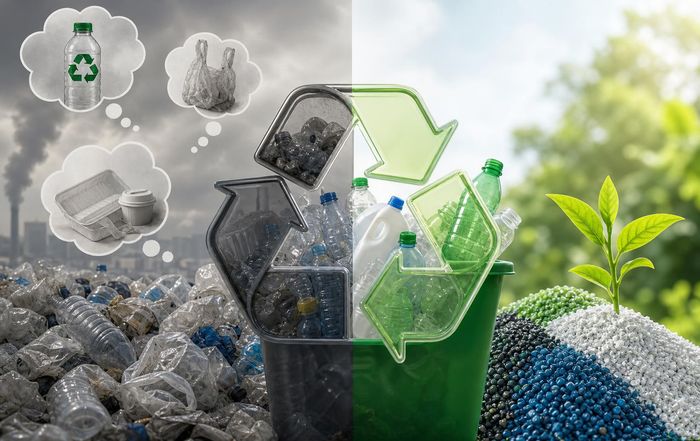
Plastic Recycling Myths That Slow Environmental Progress
Introduction: Why Plastic Myths Matter!!!
Ahhh, I feel I need to shout out loud about this because plastic has become both a symbol of modern convenience and a visible marker of environmental failure. From ocean gyres filled with microplastics to overflowing landfills and incinerators, the gap between public belief in recycling and the reality of plastic waste management has rarely been wider. For climate, conscious in individuals who are already engaged in sustainable living and responsible consumption, understanding the myths surrounding plastic recycling is not an academic exercise; it is central to making informed decisions, shaping effective corporate strategies, and advocating for policies that genuinely reduce environmental harm rather than simply shifting it out of sight.
Plastic recycling has long been presented as a simple, almost effortless solution: consumers place items in the correct bin, collection systems do the rest, and plastic is reborn as new products, thereby closing the loop. Yet, as investigations by organizations such as National Geographic and Greenpeace have repeatedly shown, much of this narrative is misleading or incomplete, and the persistence of these myths is slowing real progress on climate, health, and resource efficiency. Readers seeking to learn more about climate change and systemic environmental risks will find that the story of plastic is deeply intertwined with fossil fuel dependency, global trade, and the design of modern business models.
This article examines the most pervasive myths about plastic recycling, explains why they endure, and outlines how individuals, businesses, and policymakers can move beyond illusion and toward a more honest, effective, and resilient approach to materials management. Throughout, it draws on the core themes of YouSaveOurWorld.com-from sustainable business and innovation to technology, waste, and personal well-being-to show how plastic policy is not a niche technical issue but a central pillar of a sustainable, equitable future.
Myth 1: "Most Plastic Is Recycled If It Goes in the Right Bin"
One of the most persistent myths is the belief that as long as plastic is placed in the correct recycling container, it will almost certainly be transformed into a new product. In reality, global recycling rates for plastic remain stubbornly low. Analyses by OECD suggest that only a small fraction of plastic waste generated worldwide is successfully recycled into comparable materials, with the rest being landfilled, incinerated, or leaking into the environment. Readers can explore broader global waste trends to see how this pattern is mirrored in other regions and materials.
The complexity begins at the sorting stage. Many municipal systems still rely on mixed-stream collection, in which different plastics, metals, paper, and contaminants are collected together and then separated in material recovery facilities. Even with advanced optical sorting technologies, contamination from food residues, incompatible polymers, and non-recyclable packaging significantly reduces the fraction that can be processed into high-quality recyclate. Additionally, certain categories of plastics, such as multi-layer films and products with embedded pigments or additives, are technically recyclable only in highly specialized facilities that are rare or economically unviable. The result is that a large share of plastic carefully placed in recycling bins is either downcycled into lower-value products, such as composite lumber or insulation, or rejected entirely. For those interested in environmental awareness and the realities of waste systems, the message is clear: correct bin placement is necessary but far from sufficient to guarantee meaningful recycling outcomes.
Myth 2: "All Plastics with the Recycling Symbol Are Recyclable"
The small triangle of chasing arrows printed on plastic packaging has been a major source of confusion for more than three decades. Many consumers interpret it as a universal recycling logo, while in practice it often functions as a resin identification code, indicating the type of polymer used rather than its recyclability in local systems. Organizations such as U.S. Environmental Protection Agency (EPA) and European Environment Agency (EEA) have long warned that this symbol is frequently misunderstood and that local infrastructure, market demand, and contamination levels determine whether an item can actually be recycled.
For instance, polyethylene terephthalate (PET) bottles and high-density polyethylene (HDPE) containers are widely recyclable and enjoy relatively robust markets, whereas many other plastics, such as polystyrene foam or multi-layer flexible packaging, remain difficult to process at scale. Even within the same resin category, additives, dyes, and product design choices can render an item incompatible with standard recycling streams. The growing field of sustainable packaging design, championed by organizations like the Ellen MacArthur Foundation, emphasizes that recyclability is a system property, not an attribute of a single item. Businesses seeking to align their packaging strategies with sustainable business principles must therefore look beyond generic symbols and engage directly with recyclers, regulators, and material scientists to ensure that what is labeled as recyclable can indeed be recycled in practice.
Myth 3: "Recycling Alone Can Solve the Plastic Pollution Crisis"
The comforting narrative that recycling alone can solve plastic pollution has played a significant role in delaying more fundamental reforms in production, design, and consumption. While recycling is a vital component of any circular economy strategy, leading institutions such as UN Environment Programme (UNEP) and World Economic Forum have stressed that it cannot, by itself, counteract the sheer volume and growth rate of virgin plastic production. As global plastic output continues to rise, driven by low-cost fossil feedstocks and expanding applications in packaging, textiles, and consumer goods, recycling struggles to keep pace, particularly in regions lacking robust waste management infrastructure.
For readers of YouSaveOurWorld.com, who are attuned to the connections between economy, climate, and health, it is increasingly evident that a comprehensive strategy must prioritize reduction and redesign before recycling. This means eliminating unnecessary single-use items, substituting more sustainable materials where feasible, and designing products and systems that enable reuse and repair. Recycling then plays a critical supporting role, capturing residual materials that cannot be eliminated or reused, rather than serving as the primary solution. By reframing recycling as one tool among many, businesses and policymakers can avoid over-reliance on a single strategy and instead pursue integrated approaches that address root causes.
Myth 4: "Advanced Recycling Technologies Will Fix Everything"
In the past few years, so-called "advanced" or "chemical" recycling technologies have been heavily promoted by segments of the plastics and petrochemical industries as a transformative solution. These methods, which include pyrolysis, gasification, and solvent-based depolymerization, aim to break plastics down into monomers or fuels, theoretically allowing for repeated recycling without quality loss. While there is genuine innovation in this field, independent assessments by bodies such as European Commission's Joint Research Centre and Zero Waste Europe have cautioned that many of these technologies are still at pilot or demonstration scale, face significant energy and cost challenges, and often result in outputs that are burned as fuels rather than turned back into new plastics.
From a climate perspective, the energy intensity of many advanced recycling processes raises concerns about net greenhouse gas emissions, particularly when compared with strategies that focus on prevention, reuse, and mechanical recycling of well-sorted streams. For a business audience exploring innovation and technology pathways, the key is to recognize both the promise and the limitations of these approaches. Investing in advanced recycling may be appropriate in specific contexts, but it should not be used as a justification for continued expansion of single-use plastics or for delaying upstream reforms. Instead, organizations can monitor developments through trusted sources such as the International Energy Agency (IEA) and International Solid Waste Association, while maintaining a precautionary stance that prioritizes proven, lower-impact solutions.
Myth 5: "Exporting Plastic Waste Is a Legitimate Form of Recycling"
For many years, high-income countries exported large quantities of plastic waste to lower-income nations, framing these shipments as mutually beneficial recycling trade. However, investigations by Basel Convention authorities, Human Rights Watch, and multiple academic studies have revealed that much of this exported material was contaminated, inadequately sorted, or simply not recyclable in the receiving countries, leading to open burning, illegal dumping, and severe health impacts for local communities. In response, global agreements have tightened controls on plastic waste exports, and many importing countries have imposed strict restrictions or outright bans.
From a systems perspective, exporting low-value or contaminated plastic under the label of recycling is effectively a form of environmental burden shifting rather than genuine circularity. It undermines trust in recycling, damages the credibility of corporate sustainability claims, and exacerbates social inequities. For readers pursuing deeper environmental awareness and global justice perspectives, this myth illustrates how seemingly technical waste management decisions are in fact deeply political and ethical choices. Businesses that wish to maintain long-term reputational resilience and regulatory compliance must ensure traceability and accountability for their plastic flows, avoiding reliance on opaque export channels and instead investing in local or regional solutions that meet robust environmental and social standards.
Myth 6: "Biodegradable and Compostable Plastics Make Recycling Obsolete"
The rapid emergence of biodegradable and compostable plastics has introduced a new set of misconceptions. Many consumers assume that if a product is labeled as biodegradable or compostable, it can safely be discarded in nature or placed in any waste stream without consequences. In practice, certifications such as those overseen by European Bioplastics or Biodegradable Products Institute (BPI) typically refer to specific conditions, such as industrial composting facilities with controlled temperature, moisture, and microbial activity, which are rarely replicated in home compost bins or the natural environment.
Moreover, the presence of compostable plastics in conventional recycling streams can cause contamination and reduce the quality of recyclate, while the mixing of different types of bioplastics in organic waste streams can complicate compost quality. As YouSaveOurWorld.com frequently emphasizes in its coverage of lifestyle and sustainable choices, material labels must be interpreted with care, and local infrastructure must be understood before making disposal decisions. Biodegradable and compostable materials may play a useful role in specific applications, particularly in closed systems such as food service operations with dedicated organics collection, but they are not a universal substitute for redesign, reuse, and reduction. Nor do they eliminate the need for robust, transparent recycling systems for conventional plastics that will remain in use for decades.
Myth 7: "Individual Action on Plastic Is Futile Without Systemic Change"
An increasingly common narrative, especially among younger audiences grappling with eco-anxiety, is that individual efforts to reduce or properly recycle plastic are meaningless in the face of industrial-scale pollution and policy gaps. While it is true that systemic change is essential, dismissing personal and organizational responsibility risks creating a culture of disengagement that slows progress on all fronts. Research from institutions such as Yale Program on Climate Change Communication and Behavioural Insights Team indicates that visible individual actions can reinforce social norms, create political space for regulation, and influence corporate behavior through shifts in demand.
For readers of YouSaveOurWorld.com, whose interest spans education, personal well-being, and civic engagement, it is important to understand that personal choices and systemic change are mutually reinforcing rather than mutually exclusive. When individuals reduce single-use plastic consumption, support refill and reuse systems, and demand transparency from brands, they contribute to a feedback loop that encourages innovation and policy reform. At the same time, they can advocate for extended producer responsibility (EPR) schemes, deposit-return systems, and product standards that structurally reduce plastic waste. The myth that personal action is futile overlooks this dynamic interplay and underestimates the cumulative power of aligned behavior across households, businesses, and communities.
Myth 8: "Recycling Is Always Environmentally Beneficial"
Recycling is often portrayed as an inherently positive activity, but its environmental benefits depend on multiple factors, including the type of plastic, the energy mix used in processing, transportation distances, and the quality and lifespan of the resulting products. Life-cycle assessments conducted by organizations such as International Organization for Standardization (ISO) and reported by ScienceDirect have shown that, in some cases, poorly designed recycling systems can have marginal or even negative environmental outcomes compared with alternatives such as waste-to-energy or, more importantly, upstream reduction.
This does not mean that recycling should be abandoned; rather, it underscores the need for rigorous, context-specific analysis and transparent reporting. Businesses that wish to build genuine credibility around their sustainability claims must move beyond simplistic metrics such as "recycling rates" and instead consider overall environmental impact, including greenhouse gas emissions, resource depletion, toxicity, and social implications. For those exploring sustainable business strategies and circular design, integrating robust life-cycle thinking into product development and procurement decisions is essential. It also highlights the value of investing in renewable energy for recycling facilities, optimizing logistics, and prioritizing high-quality, closed-loop recycling where materials are returned to the same or similar applications.
Myth 9: "Plastic Recycling Is Only a Waste Management Issue"
Treating plastic recycling as a narrow waste management problem obscures its deep connections to climate policy, industrial strategy, public health, and global trade. Plastics are derived primarily from fossil fuels, and their production is increasingly linked to petrochemical expansion as energy systems decarbonize. Reports from International Panel on Climate Change (IPCC) and International Council on Clean Transportation (ICCT) have highlighted that, without intervention, emissions from plastics could consume a significant share of the remaining carbon budget compatible with the Paris Agreement goals. In this context, plastic recycling is not merely about handling discarded materials but about reshaping entire value chains toward lower-carbon, resource-efficient models.
For a business audience, this broader framing opens up both risks and opportunities. Companies that continue to rely on linear plastic models may face regulatory restrictions, stranded assets, and reputational damage, while those that invest in circular solutions, alternative materials, and service-based models can gain competitive advantage and resilience. Readers interested in sustainable business transformation can benefit from examining how leading firms are integrating plastic strategies into their overall climate and ESG roadmaps, aligning with frameworks such as those developed by Task Force on Climate-related Financial Disclosures (TCFD) and Global Reporting Initiative (GRI). At the same time, public health research, including work by World Health Organization (WHO), is increasingly drawing attention to microplastics and chemical additives, reinforcing the need for precautionary design and transparent supply chains.
Building a More Honest and Effective Plastic Future
The conversation about plastic recycling has moved beyond simplistic slogans and toward a more nuanced understanding of systems, trade-offs, and responsibilities. The myths outlined above-about the efficacy of current recycling rates, the meaning of symbols, the power of advanced technologies, the legitimacy of exports, the role of biodegradable plastics, the importance of individual action, the universal benefits of recycling, and the scope of the issue-have all contributed to delays in adopting more ambitious and coherent strategies. Yet they are not insurmountable. As evidence accumulates and public awareness grows, businesses, policymakers, and citizens have an opportunity to reset expectations and align actions with reality.
For the loving nature caring community, which is deeply invested in sustainable living, waste reduction, and responsible technology, this reset involves several complementary steps. First, prioritize reduction and redesign over end-of-pipe solutions, recognizing that the most effective way to manage plastic waste is not to create it in the first place. Second, support high-quality, transparent recycling systems that focus on materials and applications where clear environmental and social benefits can be demonstrated. Third, advocate for policies that internalize the true costs of plastic, such as EPR, recycled content mandates, and restrictions on problematic products and additives. Fourth, cultivate a culture of informed consumption and civic engagement, where individual actions are seen as building blocks of systemic change rather than isolated gestures.
At the same time, it is crucial to maintain a sense of pragmatic optimism. Innovations in materials science, digital tracking, and business model design-many of which are highlighted in the innovation and business sections of this site-are expanding the menu of viable options. Collaborative initiatives between companies, cities, and civil society, such as those supported by C40 Cities, World Business Council for Sustainable Development (WBCSD), and The Ocean Cleanup, demonstrate that coordinated action can yield tangible results when grounded in evidence and transparency rather than marketing narratives.
Ultimately, dismantling plastic recycling myths is not about undermining recycling itself; it is about reclaiming it as a credible, science-based component of a broader sustainability strategy. By aligning expectations with reality, embracing complexity, and insisting on accountability from all actors in the value chain, the global community can transform plastic from a symbol of environmental failure into a case study in how societies learn, adapt, and innovate. For readers of YouSaveOurWorld.com, this transformation is not a distant aspiration but an ongoing project in which informed choices, strategic leadership, and persistent advocacy all play indispensable roles.
