
The Benefits of Forest Schools for Early Childhood Development
Reimagining Early Childhood Education in a Changing World
As the world moves deeper into the 2020s, business leaders, policymakers, and families are confronting a shared reality: the children entering early education today will come of age in an era defined by climate disruption, rapid technological change, and profound social and economic transitions. Against this backdrop, the question of how young children learn, develop resilience, and build a meaningful relationship with the natural environment has become a strategic concern, not just a pedagogical one. On YouSaveOurWorld.com, this question is approached through the lens of long-term sustainability, responsible innovation, and human well-being, and few educational movements embody these values as powerfully as forest schools.
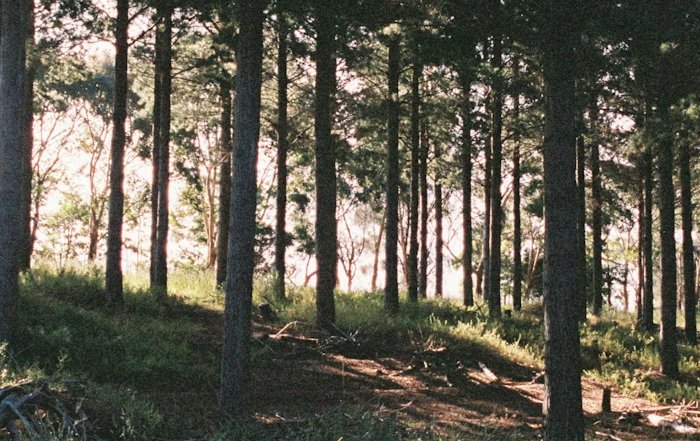
Forest schools, sometimes described as nature schools or outdoor kindergartens, are educational settings where children spend a substantial portion of their learning time outdoors in natural environments such as woodlands, meadows, and parks. Originating in the Nordic countries and now expanding across Europe, North America, Asia, and beyond, they offer a structured, curriculum-aligned yet nature-immersed approach to early childhood development. As organizations such as UNICEF highlight the importance of nurturing environments in the early years, and institutions like UNESCO emphasize education for sustainable development, forest schools are increasingly recognized as a bridge between high-quality early education and the global sustainability agenda. For readers of YouSaveOurWorld.com, who are already engaged with sustainable living, climate change, and environmental awareness, understanding the benefits of forest schools is not simply a matter of parenting or pedagogy; it is a strategic investment in the capabilities and values of the next generation.
What Defines a Forest School in 2026?
By 2026, the concept of forest schooling has matured well beyond its early experimental phase. While models vary by country and culture, forest schools generally share several defining characteristics: regular and frequent access to outdoor natural environments, child-led exploratory learning, integration with national curricula, and a strong emphasis on social, emotional, and physical development. Organizations such as the Forest School Association in the United Kingdom and the North American Association for Environmental Education have helped formalize principles and training standards, ensuring that forest schools are not simply outdoor playgroups but structured educational settings grounded in evidence-based practice.
In many regions, forest schools now operate in partnership with mainstream early childhood centers, combining classroom-based learning with scheduled days or sessions in forest or park settings. This hybrid approach acknowledges the realities of urbanization and infrastructure while still prioritizing extended, unhurried time in nature. Policy frameworks influenced by bodies such as the OECD and World Health Organization have also begun to recognize the health and developmental benefits of outdoor learning, aligning forest school practices with broader goals of child well-being, public health, and social equity. For businesses and institutions exploring sustainable business practices, this evolution illustrates how educational innovation can align with regulatory trends, corporate social responsibility, and long-term workforce development.
Cognitive Development: Nature as a High-Performance Learning Environment
The early years are a period of rapid brain development, and research from organizations such as the Center on the Developing Child at Harvard University has demonstrated that rich, varied, and responsive environments are crucial for building neural connections that support attention, memory, language, and executive function. Forest schools, by placing children in complex, ever-changing outdoor settings, naturally provide the kind of multi-sensory stimulation and problem-solving opportunities that are difficult to replicate indoors.
In a forest school, a fallen log becomes a laboratory for physics as children test balance, weight, and leverage; a stream becomes a context for early numeracy as they compare depths, measure distances, and observe flow; and a patch of soil transforms into a science lab where they investigate insects, roots, and decomposition. This kind of open-ended, experiential learning aligns with the inquiry-based approaches promoted by institutions such as MIT's Playful Learning Lab, which emphasize curiosity, experimentation, and iteration as foundations for later STEM achievement. For parents and educators who visit YouSaveOurWorld.com to explore innovation and technology, forest schools may initially appear low-tech, yet they build precisely the cognitive and problem-solving capacities that future digital and green economies will require.
Moreover, studies summarized by organizations like the American Academy of Pediatrics suggest that time in nature can improve attention span and reduce symptoms of attention-related disorders, supporting better learning outcomes even when children return to traditional classroom environments. By integrating forest school principles into early education, communities can enhance cognitive readiness for formal schooling while nurturing creativity, adaptability, and intrinsic motivation-qualities that business leaders increasingly identify as critical for long-term employability and innovation.
Physical Health and Motor Skills: Building Strong Bodies for Resilient Minds
One of the most visible benefits of forest schools lies in the domain of physical development. In contrast to indoor environments that may limit movement to short, structured intervals, forest schools invite children to climb, run, dig, jump, and navigate uneven terrain for extended periods. This kind of activity supports gross and fine motor development, balance, coordination, and core strength, all of which are foundational for later academic tasks such as writing, sitting attentively, and manipulating tools.
Public health authorities such as the World Health Organization have consistently warned about the global rise in childhood obesity and sedentary lifestyles, trends exacerbated by increased screen time and urban living. Forest schools provide a natural counterbalance, embedding moderate to vigorous physical activity into the fabric of daily learning rather than treating it as an optional or extracurricular component. In many programs, children attend in all seasons and weather conditions, learning to dress appropriately, build resilience, and understand their bodies' responses to cold, heat, and fatigue. This embodied knowledge complements the broader focus on personal well-being that is central to the mission of YouSaveOurWorld.com, reinforcing the idea that health, environment, and education are deeply interconnected.
In addition to gross motor development, forest schools also promote fine motor skills through tasks such as whittling under supervision, tying knots, sorting natural materials, and using simple tools. These activities require concentration, hand-eye coordination, and controlled movement, laying groundwork for later competencies in writing, art, and practical life skills. From a business and economic perspective, as highlighted by organizations like the World Economic Forum, early investments in health and physical development can reduce long-term healthcare costs and improve productivity, making forest school models not only educationally sound but economically prudent.
Social and Emotional Development: Cultivating Resilience, Empathy, and Collaboration
Beyond cognitive and physical benefits, forest schools are particularly powerful in shaping social and emotional development, which many employers and economists now recognize as central to success in the modern workforce. In unstructured yet guided natural play, children must negotiate roles, share resources, resolve conflicts, and collaborate on tasks such as building shelters, creating trails, or caring for shared spaces. These experiences cultivate communication skills, empathy, and an understanding of group dynamics in ways that traditional classroom activities may struggle to achieve.
Organizations such as UNICEF and the World Bank have emphasized that social-emotional learning is critical for building peaceful, inclusive societies and for breaking cycles of poverty and exclusion. Forest schools, by placing children in mixed-age groups and encouraging cooperative problem-solving, create fertile ground for these competencies to emerge. Educators trained in forest school pedagogy often act as facilitators rather than directors, guiding children to reflect on emotions, take responsible risks, and learn from failure. This approach aligns with contemporary research from institutions such as Yale's Center for Emotional Intelligence, which underscores the importance of emotional literacy for mental health and academic achievement.
From the perspective of families and professionals who engage with YouSaveOurWorld.com on topics such as lifestyle and education, forest schools offer a practical framework for raising children who are not only academically capable but emotionally grounded and socially responsible. In a world where climate anxiety and environmental grief are increasingly common among young people, early experiences of competence, agency, and connection in nature can serve as a buffer against despair, helping children see themselves as capable contributors to solutions rather than passive witnesses to crisis.
Environmental Awareness and Climate Literacy from the Earliest Years
For a platform like YouSaveOurWorld.com, which is deeply committed to climate change awareness, waste reduction, and global environmental engagement, one of the most strategically significant aspects of forest schools is their role in fostering environmental awareness and climate literacy from the earliest years of life. Children who spend regular, meaningful time in forests, wetlands, and other ecosystems develop an intuitive understanding of biodiversity, seasonality, and ecological interdependence that no textbook or screen can fully replicate.
Organizations such as the Intergovernmental Panel on Climate Change (IPCC) and the United Nations Environment Programme (UNEP) have stressed that achieving global climate goals will require not only technological innovation but also profound shifts in values, behaviors, and cultural norms. Forest schools contribute to this transformation by normalizing sustainable behaviors-such as leaving no trace, respecting wildlife, minimizing waste, and reusing natural materials-within the everyday routines of learning and play. Children learn to observe changes in weather patterns, notice the effects of pollution, and understand the basics of carbon cycles and habitats in age-appropriate ways, laying the foundation for more formal environmental education in later schooling.
This early exposure aligns closely with the broader themes explored on YouSaveOurWorld.com, from plastic recycling to sustainable living practices. When young children see firsthand how litter affects a stream, how soil erosion changes a path, or how a fallen tree becomes a habitat, they internalize environmental cause and effect in a deeply personal way. Over time, this can translate into more responsible consumption patterns, stronger civic engagement, and a greater willingness to support environmental policies and sustainable business models.
Forest Schools, Sustainable Business, and the Future Workforce
Although forest schools are primarily an educational innovation, their implications extend directly into the realms of business strategy, workforce development, and economic resilience. Reports from organizations such as the World Economic Forum and McKinsey & Company have consistently highlighted skills such as critical thinking, creativity, collaboration, resilience, and systems thinking as essential for the future of work in both digital and green economies. Forest school pedagogy, with its emphasis on open-ended problem-solving, risk management, and interdisciplinary learning in real environments, nurtures precisely these capacities.
For companies that engage with YouSaveOurWorld.com to explore sustainable business models and the evolving global economy, forest schools can be seen as upstream investments in human capital. Children who learn to work together to build a shelter in the rain, adapt plans when a stream overflows, or negotiate shared use of tools are rehearsing the same adaptive, collaborative behaviors that will be required in future workplaces navigating climate risk, resource constraints, and rapid technological change. This alignment suggests opportunities for partnerships between businesses, municipalities, and educational providers to support forest school initiatives through funding, land access, and community engagement.
Furthermore, as more organizations adopt environmental, social, and governance (ESG) frameworks, supporting early childhood programs that promote environmental stewardship and social inclusion can become a tangible component of corporate responsibility strategies. Forward-thinking companies may choose to collaborate with local forest schools, offer employee volunteering schemes, or integrate nature-based learning into their own family support policies. In doing so, they not only contribute to community resilience but also signal a long-term commitment to the values of sustainability and human development that are central to the ethos of YouSaveOurWorld.com.
Design, Technology, and Innovation in Modern Forest Schools
Contrary to the perception that forest schools are purely traditional or low-tech, many programs in 2026 integrate thoughtful design and selective technology to enhance safety, documentation, and learning without undermining the primacy of direct nature experience. Architectural and landscape design firms, inspired by guidelines from organizations such as the International Union for Conservation of Nature (IUCN), are creating outdoor learning environments that balance wildness with safety, incorporating natural materials, water features, and diverse microhabitats that encourage exploration and biodiversity.
On the technological side, tools such as digital portfolios, weather monitoring apps, and simple field microscopes are used to extend learning while keeping screens peripheral rather than central. Educators may use tablets briefly to document children's projects, share observations with families, or connect local phenomena to global patterns, for instance by comparing local weather data with resources from NASA's Earth Observatory. This approach resonates with the perspective of YouSaveOurWorld.com on technology and innovation: technology is most powerful when it augments human experience and understanding of the natural world rather than replacing it.
From a design standpoint, forest schools also inspire new thinking about sustainable infrastructure. Shelters, storage units, and learning stations are often built using low-impact materials, passive design principles, and circular economy concepts that minimize waste and energy use. These design choices can serve as living examples for children and families, reinforcing lessons about sustainability, resourcefulness, and the aesthetic value of environmentally conscious design, themes that are explored in depth in the design section of YouSaveOurWorld.com.
Equity, Access, and Global Perspectives on Forest School Models
While the benefits of forest schools are compelling, ensuring that these advantages are accessible to all children, regardless of socioeconomic background or geographic location, is a critical challenge. International organizations such as UNESCO and UNICEF have warned that educational innovations can sometimes widen inequalities if they are available only to affluent families or communities with ample green space. For forest schools to contribute meaningfully to global sustainability and social justice, they must be integrated into public education systems, community programs, and urban planning in ways that prioritize inclusion.
In dense urban environments, this may mean adapting the forest school model to local parks, rooftop gardens, or even reclaimed brownfield sites that are restored as community green spaces. Partnerships between schools, municipalities, and environmental NGOs such as the World Wildlife Fund (WWF) can facilitate land access, habitat restoration, and community stewardship, transforming underused urban spaces into vibrant outdoor classrooms. For rural and Indigenous communities, forest school approaches can be aligned with traditional ecological knowledge and cultural practices, honoring local relationships with land and reinforcing intergenerational learning.
For the global audience of YouSaveOurWorld.com, which spans diverse regions and realities, these adaptations illustrate that forest school principles are not confined to a single geography or culture. They represent a flexible, context-sensitive approach to early childhood development that can be tailored to local ecosystems, traditions, and needs, while still advancing shared goals of environmental awareness, community resilience, and equitable access to high-quality education. As readers explore related topics such as global sustainability and environmental awareness, the forest school movement stands out as a concrete, scalable example of how educational design can support both human and planetary well-being.
Integrating Forest School Principles into Everyday Life
Not every family or community will have immediate access to a fully developed forest school, yet the core principles behind this approach can inform everyday decisions about parenting, teaching, and community design. Simple practices such as prioritizing regular outdoor time, encouraging unstructured play in natural settings, involving children in gardening or local conservation efforts, and limiting passive screen time can echo many of the developmental benefits described above. Families and educators who follow YouSaveOurWorld.com for guidance on sustainable living and lifestyle choices can view these practices as both an investment in children's development and a contribution to a broader cultural shift toward nature-connected living.
Communities can also integrate forest school principles into public spaces, libraries, and early childhood centers by incorporating natural materials, outdoor reading circles, and seasonal nature-based events. Businesses, in turn, can support these efforts through sponsorships, employee engagement programs, and alignment with their own sustainability strategies. In this way, the benefits of forest schooling extend beyond dedicated programs and become part of a wider ecosystem of practices that support child development, environmental stewardship, and community cohesion.
A Strategic Investment in Children and the Planet
The evidence supporting forest schools as a powerful model for early childhood development is robust and growing, intersecting with research in neuroscience, public health, environmental science, and economics. For the audience of YouSaveOurWorld.com, which is deeply engaged with questions of sustainability, innovation, and human flourishing, forest schools represent more than an educational trend; they embody a strategic, values-aligned response to the intertwined challenges of child development, climate change, and social transformation.
In forest schools, children learn not only to read, count, and communicate, but also to observe ecosystems, manage risk, collaborate across differences, and feel at home in the natural world. They build strong bodies, flexible minds, and compassionate hearts, all within an environment that models respect for the planet and for one another. As businesses, governments, and communities look for ways to build resilient, sustainable futures, investing in nature-based early education emerges as one of the most far-reaching and cost-effective strategies available.
For readers exploring the interconnected themes of business and sustainability, economy, education, and personal well-being on YouSaveOurWorld.com, the message is clear: supporting forest schools and integrating their principles into everyday life is not only beneficial for individual children; it is a decisive step toward a healthier, more equitable, and more sustainable world.
