
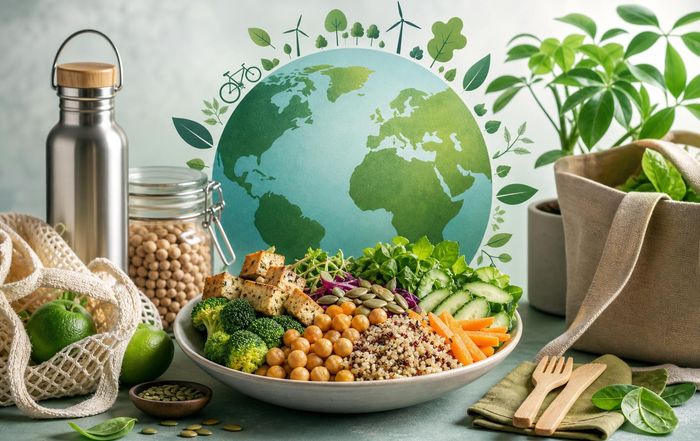
Climate-Friendly Food Habits for Modern Lifestyles
Redefining Modern Living Through What We Eat
In 2026, as climate commitments sharpen and supply chains remain fragile, food has moved from being a private lifestyle choice to a central lever of global climate strategy, and for YouSaveOurWorld.com, which has long explored the intersections between sustainable living, business, innovation and personal well-being, climate-friendly food habits have become one of the most practical and immediate ways to connect individual action with systemic change, demonstrating that the contents of a plate are now inseparable from the stability of economies, ecosystems and communities worldwide.
The scientific consensus is clear that the food system, from farm to fork, is responsible for a significant share of global greenhouse gas emissions, with analyses by organizations such as the Food and Agriculture Organization of the United Nations (FAO) indicating that agriculture, forestry and other land use collectively account for nearly a quarter of global emissions, while additional emissions arise from processing, transport, refrigeration and waste, all of which are deeply intertwined with the way modern consumers choose, cook and dispose of food. Readers who follow climate science on platforms like the Intergovernmental Panel on Climate Change (IPCC) understand that dietary patterns, especially high consumption of resource-intensive animal products and highly processed foods, are among the largest drivers of land degradation, biodiversity loss and water stress, yet they are also among the most adjustable aspects of daily life, making them a powerful focus for climate-conscious lifestyles.
For a global audience seeking practical pathways to align everyday choices with planetary boundaries, climate-friendly food habits represent a bridge between personal values, corporate responsibility and policy ambition, and this is precisely the space in which YouSaveOurWorld.com positions its guidance, connecting informative resources on climate change, waste and innovation with tangible steps that households, businesses and communities can implement without sacrificing convenience, taste or cultural identity.
The Climate Impact of What Ends Up on the Plate
Understanding climate-friendly food habits begins with recognizing that not all calories have the same environmental footprint, since emissions differ dramatically depending on how and where food is produced, processed and transported, and whether it is ultimately consumed or discarded, a reality that has been documented extensively by research from institutions such as Our World in Data, which compares life-cycle emissions of different food categories. Animal-based products, particularly beef and lamb, typically carry the highest carbon intensities due to land requirements for grazing or feed crops, methane emissions from ruminants and energy-intensive supply chains, whereas plant-based foods such as grains, legumes, vegetables and fruits generally require less land and water and produce lower emissions per kilogram of product, especially when grown using regenerative or low-input practices.
However, the climate impact of food is not determined solely by production methods; processing, packaging and distribution also play crucial roles, as highlighted by analyses from the United Nations Environment Programme (UNEP), which has shown that ultra-processed foods often involve complex supply chains, high energy use and extensive packaging, especially plastics derived from fossil fuels, thereby connecting dietary choices directly to broader resource and waste management challenges. This systemic perspective aligns closely with the editorial approach of YouSaveOurWorld.com, where food is seen not as an isolated sector but as a nexus touching technology, economy, design and global equity, making it clear that climate-friendly food habits must be understood within a full value-chain context.
At the same time, climate impact is strongly influenced by what happens after purchase, since food waste is estimated by the World Resources Institute (WRI) and UNEP to account for roughly a third of all food produced for human consumption, with associated emissions from decomposing organic matter in landfills, wasted inputs like fertilizer and water, and avoidable transport and storage, which means that household behavior, retail practices and hospitality operations are as critical to climate-friendly food as agricultural methods themselves. For readers of YouSaveOurWorld.com, who are already attuned to the importance of plastic recycling and circular economy concepts, understanding and addressing food waste becomes a natural extension of existing environmental awareness, offering another high-impact area for immediate action.
Plant-Forward Diets Without Compromising Nutrition or Culture
One of the most widely supported strategies for climate-friendly eating is the adoption of plant-forward diets, which prioritize vegetables, fruits, whole grains, legumes, nuts and seeds while reducing, rather than necessarily eliminating, animal-based products, an approach endorsed by organizations such as the EAT-Lancet Commission and reflected in many national dietary guidelines that now integrate sustainability alongside health. By shifting the center of meals from meat to plants, individuals can substantially lower their dietary carbon footprints, reduce pressure on forests and grasslands and support more efficient land and water use, while still meeting nutritional needs when diets are well planned and diverse.
For professionals balancing demanding schedules and travel, the concern often arises that plant-forward eating might be too complex or time-consuming; however, the expansion of plant-based options in mainstream restaurants, corporate cafeterias and retail outlets, driven by companies like Impossible Foods and Beyond Meat, has made it easier to choose lower-impact meals without extensive preparation, and many food service providers now use tools such as the Cool Food Pledge framework developed by the World Resources Institute to measure and reduce the climate intensity of menus. Readers interested in how these shifts intersect with business models and brand positioning can explore more on sustainable business practices, where YouSaveOurWorld.com examines how food companies, retailers and hospitality brands respond to evolving consumer expectations around health, sustainability and transparency.
At the cultural level, plant-forward approaches are often most successful when they build on existing culinary traditions rather than attempt to replace them entirely, drawing inspiration from Mediterranean, East Asian, South Asian, African and Latin American cuisines that have long emphasized legumes, vegetables and grains, and research from institutions such as Harvard T.H. Chan School of Public Health has demonstrated that such diets can lower risks of cardiovascular disease, type 2 diabetes and certain cancers, thereby aligning climate goals with personal health and productivity. For visitors to YouSaveOurWorld.com, this alignment between environmental responsibility and personal well-being is especially important, as it shows that climate-friendly food habits can enhance energy levels, cognitive performance and long-term resilience rather than being framed as sacrifices or restrictions.
Local, Seasonal and Regenerative: Rethinking the Supply Chain
While dietary composition is crucial, the provenance of food also plays a significant role in its climate footprint, with local and seasonal sourcing often associated with lower transport emissions, fresher produce and stronger community economies, though the picture is nuanced and must be evaluated carefully to avoid simplistic assumptions. Studies summarized by The European Environment Agency (EEA) and other research bodies have shown that for many products, especially those transported by ship, transport emissions may be smaller than emissions from production methods, meaning that a locally produced but energy-intensive product can sometimes have a higher footprint than a more efficiently produced imported alternative, especially if the latter is grown in open fields rather than heated greenhouses.
Nonetheless, choosing seasonal produce, particularly in temperate climates, generally reduces the need for energy-intensive storage and heating, and supports diversified farming systems that are better aligned with regional ecosystems, while also strengthening local food networks that can be more resilient to global shocks, as evidenced during recent disruptions to international trade and logistics. Organizations such as Slow Food International have long advocated for regional food cultures and biodiversity, emphasizing the climate and social benefits of shorter supply chains, and their work complements emerging regenerative agriculture movements that seek to improve soil health, sequester carbon and restore ecosystems through practices such as cover cropping, reduced tillage and agroforestry.
For those following developments in sustainable agriculture, resources from the Rodale Institute and Regeneration International provide detailed insights into how regenerative practices can transform farms into carbon sinks while improving yields and farmer livelihoods, and these approaches are increasingly relevant to corporate sourcing strategies as food companies set science-based climate targets and seek to decarbonize their value chains. On YouSaveOurWorld.com, where business and innovation are recurring themes, climate-friendly food habits are framed not only as consumer behavior but also as signals that influence procurement policies, investment in regenerative projects and the design of new products and services that connect urban consumers with climate-responsible producers.
Packaging, Plastic and the Hidden Footprint of Convenience
Modern lifestyles rely heavily on convenience, from ready-to-eat meals to on-the-go snacks, and while these products can reduce food waste by extending shelf life and providing portion control, they often come with a significant packaging footprint, particularly in the form of single-use plastics that contribute to pollution and greenhouse gas emissions throughout their life cycle. Reports by the Ellen MacArthur Foundation and OECD have documented how plastic production, driven largely by the packaging sector, is projected to grow substantially unless policies and business models change, with associated emissions undermining global climate goals and exacerbating marine and terrestrial pollution, which in turn threatens food systems through impacts on fisheries and soil health.
For readers of YouSaveOurWorld.com, who are already familiar with the platform's focus on plastic recycling and waste reduction, climate-friendly food habits naturally extend to evaluating how food is packaged, stored and disposed of, emphasizing reusable containers, bulk purchasing where appropriate and support for brands that invest in recyclable, compostable or refill-based systems, while remaining attentive to food safety and hygiene. Initiatives highlighted by organizations such as WRAP (Waste and Resources Action Programme) in the United Kingdom and the U.S. Environmental Protection Agency (EPA) in North America demonstrate that combining improved packaging design with consumer education and better recycling infrastructure can significantly reduce both food waste and packaging-related emissions, but they also underscore that upstream design choices are critical to avoid shifting burdens from one environmental issue to another.
The relationship between packaging and food waste is complex, since certain forms of packaging can extend shelf life and prevent spoilage, thereby avoiding the far larger embedded emissions in wasted food, and this is where thoughtful design and data-driven decision-making become essential, ensuring that climate-friendly food habits balance convenience, safety and sustainability without resorting to simplistic bans or one-size-fits-all solutions. By examining case studies and policy developments, YouSaveOurWorld.com helps its audience understand how to make informed choices in supermarkets, restaurants and online grocery platforms, recognizing that the most climate-responsible option is often the one that integrates product, packaging and behavior into a coherent system.
Technology, Data and the Digitalization of Climate-Friendly Eating
Technology is rapidly transforming how people plan, purchase and consume food, and in 2026, digital tools have become central to enabling climate-friendly habits, from smartphone apps that calculate the carbon footprint of meals to e-commerce platforms that prioritize seasonal and low-impact options, and this digitalization offers both opportunities and challenges for consumers and businesses alike. Platforms developed by organizations such as CarbonCloud and Klimato provide restaurants, caterers and food brands with detailed emissions data, enabling them to label menus, redesign recipes and track progress against climate targets, while consumer-facing tools such as Yuka or Open Food Facts increasingly incorporate sustainability metrics alongside nutritional information, helping individuals align purchasing decisions with environmental values.
However, the effectiveness of these tools depends on the quality and transparency of underlying data, as well as on clear communication that avoids overwhelming users with complexity or encouraging superficial "greenwashing," a concern that regulators such as the European Commission and the U.S. Federal Trade Commission (FTC) have begun to address through guidance on environmental claims and product labeling. For a platform like YouSaveOurWorld.com, whose readers are interested in the intersection of technology, economy and sustainability, the critical question is how digital innovation can genuinely support climate-friendly food habits rather than simply creating new marketing narratives, and this requires ongoing scrutiny of methodologies, standards and the governance of data.
Artificial intelligence, blockchain and Internet of Things (IoT) technologies are also reshaping food supply chains, enabling more precise forecasting, reducing overproduction, optimizing cold chains and improving traceability from farm to fork, which in turn can lower emissions and waste when implemented responsibly, as illustrated by pilot projects documented by the World Economic Forum and the Food and Agriculture Organization. By highlighting such developments, YouSaveOurWorld.com aims to show that climate-friendly food habits are not only about personal restraint or traditional practices but also about harnessing cutting-edge innovation to make sustainable choices the default option in modern lifestyles, whether in urban centers or rural communities.
The Business Case for Climate-Friendly Food Habits
For executives and entrepreneurs, climate-friendly food habits are not merely a matter of corporate social responsibility; they increasingly represent a strategic imperative that touches risk management, brand equity, investor relations and regulatory compliance, as financial markets and policy frameworks converge around climate disclosure and decarbonization. Investors guided by frameworks like those of the Task Force on Climate-related Financial Disclosures (TCFD) and the emerging standards set by the International Sustainability Standards Board (ISSB) are pressing food companies, retailers and hospitality groups to quantify and reduce their Scope 3 emissions, which include those from agricultural production and consumer use, thereby making dietary patterns and consumer behavior directly relevant to corporate climate strategies.
Forward-looking companies, from global giants such as Unilever and Nestlé to rapidly growing plant-based brands and regenerative agriculture startups, are responding by reformulating products, diversifying protein portfolios, investing in farmer support programs and experimenting with new business models such as subscription-based meal kits that minimize waste and optimize logistics, and many of these initiatives are being tracked and benchmarked by independent organizations like CDP (Carbon Disclosure Project). For decision-makers exploring how to align corporate offerings with emerging consumer expectations, the resources on sustainable business and business strategy at YouSaveOurWorld.com provide context on how climate-friendly food habits can become a source of competitive advantage, driving innovation, customer loyalty and resilience in volatile markets.
Public policy is also shifting, with governments experimenting with measures such as sustainability labeling, public procurement standards favoring plant-forward menus, and fiscal incentives for fruits, vegetables and legumes, while some jurisdictions debate the role of carbon pricing or taxes on high-emission foods, guided by research from bodies like the OECD and World Bank. Businesses that anticipate these trends and engage constructively with policymakers, civil society and consumers are better positioned to shape fair and effective regulations, while those that ignore them risk regulatory shocks, reputational damage and stranded assets, particularly in carbon-intensive segments of the food system.
Education, Culture and the Psychology of Dietary Change
Transforming food habits at scale requires more than information; it demands cultural shifts, social norms and supportive environments that make climate-friendly choices intuitive and rewarding, and this is where education, storytelling and community engagement become indispensable. Institutions such as UNESCO and leading universities have emphasized the importance of integrating sustainability into curricula at all levels, from primary schools to executive education, with food systems used as tangible case studies that connect climate science, health, economics and social justice, thereby equipping future leaders and citizens with the knowledge and skills to navigate complex trade-offs.
At the same time, behavioral science research from organizations like the Behavioural Insights Team and Stanford University has shown that subtle changes in how options are presented, such as placing plant-based dishes at the top of menus or framing them as chef's specials, can significantly increase their uptake without restricting choice, indicating that "choice architecture" can be a powerful tool for promoting climate-friendly diets in workplaces, schools and public institutions. For the community around YouSaveOurWorld.com, which values environmental awareness and education, this highlights the importance of not only personal decisions but also advocacy within organizations, encouraging canteens, event organizers and hospitality partners to adopt evidence-based strategies that normalize sustainable options.
Cultural narratives also matter, since food is deeply tied to identity, celebration and comfort, and climate communication that ignores these emotional dimensions risks backlash or apathy; by contrast, storytelling that honors culinary heritage, showcases creative chefs and entrepreneurs, and highlights positive examples of communities thriving through sustainable food practices can inspire change without moralizing. YouSaveOurWorld.com seeks to contribute to such narratives by presenting climate-friendly food habits as an evolution of modern lifestyles that respects diversity, pleasure and social connection, reinforcing the idea that sustainability can enrich rather than diminish quality of life.
Integrating Climate-Friendly Food Habits into Everyday Life
For individuals and families navigating work, travel, social obligations and budget constraints, the challenge is to translate high-level principles into practical routines that are realistic and durable, and this is where incrementalism and flexibility become crucial, recognizing that perfection is neither feasible nor necessary to make a meaningful contribution to climate goals. Starting with small, consistent changes-such as designating certain days of the week for plant-based meals, prioritizing seasonal produce, planning meals to reduce waste, or choosing restaurants that publish sustainability commitments-can create momentum and gradually reshape habits, especially when supported by digital tools, peer networks and workplace initiatives.
Resources on lifestyle and sustainable living at YouSaveOurWorld.com emphasize that climate-friendly food choices should be aligned with personal values, health goals and cultural preferences, and that they can coexist with professional ambitions and modern conveniences when approached with creativity and openness rather than rigid rules. Over time, these choices can influence market offerings, as businesses respond to demand signals, and can also strengthen a sense of agency in the face of global challenges, countering feelings of helplessness that often accompany news about climate change and environmental degradation.
Ultimately, climate-friendly food habits are not a niche concern but a central component of a broader transformation in how societies produce, distribute and value food, intersecting with efforts to reduce poverty, protect biodiversity, stabilize the climate and promote human health, as articulated in frameworks such as the United Nations Sustainable Development Goals (SDGs). By connecting insights from science, business, policy and culture, YouSaveOurWorld.com aims to support its audience in making informed, confident choices that align their daily meals with the future they wish to see, demonstrating that modern lifestyles, far from being incompatible with sustainability, can become powerful vehicles for regenerating the planet when guided by experience, expertise, authoritativeness and trustworthiness.
