
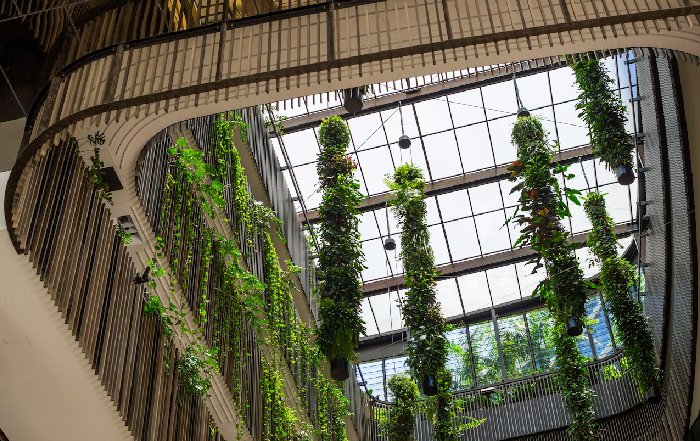
Integrating Biophilic Design into Workspaces for Well-Being and Sustainability
Biophilic Design at the Intersection of Work, Nature, and Sustainability
As organizations are now facing converging pressures from climate risk, workforce expectations, and regulatory scrutiny, the design of workspaces has become a strategic question rather than a purely aesthetic one. Biophilic design, the practice of integrating nature and natural processes into the built environment, has emerged as a powerful framework that connects employee well-being, environmental performance, and long-term business resilience. For YouSaveOurWorld.com, which focuses on sustainable living, responsible business, climate change, and personal well-being, biophilic workspaces are a natural focal point because they transform sustainability from an abstract corporate goal into a tangible, everyday experience for people at work.
Biophilic design is grounded in the concept of "biophilia," popularized by Edward O. Wilson, which proposes that humans possess an innate tendency to seek connection with nature and other forms of life. In office environments that have historically prioritized efficiency, density, and cost over human experience, this principle has often been neglected, leading to spaces that are technically functional yet psychologically draining and environmentally intensive. As hybrid work models mature and employees increasingly choose where and how they work, organizations that fail to consider biophilic principles risk not only reduced productivity and engagement, but also reputational and competitive disadvantage in an era when sustainable and human-centered workplaces are becoming a baseline expectation.
Readers seeking an overarching perspective on the relationship between environment, lifestyle, and work can explore how YouSaveOurWorld.com frames these issues through its dedicated coverage of sustainable living and personal well-being, both of which intersect directly with the evolution of the modern workplace.
The Science Behind Biophilic Workspaces
The case for biophilic design in work environments is not merely aesthetic sentiment; it is grounded in a growing body of evidence from environmental psychology, occupational health, and building science. Research synthesized by organizations such as Terrapin Bright Green and the International WELL Building Institute (IWBI) indicates that access to natural light, views of greenery, natural materials, and biomorphic patterns can reduce stress markers, improve cognitive function, and enhance overall mood and satisfaction at work. Readers interested in the broader science of healthy buildings can explore resources from the Harvard T.H. Chan School of Public Health's Healthy Buildings program, which has been influential in linking indoor environments to human performance.
Biophilic design strategies typically fall into three broad categories: direct experience of nature (such as plants, water, and natural light), indirect experience of nature (such as natural materials, colors, and imagery), and experience of space and place (such as refuge, prospect, and spatial variability that echo natural landscapes). When thoughtfully integrated, these elements can influence circadian rhythms, reduce visual fatigue, support mental restoration, and encourage informal social interaction, which in turn can enhance creativity and problem-solving. Organizations such as the World Green Building Council have highlighted how healthier, nature-connected offices contribute to lower absenteeism and higher retention, supporting the business case for investment in biophilic strategies; interested readers can learn more about the connection between green buildings and productivity on the WorldGBC website.
From a sustainability perspective, biophilic design also intersects with energy efficiency, material health, and climate adaptation. For example, optimizing daylight access can reduce dependence on artificial lighting, while operable windows and natural ventilation can lower cooling loads in appropriate climates. At the same time, the thoughtful selection of low-impact, responsibly sourced natural materials supports broader environmental objectives. YouSaveOurWorld.com explores these systemic links in its coverage of climate change and environmental awareness, demonstrating how workplace design decisions can contribute to or mitigate global environmental pressures.
Biophilic Design as a Strategic Business Lever
In 2026, biophilic design has moved from the fringes of progressive architecture into mainstream corporate strategy, particularly among organizations that understand the competitive importance of employee experience. Leading companies such as Microsoft, Salesforce, and Google have invested in nature-rich campuses with extensive greenery, outdoor work areas, and daylight-optimized interiors, recognizing that physical environments shape culture, collaboration, and brand identity. While not every organization can replicate the scale of these flagship projects, the underlying principle is widely applicable: workplaces that reflect care for people and the planet send a powerful signal to employees, customers, and investors about the organization's values and long-term vision.
From a financial perspective, the costs associated with biophilic interventions are often outweighed by the benefits in productivity, talent attraction, and reduced turnover. The World Economic Forum has repeatedly emphasized that human capital is a primary driver of value creation in the modern economy, and that investments in well-being and sustainable practices are central to future-ready business models; readers can explore this perspective further through the Forum's work on future of work and well-being. When organizations integrate biophilic design into their broader sustainability and ESG strategies, they also strengthen their narrative for stakeholders who scrutinize how environmental commitments translate into concrete action.
On YouSaveOurWorld.com, the connection between workspace design and corporate responsibility is framed within the broader discussion of sustainable business and business strategy. Biophilic design is positioned not as a superficial design trend, but as a practical mechanism for aligning operational realities with stated values around sustainability, employee care, and long-term resilience.
Biophilic Design and Climate-Aligned Workplaces
The climate crisis has reshaped expectations for corporate real estate and workplace design, with organizations increasingly expected to reduce emissions, adapt to climate risks, and support broader environmental goals. Biophilic design contributes to this agenda by encouraging passive design strategies that reduce energy demand, improve thermal comfort, and enhance resilience to heatwaves and other climate-related stresses. The Intergovernmental Panel on Climate Change (IPCC) has emphasized the importance of demand-side measures and energy-efficient buildings in achieving global climate targets, a perspective that aligns closely with the principles of climate-responsive, nature-integrated architecture; those seeking deeper scientific context can explore the IPCC reports.
In practical terms, climate-aligned biophilic workspaces may incorporate shading devices that echo natural patterns, green roofs that reduce urban heat island effects, indoor planting schemes that support humidity control, and building orientations that maximize natural light while minimizing glare and overheating. When combined with high-performance envelopes and smart building systems, these strategies can significantly reduce operational emissions while creating more comfortable and engaging environments for occupants. The U.S. Green Building Council (USGBC) and its LEED certification framework have increasingly recognized the value of biophilic strategies in achieving holistic sustainability performance; more information on green building standards and best practices is available from the USGBC.
For YouSaveOurWorld.com, which provides accessible explanations of global environmental challenges and their local implications, biophilic workplaces represent a tangible way for organizations to respond to climate change in their day-to-day operations. By designing offices that are both low-carbon and life-enhancing, businesses can demonstrate that climate responsibility and human-centered design are mutually reinforcing, not competing, priorities.
Materials, Waste, and Circular Thinking in Biophilic Workspaces
While many discussions of biophilic design focus on greenery and views, material choices and waste management practices are equally important from a sustainability and health perspective. A truly biophilic workplace must consider the full lifecycle of materials used in furniture, finishes, and fixtures, prioritizing low-toxicity, renewable, and recycled content wherever possible. Organizations such as the Ellen MacArthur Foundation have advanced the concept of a circular economy in which materials are kept in use for as long as possible and waste is minimized; readers can explore this framework through the foundation's resources on circular design and business.
In a biophilic context, circular principles might manifest as reclaimed wood surfaces, recycled metal fixtures, natural fiber textiles, and modular furniture systems designed for disassembly and reuse. These choices not only reduce environmental impact but also contribute to a sense of authenticity and connection to natural processes, especially when the provenance of materials is transparent and communicated to occupants. At the same time, effective waste management systems within the workplace, including clear segregation of recyclables, composting where feasible, and education about responsible disposal, reinforce the behavioral dimension of sustainability. YouSaveOurWorld.com addresses these themes through its coverage of waste and plastic recycling, emphasizing how everyday decisions in offices and homes contribute to broader environmental outcomes.
Global initiatives such as the United Nations Environment Programme (UNEP) also provide guidance on sustainable consumption and production, highlighting the role of businesses in transitioning to more resource-efficient models; those interested in the policy and international context can learn more via UNEP's work on resource efficiency. When organizations apply these principles to their workspaces, biophilic design becomes a bridge between aesthetic appeal and systemic environmental responsibility, demonstrating that beautiful, nature-inspired environments can also be low-waste and materially responsible.
Innovation and Technology in Biophilic Office Design
The rapid evolution of workplace technology has sometimes been portrayed as antithetical to nature, with screens, sensors, and automation creating increasingly artificial environments. However, in 2026, a more nuanced view is emerging in which technology is seen as an enabler of biophilic and sustainable design rather than a competitor. Smart building systems can optimize daylight and shading, monitor indoor air quality, and adjust ventilation rates in response to occupancy, enhancing comfort while minimizing energy use. Digital tools also allow designers to simulate daylight patterns, thermal performance, and acoustic conditions, enabling more precise integration of biophilic elements into complex office environments.
Organizations such as MIT's Senseable City Lab and various research centers at ETH Zurich and other leading universities have explored how data, sensors, and responsive systems can create more adaptive, human-centered spaces; interested readers can explore broader perspectives on technology and the built environment through resources from MIT's urban innovation initiatives. In a biophilic office, technology might support dynamic lighting that mimics natural daylight cycles, interactive displays that provide real-time information on environmental performance, or virtual windows that bring remote natural landscapes into windowless spaces when physical views are not possible.
For YouSaveOurWorld.com, which highlights the role of technology and innovation in advancing sustainability, this convergence is particularly significant. Biophilic design is no longer limited to static plant installations or material choices; it is increasingly about orchestrating an integrated system that combines natural elements, digital intelligence, and human behavior to create spaces that are responsive, restorative, and resource-efficient. When technology is deployed thoughtfully, it can help organizations measure the impact of biophilic interventions on energy use, indoor environmental quality, and even employee engagement, strengthening the evidence base for further investment.
Biophilic Workspaces, Lifestyle, and Personal Well-Being
The shift toward hybrid and flexible work has blurred the boundaries between professional and personal life, making the quality of work environments a lifestyle issue as much as an organizational one. Employees who spend part of their week in the office and part at home now compare these environments more consciously, seeking consistency in comfort, access to daylight, and opportunities for movement and restoration. Biophilic design offers a framework for creating coherence across these settings, whether through consistent use of natural materials, access to plants and outdoor spaces, or design cues that encourage regular breaks and mindful transitions between tasks.
Health organizations such as the World Health Organization (WHO) have underscored the importance of mental health and well-being in the workplace, particularly in the wake of the COVID-19 pandemic and subsequent societal shifts; more information on this topic is available through the WHO's work on mental health and healthy workplaces. Biophilic environments, which have been associated with reduced stress, improved mood, and enhanced cognitive restoration, can form a key component of organizational strategies to support psychological well-being and prevent burnout. When employees perceive that their workplace is designed with their health in mind, it can also foster a sense of trust and alignment with organizational values.
On YouSaveOurWorld.com, biophilic design is contextualized within broader discussions of lifestyle and personal well-being, emphasizing that sustainability is not only about environmental metrics but also about the quality of daily life. A nature-connected workspace can encourage healthier habits, from walking meetings in outdoor areas to mindful pauses in quiet, plant-filled zones, reinforcing the idea that sustainable living begins with the environments in which people spend most of their waking hours.
Education, Culture, and Organizational Change
Integrating biophilic design into workspaces is not solely a matter of physical refurbishment; it requires cultural and educational initiatives that help people understand, value, and maintain these environments. Without clear communication and shared ownership, plant installations can be neglected, quiet restorative zones can be misused, and energy-saving features can be overridden or ignored. Forward-looking organizations therefore pair design interventions with training, storytelling, and engagement programs that explain the rationale behind biophilic elements and encourage employees to participate in their stewardship.
Educational institutions and professional organizations, including The American Institute of Architects (AIA) and various design schools, have begun to integrate biophilic and regenerative design principles into their curricula, recognizing that future architects, interior designers, and facility managers must be equipped to deliver nature-integrated environments at scale. Readers interested in formal frameworks and case studies can explore resources from Biophilic Cities and other networks that promote nature in urban environments, as well as broader materials on sustainable design education from professional bodies such as the Royal Institute of British Architects (RIBA).
For YouSaveOurWorld.com, education is a core pillar, reflected in its dedicated section on education. By translating specialist knowledge about biophilic design into accessible guidance for business leaders, employees, and designers, the platform helps bridge the gap between theory and practice. This educational role is particularly important for small and medium-sized enterprises that may not have in-house sustainability or workplace strategy teams, yet still wish to create healthier, more sustainable environments for their people.
Economic and Strategic Implications in 2026
In a global economy characterized by uncertainty, rapid technological change, and intensifying environmental risk, investment in biophilic workplaces can be viewed as a form of strategic insurance as well as an operational enhancement. Real estate portfolios that are aligned with health, sustainability, and flexibility trends are more likely to retain value and remain attractive to tenants and employees, while outdated, sealed, and resource-intensive buildings risk becoming stranded assets. Economic analyses from organizations such as the OECD and McKinsey & Company have underscored that green and human-centric buildings are integral to resilient, low-carbon growth; readers can delve deeper into these macroeconomic perspectives through resources on green growth and productivity from the OECD.
From an organizational standpoint, biophilic design can also support broader transformation efforts, including diversity and inclusion, innovation culture, and agile working. Spaces that offer varied settings-quiet refuges, collaborative hubs, outdoor or semi-outdoor work areas-can accommodate a wider range of work styles and accessibility needs, making the workplace more inclusive and supportive of different personalities and life circumstances. This spatial diversity, when guided by biophilic principles, can foster serendipitous encounters and creative thinking, aligning with the innovation agendas of many forward-looking companies.
YouSaveOurWorld.com situates these developments within its broader analysis of the economy and business, emphasizing that the economic rationale for sustainability is now as compelling as the ethical one. In this context, biophilic design is not an optional embellishment but a strategic component of modern, future-proof workplaces that support performance, attract talent, and embody corporate purpose.
Where are YouSaveOurWorld.com in Advancing Biophilic Workspaces?
As a platform dedicated to connecting sustainable living, business responsibility, innovation, and personal well-being, YouSaveOurWorld.com occupies a distinctive position in the evolving conversation about biophilic design. Rather than treating workspace design as a niche professional topic, it presents biophilic principles as part of a continuum that runs from individual lifestyle choices to organizational strategy and global environmental outcomes. Through its coverage of sustainable living, sustainable business, climate change, and innovation, the site demonstrates how integrating nature into workplaces can support both planetary health and human flourishing.
The platform's emphasis on practical guidance, accessible explanations, and cross-cutting themes helps business leaders and professionals understand how biophilic design intersects with topics such as waste reduction, responsible materials, employee well-being, and technological innovation. By highlighting case studies, emerging research, and actionable strategies, YouSaveOurWorld.com encourages organizations of all sizes to see their workspaces as levers for positive change rather than static cost centers. In doing so, it reinforces the message that every office, studio, or co-working space can become a microcosm of a more sustainable, regenerative future.
As the world moves deeper into the decisive decade for climate action and social transformation, the integration of biophilic design into workspaces represents a concrete, visible, and emotionally resonant way to align daily life with long-term sustainability goals. For readers exploring how to translate environmental awareness into meaningful action at work and at home, YouSaveOurWorld.com serves as a guide, demonstrating that the path to a healthier planet runs through the very spaces where people think, collaborate, and create value every day.
