
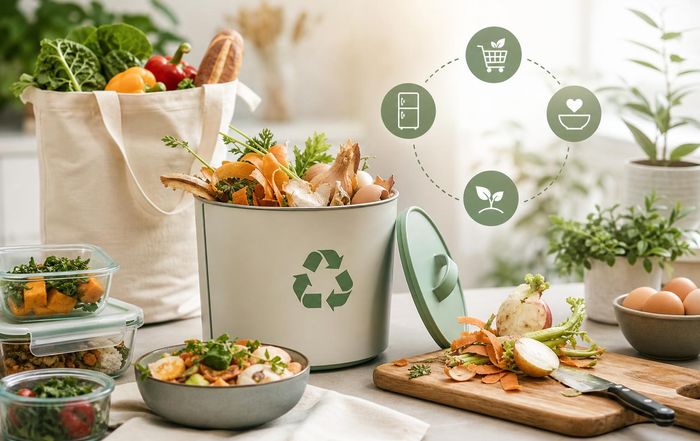
How to Reduce Food Waste Without Changing Your Entire Diet
Many people want to cut food waste for environmental and financial reasons, but feel overwhelmed by advice that seems to demand a complete lifestyle overhaul: go zero-waste, cook everything from scratch, grow your own food. For most households, that is neither realistic nor necessary. It is possible to make a meaningful difference without switching to a totally new way of eating.
This yummy article focuses on practical, low-friction changes that fit around the way you already shop, cook, and eat. The aim is not perfection, but progress: shrinking your bin, saving money, and lowering your climate impact while still enjoying the foods you like.
Food waste is a climate issue as well as a moral and economic one. The UN Environment Programme estimates that hundreds of millions of tonnes of food are wasted each year globally, much of it at household level. When food is thrown away, the land, water, energy, and labour that went into producing it are also wasted, and discarded food often generates methane in landfill. Yet most of this waste comes from small, everyday habits that can be tweaked without adopting a radically "sustainable" diet. For readers interested in broader lifestyle shifts, our pages on sustainable living, waste, and climate change provide more context. Here, the focus stays firmly on simple, realistic actions.
Why food waste happens in ordinary households
Understanding why food gets wasted is more useful than memorising tips. Research from organisations such as WRAP in the UK and the US Department of Agriculture (USDA) shows that most household food waste falls into a few predictable patterns, which are remarkably similar across many countries.
A major cause is over-buying, often driven by shopping when hungry, buying in bulk because something is on promotion, or failing to check what is already at home. People frequently purchase ingredients for ambitious new recipes and then default to familiar meals, leaving the new items unused. Another common pattern is poor visibility in the fridge and cupboards: food gets pushed to the back, hidden in opaque containers, or duplicated because nobody realised there were already three half-used jars of the same product. This is particularly true for perishable items like salad leaves, berries, and dairy products.
Date label confusion also plays a role. Surveys by bodies such as the Food and Agriculture Organization (FAO) and European Commission suggest that many consumers throw away food that is still safe to eat because they misunderstand "best before" and "use by" dates. In many countries, "best before" indicates quality rather than safety; food may still be edible after this date, especially when it has been properly stored. "Use by" is stricter and usually relates to safety, particularly for chilled animal products. But because the terminology and regulation differ across regions, many people default to discarding anything that looks "out of date," even if it smells and looks fine.
Portion sizes are another issue. Cooking too much rice, pasta, or meat and then failing to use leftovers is a major contributor to waste. This is often compounded by social norms: hosts feel obliged to provide more food than guests will eat, and parents may over-serve children in the hope they will eat more. At the same time, many households lack confidence in using leftovers creatively, or worry about food safety when reheating.
Finally, there are psychological and cultural factors. In some contexts, abundance is associated with hospitality or success, and partly eaten plates are tolerated or even expected. In others, people may feel guilty about eating "imperfect" fruit and vegetables, or see slightly wilted produce as unworthy of serving. Recognising these patterns helps explain why food waste is not simply a matter of "caring more" about the environment; it is often about ingrained habits and subtle expectations. The encouraging news is that small, targeted adjustments can disrupt these patterns without requiring a complete change of diet.
Smarter shopping without strict meal plans
Meal planning is often presented as the cornerstone of reducing food waste, but detailed weekly plans do not suit everyone. Work schedules change, children's tastes fluctuate, and social plans appear at the last minute. Instead of rigid planning, a lighter-weight approach can cut waste while preserving flexibility.
One effective strategy is to plan only the "anchor" meals that are least likely to change: perhaps a couple of dinners you know you will cook at home, or the lunches you routinely bring to work. For these, make a short list of specific ingredients. Then create a second list of versatile staples-items like eggs, frozen vegetables, canned beans, or grains-that can be used in many different meals. This two-tier approach reduces the risk of buying perishable ingredients for recipes you never make, while ensuring you still have options if plans change.
Before shopping, a quick "fridge and cupboard scan" is more important than a perfect plan. Spending two or three minutes checking what needs to be used soon can redirect your purchases: perhaps you buy a sauce that works with the vegetables you already have, rather than a new set of ingredients that will compete for attention. Keeping a running note on your phone of items that are nearly finished-milk, bread, cooking oil-helps avoid duplicate purchases. This is especially useful for shared households where multiple people shop.
Choosing packaging and formats carefully can also reduce waste without changing what you eat. If you rarely finish a large tub of yoghurt before it spoils, a slightly smaller size may be better value overall, even if the price per gram is higher. Conversely, if you reliably use a staple like oats or rice, buying in bulk can reduce both packaging and cost. Many supermarkets now offer "wonky" or "imperfect" produce at a discount. As long as it is fresh, there is no nutritional downside to choosing these items, and it helps divert food that might otherwise be discarded.
For readers interested in the broader economic and business implications of these choices, our economy and business sections explore how consumer behaviour shapes supply chains. At household level, however, the goal is simple: buy what you will actually eat, in forms that fit your real habits rather than your idealised ones.
Making your fridge, freezer, and cupboards work for you
Storage is one of the most overlooked levers for reducing food waste. Small changes in how food is organised and contained can significantly extend its usable life and make it easier to see and use what you already own. Guidance from food safety agencies such as the US Food and Drug Administration (FDA) and Food Standards Agency (FSA) emphasises that correct temperature and storage can both reduce waste and protect health.
A good starting point is to treat your fridge and pantry as active tools, not passive spaces. In practice, this means designating a visible "eat me first" area-perhaps a front shelf or a basket-where you place items that are close to their date or already opened. Whenever you open the fridge, this area acts as a prompt, nudging you to incorporate these foods into your next meal. The same principle works in cupboards: a small box for "open packets and jars" can stop half-used items getting lost behind newer purchases.
Transparent containers make a difference. Leftovers stored in clear glass or plastic containers are more likely to be eaten than those wrapped in foil or stored in opaque tubs, simply because you can see them. Labelling containers with the date they were cooked, using masking tape or a washable marker, reduces uncertainty about how long something has been there. Many public health agencies provide simple guidance on how long common leftovers remain safe in the fridge; checking resources from organisations like the World Health Organization (WHO) or your national food safety authority can clarify this.
Freezers are powerful tools for preventing waste, yet are often underused or poorly organised. Most cooked dishes, from soups and stews to cooked grains and sliced bread, freeze well. Freezing does not require a change in diet; it simply spreads the same meals over a longer period. To make this work, freeze in portions that match how you actually eat. For example, freezing bread in half-loaves or sliced portions allows you to defrost only what you need. Labelling freezer containers with both content and date reduces the risk of mystery boxes accumulating.
Temperature matters too. Many households keep fridges slightly warmer than recommended. Food safety authorities typically suggest a refrigerator temperature of around 4°C (40°F) or below. Using a simple fridge thermometer can confirm whether your appliance is in the safe zone, which can extend the life of perishable foods while reducing the risk of spoilage and foodborne illness.
For readers who want to delve deeper into how home design and technology can support lower-waste living-from smart fridges to storage-optimised kitchens-our design and innovation pages explore these themes more fully.
Using dates, senses, and safety together
A significant amount of edible food is discarded because of confusion about date labels and safety. While regulations differ across countries, a few general principles can help most households waste less without compromising health.
In many regions, "use by" dates are about safety, especially on chilled animal products such as fresh meat, fish, and some dairy. These foods should not be eaten after the "use by" date unless they have been frozen before that date and are cooked thoroughly after defrosting, following official guidelines. On the other hand, "best before," "best if used by," or similar wording usually refers to quality, not safety. Products such as dried pasta, rice, canned goods, and many snacks are often perfectly safe to eat after the best-before date, though texture or flavour might gradually decline.
International campaigns led by groups such as Too Good To Go and REFED emphasise the importance of using your senses-sight, smell, and sometimes taste-alongside date labels. For example, yoghurt that smells fresh and looks normal is likely safe even if it is slightly past its best-before date, assuming it has been stored correctly and the packaging is intact. Bread that is a few days old but free from visible mould can be toasted, made into croutons, or used in recipes, even if it is no longer soft enough for sandwiches.
However, relying solely on senses can be misleading for certain high-risk foods, especially those associated with pathogens that do not change smell or appearance. That is why cross-checking with trusted guidance from organisations such as the Centers for Disease Control and Prevention (CDC) or your national food safety agency is wise, particularly when you are unsure how long cooked leftovers can safely be kept. Many agencies publish simple charts for fridge and freezer storage times.
The key is to avoid two extremes: ignoring date labels entirely, which can be unsafe, and treating them as absolute cut-off points for all foods, which leads to unnecessary waste. A balanced approach-respecting safety-critical labels, particularly on meat and fish, but being flexible with low-risk dry goods-reduces waste without asking you to change what you eat. It simply changes when you decide something genuinely needs to be discarded.
Leftovers as convenience, not compromise
For many households, leftovers are associated with compromise: something to tolerate when you are too frugal or too busy to cook something "proper." Reframing leftovers as a form of ready-made convenience food can dramatically reduce waste without altering your diet. You are still eating the meals you like; you are just enjoying them twice.
One practical shift is to cook with intentional leftovers in mind. When preparing a meal you enjoy, consider making slightly more of the elements that store well-such as grains, roasted vegetables, or sauces-rather than extra components that do not reheat nicely. The additional portions can become lunches, quick dinners, or building blocks for new dishes. For example, extra roasted vegetables can be turned into a frittata, blended into soup, or added to salads. Cooked grains like rice or quinoa can be fried with eggs and vegetables, or used in grain bowls.
To make leftovers genuinely convenient, think about where and when they will be eaten. If you often eat lunch at work, portion meals directly into containers as you clear up dinner, rather than storing everything in one large dish. This small step reduces friction the next morning and increases the chance the food will actually be used. Labelling containers with the meal name and date can also make your fridge feel more like a curated selection of options than a jumble of unknowns.
Food safety remains important. Many public health bodies advise cooling leftovers quickly and refrigerating them within a couple of hours, then reheating until steaming hot when eaten. Following these basic rules allows you to enjoy leftovers confidently. For more on how food choices intersect with personal well-being, including nutrition and stress around meal preparation, readers can explore related content on our site.
Culturally, normalising leftovers helps too. Serving a "buffet" of different small portions at the end of the week, or combining leftovers into a shared meal, can make the practice feel intentional rather than second-best. Many families designate one evening as a "use-it-up night," which can become a weekly ritual. None of this requires new recipes or ingredients; it simply makes better use of what is already there.
Small cooking tweaks that cut waste
Even if you have no interest in changing your overall diet, minor adjustments to how you cook can significantly reduce waste. These tweaks focus on using more of the ingredients you already buy, rather than swapping them for something else.
One straightforward change is to use edible parts of plants that are often discarded. Carrot tops, beet greens, and broccoli stems, for instance, are frequently thrown away despite being nutritious. While not everyone will want to eat every part of every vegetable, incorporating some of these into soups, stir-fries, or stocks can reduce waste without altering the main dish. Food agencies and culinary schools increasingly publish guidance on safe and tasty ways to use such "secondary" parts of common ingredients, and organisations like the James Beard Foundation have highlighted professional chefs who do this routinely.
Another tweak is to adjust default portion sizes. If certain foods-like rice, pasta, or potatoes-regularly end up uneaten on plates, slightly reducing the amount cooked can have a significant cumulative effect over weeks and months. This does not require calorie counting; it can be as simple as using a smaller mug to measure rice or learning how many handfuls of pasta people in your household typically finish. If someone is still hungry, it is easier to offer fruit or bread than to rescue food that has already been left on a plate.
Using "base recipes" that are flexible about ingredients can also help. Dishes like omelettes, stir-fries, fried rice, pasta with vegetables, or grain bowls are inherently adaptable, allowing you to incorporate whatever needs using rather than buying something new. Having a mental list of two or three such fallback meals makes it easier to respond when you notice produce approaching its limit. These dishes can be adapted to almost any cuisine or dietary preference, from plant-based to meat-heavy, so they do not demand a change in the broad pattern of what you eat.
For readers interested in how these techniques fit into broader sustainable living and lifestyle choices, it is worth noting that many traditional cuisines around the world have long relied on such flexible, low-waste dishes-soups, stews, casseroles, and porridges-often developed in response to scarcity and seasonality. Modern households can draw on this heritage without adopting a radically different diet.
Dining out, takeaway, and the "last mile" of waste
Food waste does not only happen at home. Restaurants, cafés, and takeaway services are significant sources of waste, though in many countries they are increasingly working to reduce it. Consumers can influence this "last mile" without giving up eating out or ordering in.
When dining out, being realistic about how hungry you are and how large portions are likely to be is a simple but often overlooked step. Many restaurants serve portions that are larger than most people need. Sharing side dishes, skipping an extra course, or asking about portion size before ordering can prevent food being left uneaten. If leftovers remain and local food safety norms permit, taking them home can provide an extra meal. Some cities and countries now encourage this practice explicitly, and many establishments are happy to provide containers.
Ordering takeaway offers similar opportunities. Choosing dishes that reheat well-such as curries, stews, or rice-based meals-makes it easier to enjoy leftovers later in the week. If you know from experience that a particular restaurant's portions are large, ordering one dish fewer than the number of people eating, and supplementing with items you already have at home, can reduce both cost and waste.
On the supply side, various apps and platforms connect consumers with surplus food from restaurants, bakeries, and supermarkets at discounted prices. Organisations like Too Good To Go and Olio operate in multiple countries, allowing users to purchase or share food that would otherwise be discarded. While availability varies by location, participating in such schemes can lower your food bill and support broader waste-reduction efforts without changing what you like to eat.
From a sustainable business perspective, there is growing interest in how hospitality and retail sectors can redesign menus, buffets, and inventory systems to minimise waste. Consumers who value low-waste practices can encourage this trend by supporting establishments that are transparent about their efforts, whether through portion control, donation programmes, or creative use of surplus ingredients.
When food really cannot be eaten: better disposal options
Even with the best intentions, some food will always be inedible: bones, eggshells, coffee grounds, spoiled items. How this waste is handled still affects its environmental impact. While prevention is more important than disposal, understanding your options can help close the loop.
In many cities and regions, municipal or private services now collect food scraps separately for composting or anaerobic digestion. These processes can turn waste into soil amendments or biogas, reducing methane emissions compared with landfill. Checking your local authority's guidance or waste management company's website can clarify what is accepted; in some programmes, cooked food and meat are allowed, while in others only plant-based scraps are permitted.
Home composting is another option, particularly for those with a garden or access to shared green space. Basic composting works well for fruit and vegetable scraps, coffee grounds, and some paper products, though meat and dairy are usually excluded to avoid odour and pests. Resources from organisations such as Garden Organic in the UK or national agricultural extension services provide simple guidance on starting and maintaining a compost system. For apartment dwellers, systems like worm composting or small sealed units can handle modest amounts of waste without outdoor space.
Where neither municipal collection nor home composting is feasible, reducing waste at the source becomes even more important, since most discarded food will end up in mixed rubbish destined for landfill or incineration. From a broader environmental awareness perspective, advocating for better food waste infrastructure at local or national level can be a meaningful civic action, complementing individual efforts.
Choosing low-waste habits that fit your life
The most effective way to reduce food waste without changing your entire diet is to focus on a few habits that feel easy and natural in your particular circumstances. For some people, that might be embracing the freezer and labelling leftovers. For others, it might be a weekly "use-it-up" meal, a quick fridge scan before shopping, or learning to trust their senses with best-before dates.
Behavioural research from institutions such as Stanford University, Harvard University, and other academic centres suggests that small, specific changes are more likely to stick than broad resolutions. Instead of aiming to "never waste food again," it can be more realistic to set a modest, concrete goal: for example, halving the amount of salad that ends up in the bin, or ensuring that bread is always frozen before it goes stale. Over time, these modest commitments often lead to wider shifts in how people think about food, sustainability, and consumption.
Healthy happy people who want to connect these everyday actions to global issues can explore our global and sustainable living sections, which look at how individual choices intersect with food systems, climate policy, and economic structures. But it is worth emphasising that meaningful impact does not require radical dietary change. Simply buying what you will actually eat, storing it well, and finding satisfying ways to enjoy leftovers can significantly reduce waste, save money, and lighten your household's environmental footprint-while still letting you eat the foods you already love.
