
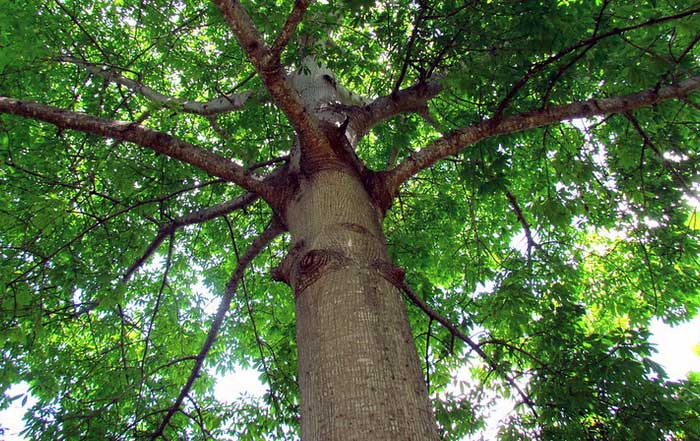
Trees, Climate, and Commerce: Why Strategic Tree Planting Is Now Core Business in 2026
Trees have shifted, decisively and irreversibly, from being perceived as a scenic backdrop to being recognized as strategic assets in climate resilience, public health, and long-term economic performance. By 2026, the convergence of climate science, urban planning, and corporate sustainability has made tree planting and forest conservation central to how forward-looking organizations, cities, and investors define risk, opportunity, and value creation. For YouSaveOurWorld.com, which focuses on connecting sustainable living with business strategy and global impact, trees are no longer simply a symbol of environmentalism; they are a measurable, finance-relevant and technology-enabled lever for managing climate risk, strengthening communities, and building durable competitive advantage.
This reframing is underpinned by mounting evidence from institutions such as the Intergovernmental Panel on Climate Change (IPCC) and the World Bank, which quantify how forest ecosystems underpin climate stability, water security, and economic resilience. At the same time, regulatory frameworks, investor expectations, and consumer preferences have evolved rapidly. Companies that once treated tree planting as a philanthropic gesture now embed it within climate transition plans, nature-related risk disclosures, and net-zero roadmaps, while cities integrate urban forestry into infrastructure planning, public health strategies, and climate adaptation programs. Within this landscape, the mission of YouSaveOurWorld.com is to translate this complex, fast-changing picture into actionable insights for individuals, communities, and businesses seeking to align daily decisions with a credible sustainability strategy.
Trees as Critical Infrastructure for a Warming World
The scientific consensus in 2026 is unequivocal: limiting global warming to 1.5-2°C requires both rapid emissions reductions and large-scale enhancement of natural carbon sinks, with forests playing a pivotal role. Trees absorb and store carbon dioxide, but their strategic importance extends far beyond sequestration. They regulate local and regional climates, stabilize soils, protect watersheds, and support biodiversity, all of which are now recognized as material to economic stability and social well-being.
Forests and urban tree canopies are increasingly treated as critical infrastructure, not optional amenities. In dense cities, strategically planted trees reduce the urban heat island effect, lowering peak temperatures and reducing energy demand for cooling, which directly affects energy costs, grid stability, and public health. In rural and peri-urban regions, forested landscapes mitigate flood risk, support agriculture through microclimate regulation, and provide ecosystem services that underpin food and water security. These interdependencies are central to the themes explored across YouSaveOurWorld.com, from sustainable living and climate change to the evolving role of business in a resource-constrained world.
Global institutions such as the World Resources Institute and the Food and Agriculture Organization of the United Nations have, over the past decade, sharpened their analyses of how forest loss amplifies climate risks and economic volatility. At the same time, the Taskforce on Nature-related Financial Disclosures (TNFD) has accelerated the integration of nature into financial decision-making, prompting boards and executives to treat tree cover, watershed integrity, and biodiversity as issues of fiduciary responsibility rather than optional corporate responsibility.
Urban Air Quality, Health, and the Business Case for Green Cities
In many metropolitan regions, air quality has become both a public health emergency and a business risk. Fine particulate matter and nitrogen oxides from traffic and industry increase healthcare costs, reduce worker productivity, and shorten lifespans. Trees, through photosynthesis and deposition of airborne particles on leaves and bark, offer a cost-effective complement to technological pollution controls. Research summarized by the World Health Organization shows that urban green infrastructure, when properly planned, can significantly reduce concentrations of pollutants in densely populated districts.
For municipal decision-makers, the economics are increasingly compelling. Investments in urban forestry deliver multiple co-benefits: lower healthcare costs, higher property values, improved worker performance, and enhanced attractiveness for talent and tourism. For companies, locating offices and facilities in greener districts can be linked to reduced absenteeism and higher employee satisfaction. This is why urban greening is now often embedded in broader sustainability and wellness strategies, connecting environmental performance with personal well-being and long-term workforce resilience.
At YouSaveOurWorld.com, these dynamics are framed not only as environmental imperatives but as integral to sustainable business strategy. As organizations seek to strengthen their social license to operate, initiatives that improve local air quality and public health through tree planting and green corridors are increasingly featured in environmental, social, and governance (ESG) reporting and stakeholder engagement.
Cooling Cities, Stabilizing Energy Demand, and Protecting Infrastructure
The record-breaking heatwaves of the early 2020s demonstrated how vulnerable cities and energy systems are to extreme temperatures. Heat-related mortality surged, infrastructure buckled, and electricity grids faced unprecedented stress from air-conditioning demand. In this context, trees emerged as a practical, scalable tool for adaptation. Their shade and evapotranspiration can reduce local ambient temperatures by several degrees, with measurable impacts on peak electricity load and building cooling costs.
Urban planners now routinely integrate canopy cover targets into zoning regulations and resilience plans, recognizing that tree-lined streets, parks, and green roofs can delay or reduce the need for expensive grey infrastructure upgrades. This integration of ecology and engineering aligns closely with YouSaveOurWorld.com's focus on innovation and technology, where natural systems are treated as performance-enhancing assets rather than constraints.
Organizations such as NASA and the European Space Agency have contributed significantly to this shift by using satellite data to map urban heat islands, monitor canopy cover, and model the cooling benefits of different greening strategies. These data-driven insights have made it possible for city leaders and businesses to quantify the return on investment of tree planting, moving the conversation from aesthetic preference to risk management and cost optimization.
Trees, Noise, and the Human Experience of the City
While climate and carbon dominate much of the public discourse, the quieter yet profound influence of trees on the sensory and psychological quality of urban life is increasingly recognized. Dense vegetation acts as a natural sound barrier, softening traffic noise and industrial hum, and providing spaces where residents and workers can experience relative calm. This has direct implications for mental health, stress levels, and overall life satisfaction.
Evidence from environmental psychology, highlighted by organizations such as National Geographic and leading academic centers, shows that regular exposure to tree-rich environments is correlated with lower stress, improved attention, and better long-term health outcomes. For employers, these findings reinforce the business case for integrating greenery into office campuses, logistics hubs, and retail environments, linking environmental design to employee performance and customer experience. For cities, tree-lined streets and parks become part of a broader strategy to enhance liveability, retain residents, and attract investment.
On YouSaveOurWorld.com, the intersection of green spaces, mental health, and productivity is explored not only from an environmental standpoint but as a core dimension of sustainable lifestyle and holistic well-being. Trees, in this framing, are not simply carbon sinks; they are foundational to how people experience and navigate increasingly dense and digital urban environments.
Natural Defenses Against Extreme Weather and Systemic Risk
As climate impacts intensify, the role of trees and forests as natural defenses against extreme weather has become a central theme in climate adaptation planning. Coastal mangroves, riparian forests, and upland woodlands help dissipate storm surges, stabilize riverbanks, and reduce landslide and erosion risks. Their contribution to disaster risk reduction is now quantified in economic terms, with studies by the United Nations Environment Programme and the World Bank estimating billions of dollars in avoided damages when natural infrastructure is preserved or restored.
This recognition has led to a revaluation of land and asset portfolios. Insurers and reinsurers increasingly factor nature-based defenses into their risk models and pricing, while governments and businesses collaborate on large-scale reforestation and conservation projects around critical infrastructure such as ports, highways, and industrial zones. These developments are closely aligned with the themes of global risk and opportunity that YouSaveOurWorld.com examines, emphasizing how local tree planting decisions can contribute to macro-level resilience.
For businesses, especially those with extended supply chains across climate-vulnerable regions, supporting forest conservation and landscape restoration is now understood as a strategic investment in continuity and risk reduction. This perspective underscores the importance of integrating nature-based solutions into corporate climate adaptation plans, rather than treating them as separate philanthropic initiatives.
Carbon Sequestration, Integrity, and the Evolving Market for Nature-Based Solutions
The rapid expansion of voluntary carbon markets in the early 2020s placed forests and tree planting at the center of corporate net-zero strategies. However, controversies around additionality, permanence, and community rights exposed the risks of treating trees as simple offsets rather than complex living systems. By 2026, standards and expectations have evolved substantially. Organizations such as the Science Based Targets initiative (SBTi) and the Integrity Council for the Voluntary Carbon Market now emphasize that nature-based solutions must complement, not substitute, deep emissions reductions.
In this context, high-quality forest projects are characterized by rigorous monitoring, transparent governance, and genuine co-benefits for local communities and biodiversity. Tree planting is increasingly embedded in landscape-level strategies that consider species diversity, ecological integrity, and long-term stewardship. This aligns with YouSaveOurWorld.com's emphasis on environmental awareness, where readers are encouraged to scrutinize claims, understand underlying methodologies, and support initiatives that balance carbon objectives with social justice and ecosystem health.
Leading conservation organizations such as The Nature Conservancy and research outlets like Scientific American have played a crucial role in clarifying best practices and exposing greenwashing. Their work has helped businesses and investors distinguish between superficial tree-planting claims and robust, science-based projects that truly contribute to climate mitigation and resilience.
Biodiversity, Food Systems, and the Hidden Economic Value of Trees
Trees are keystones of biodiversity, providing habitat, food, and migration corridors for countless species. The erosion of forest ecosystems has direct implications for agriculture, water availability, and disease regulation, all of which are central to economic stability. Pollinators, natural pest predators, and soil organisms depend on diverse, healthy landscapes; their decline can disrupt food systems and raise input costs for farmers and food companies.
Agroforestry-integrating trees into agricultural systems-has gained prominence as a practical approach to enhancing resilience, diversifying income, and improving soil health. In Latin America, Africa, and Asia, successful case studies show how trees on farms can stabilize yields, improve microclimates, and open access to premium markets for sustainably produced commodities. These approaches resonate strongly with the integrated view of environment and economy promoted on YouSaveOurWorld.com, where sustainable agriculture, forest conservation, and climate resilience are treated as interlocking elements of long-term prosperity.
Institutions such as the Food and Agriculture Organization of the United Nations and the Convention on Biological Diversity have, in recent years, underscored the need to align forest and agricultural policies, moving beyond siloed approaches. For business leaders, this means that strategies for supply chain resilience, market differentiation, and regulatory compliance increasingly depend on how effectively they support tree-rich, biodiverse landscapes.
Community Cohesion, Education, and the Social License to Operate
Tree planting has proven to be a powerful catalyst for community engagement and environmental education. When residents participate in planning, planting, and caring for trees, they develop a sense of shared ownership and stewardship that extends beyond individual plots or projects. This social dimension is critical for the long-term success of urban forestry and reforestation efforts, as trees require ongoing care, protection, and integration into local decision-making.
For businesses and institutions, partnering with communities on tree-planting initiatives can strengthen trust, enhance brand reputation, and build a more resilient operating environment. However, the most effective partnerships are those that respect local knowledge, address community priorities, and provide tangible social and economic benefits. This perspective aligns with YouSaveOurWorld.com's emphasis on education and empowerment, where environmental action is framed as a collaborative, inclusive process rather than a top-down directive.
International organizations such as the United Nations Development Programme and global media outlets like BBC News have showcased how community-led reforestation projects can transform degraded landscapes, revive local economies, and foster social cohesion. These stories reinforce a key message: tree planting is most impactful when it is embedded in broader efforts to enhance livelihoods, strengthen local governance, and expand access to environmental education.
Technology, Data, and the Professionalization of Tree Planting
The practice of tree planting has been transformed by technology. Remote sensing, artificial intelligence, and drones have made it possible to map degraded lands, monitor forest health, and optimize planting strategies with unprecedented precision. Startups and established firms alike now offer end-to-end solutions that combine site assessment, species selection, planting logistics, and long-term monitoring, turning tree planting into a data-rich, performance-managed activity.
Satellites operated by NASA, the European Space Agency, and private providers deliver high-resolution data on canopy cover, moisture levels, and land-use change, enabling investors, regulators, and the public to verify claims about reforestation and conservation. This transparency is critical for building trust in nature-based solutions and ensuring that financial flows support genuinely effective projects. It also creates new opportunities for innovation in fields such as environmental fintech, climate risk analytics, and sustainable design.
For YouSaveOurWorld.com, this technological shift reinforces the importance of bridging environmental science, business strategy, and digital innovation. Tree planting is no longer a purely manual or symbolic act; it is a sophisticated, data-informed discipline that requires cross-functional expertise in ecology, engineering, finance, and community engagement.
Integrating Trees into Business Strategy and Urban Policy
By 2026, leading organizations treat trees and forests as strategic assets that intersect with risk management, brand positioning, regulatory compliance, and innovation. In practice, this means integrating tree-related considerations into core processes: site selection, facility design, logistics planning, supply chain management, and employee engagement. It also means aligning corporate initiatives with city-level plans for green infrastructure, climate adaptation, and public health.
Cities, for their part, are embedding canopy targets, biodiversity corridors, and nature-based solutions into building codes, infrastructure investments, and zoning regulations. This alignment of public policy and private strategy is essential for scaling impact and avoiding fragmented, short-lived projects. It also reflects a deeper understanding that environmental integrity is inseparable from long-term economic competitiveness and social stability.
On YouSaveOurWorld.com, this integrated perspective is reflected across content on sustainable business, waste, and plastic recycling, where trees and forests are consistently positioned within broader systems of production, consumption, and urban development. Readers are encouraged to see tree planting not as an isolated act, but as part of a coherent strategy that spans lifestyle choices, investment decisions, and organizational governance.
A Long-Term Vision: Trees as the Backbone of a Regenerative Economy
Looking ahead, the role of trees in shaping a regenerative, low-carbon economy will only grow in significance. As climate impacts intensify and resource pressures mount, societies will increasingly depend on forests and tree-rich landscapes to stabilize ecosystems, support food and water security, and buffer communities against shocks. At the same time, the expectations placed on businesses, investors, and governments to demonstrate credible, science-based action on climate and nature will continue to rise.
For YouSaveOurWorld.com, the task is to help individuals and organizations navigate this evolving landscape with clarity, integrity, and ambition. This involves highlighting best practices, exposing superficial or misleading claims, and emphasizing the interconnectedness of environmental, economic, and social systems. Trees, in this narrative, are both a practical tool and a powerful symbol: they embody the patience, foresight, and collaboration required to build a future in which prosperity is aligned with planetary boundaries.
By embedding tree planting and forest conservation into everyday decisions-from city planning and corporate strategy to household choices and educational curricula-societies can move beyond incremental change toward genuinely transformative progress. In that journey, the insights, resources, and perspectives curated by YouSaveOurWorld.com aim to support readers in translating awareness into action, ensuring that every tree planted contributes meaningfully to a more resilient, equitable, and thriving world.
