
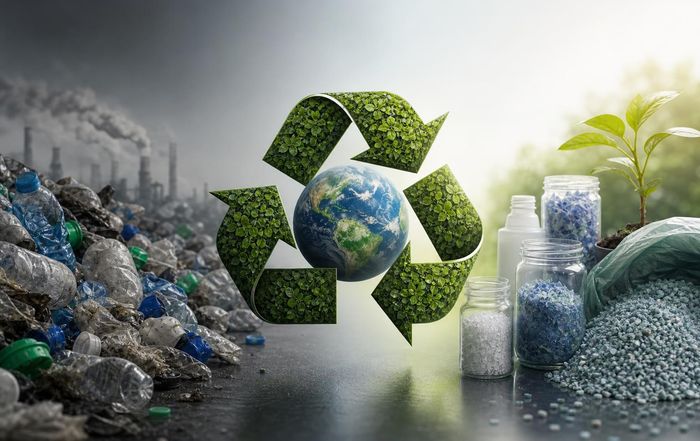
Plastic Recycling Challenges and Practical Solutions!
Introduction: Why Plastic Recycling Still Matters
Waaaa, plastic remains both a cornerstone of the global economy and one of the most visible symbols of environmental strain, and for the community that gathers around YouSaveOurWorld, the question is no longer whether plastic is a problem, but how to realistically transform the systems that produce, use, and attempt to recycle it. Despite years of commitments from governments, multinational corporations, and international bodies such as the United Nations, global plastic production continues to rise, and recycling rates in many regions remain stubbornly low. Yet, amid this complexity, there is an emerging body of practical knowledge, technological innovation, and business strategy that shows how plastic recycling can move from aspirational rhetoric to measurable impact.
Keen readers who follow the sustainable living and circular economy insights on YouSaveOurWorld's sustainable living section are accustomed to nuanced perspectives that balance environmental urgency with economic realism, and plastic recycling is a domain where that balance is especially critical. Understanding the real challenges-technical, economic, regulatory, and behavioral-allows decision-makers and citizens to distinguish between symbolic gestures and structural solutions, and to align personal choices, corporate strategies, and public policies with credible pathways toward a lower-waste, lower-carbon future.
The Scale of the Plastic Problem in 2026
By 2026, global plastic production has surpassed 400 million metric tons annually, with a significant portion designed for short-lived applications such as packaging, single-use consumer goods, and disposable textiles. According to analyses from organizations like the OECD and research summarized by Our World in Data, only a small fraction of all plastic ever produced has been recycled, while the majority has been landfilled, incinerated, or leaked into the environment. Those seeking to deepen their understanding of the systemic drivers of this trend can explore broader context on climate change and resource pressures as discussed on YouSaveOurWorld.
The consequences of this imbalance between production and recovery are now well documented. Microplastics have been detected in oceans, rivers, soils, and even human blood and lung tissue, as highlighted by research shared through platforms such as The Lancet and Nature. Marine ecosystems, documented extensively by organizations like UNEP and NOAA, are particularly vulnerable, with plastic debris harming wildlife, disrupting habitats, and entering food chains. At the same time, the climate implications of plastic, which is primarily derived from fossil fuels, are increasingly clear; reports from the Intergovernmental Panel on Climate Change (IPCC) show that plastic production, disposal, and incineration contribute meaningfully to greenhouse gas emissions, underscoring how waste management and climate policy are deeply intertwined.
For the business-oriented readers of YouSaveOurWorld's business and economy pages, this scale of impact is not only an environmental story but also a strategic one, because regulatory pressures, investor expectations, and consumer demands are converging on companies that rely heavily on plastic-intensive value chains.
Why Plastic Recycling Is So Difficult
Despite decades of public campaigns and the widespread use of recycling symbols, plastic recycling remains technically and economically challenging, and understanding these barriers is essential for anyone seeking to support or design effective solutions.
One of the core obstacles is the sheer diversity of plastic types and additives. While the familiar resin identification codes-PET, HDPE, PVC, LDPE, PP, PS, and others-offer a basic taxonomy, in practice, each category encompasses countless formulations, additives, and composite materials. This heterogeneity makes sorting and processing complex and costly. Mechanical recycling systems, which dominate global capacity, work best with clean, homogeneous streams such as clear PET bottles or HDPE containers; when packaging layers multiple materials together, incorporates pigments, or uses complex laminates, the result is often a product that is technically recyclable in theory but rarely recycled in practice. Those interested in the design implications of this complexity can explore related themes on YouSaveOurWorld's design insights, where material choices and product lifecycles are examined from a systems perspective.
Contamination presents another significant barrier. Food residues, labels, non-recyclable components, and incorrectly sorted waste can degrade the quality of recycled plastic, reduce yields, and increase costs for material recovery facilities. As EPA guidance in countries like the United States has consistently emphasized, even small amounts of contamination can cause entire batches to be downcycled or discarded, eroding both environmental benefits and economic viability. This is compounded by inconsistent local collection systems, varying standards, and limited public understanding of what is actually recyclable, despite educational efforts by organizations such as Recycle Now in the UK and The Recycling Partnership in the US.
Moreover, the economics of plastic recycling are frequently unfavorable. Virgin plastic, produced at scale from petrochemical feedstocks, often remains cheaper than high-quality recycled resin, especially when fossil fuel prices are low and external environmental costs are not fully priced into markets. Analysts at institutions like McKinsey & Company and the World Economic Forum have repeatedly noted that without policy interventions or strong corporate procurement commitments, recycled plastic struggles to compete. This reality has led many readers of YouSaveOurWorld's economy section to recognize that circularity is not just an engineering challenge but a question of market design, incentives, and regulatory frameworks.
Mechanical Recycling: Strengths, Limits, and Modernization
Mechanical recycling-collecting, sorting, cleaning, shredding, and reprocessing plastics into pellets-remains the backbone of global plastic recycling systems in 2026, and when well implemented, it can deliver significant environmental benefits, including lower energy use and reduced greenhouse gas emissions compared with virgin production. Studies referenced by The Ellen MacArthur Foundation and European Environment Agency have shown that high-quality mechanical recycling of PET and HDPE, in particular, can substantially cut lifecycle emissions, especially when powered by low-carbon energy sources.
However, mechanical recycling has intrinsic limitations that businesses and policymakers must acknowledge. Each cycle of mechanical processing tends to degrade polymer chains, leading to reduced material performance, color changes, and the need to blend recycled content with virgin plastic to maintain product quality. This is one reason why many plastic products are downcycled into lower-value applications, such as textiles or construction materials, rather than closing the loop into food-grade packaging. For those exploring the broader waste hierarchy and its implications, the analysis on YouSaveOurWorld's waste page offers a useful framework for thinking about recycling in relation to reduction and reuse.
Modernization efforts are, however, reshaping what mechanical recycling can achieve. Advanced optical sorting technologies, including near-infrared spectroscopy and AI-enabled robotics, are improving material separation and reducing contamination. Companies such as AMP Robotics and research institutions associated with MIT and Fraunhofer have demonstrated that machine learning can identify and sort plastics with greater precision and speed than manual methods, potentially raising recovery rates and lowering operational costs. Simultaneously, investments in washing and decontamination technologies are enabling higher-quality recycled resins suitable for more demanding applications, including certain food-contact uses, subject to regulatory approvals by authorities such as the European Food Safety Authority (EFSA) and the U.S. Food and Drug Administration (FDA).
The community at YouSaveOurWorld.com, particularly those following developments in innovation and technology, has shown a strong interest in how these digital and mechanical advances can be scaled globally, especially in emerging markets where infrastructure gaps remain significant yet the potential for leapfrogging outdated systems is considerable.
Chemical Recycling and Emerging Technologies
Beyond mechanical approaches, chemical recycling has gained significant attention in recent years as a potential solution to the limitations of conventional systems. These technologies, which include processes such as depolymerization, pyrolysis, and gasification, aim to break plastics down to their molecular building blocks or convert them into fuels and chemical feedstocks. In principle, this could enable the recycling of mixed or contaminated plastics that are not suitable for mechanical processes and could generate outputs that are chemically equivalent to virgin materials.
Major chemical and energy companies, including BASF, Dow, and ExxonMobil, have invested heavily in pilot and commercial-scale facilities, often in partnership with consumer goods companies like Unilever and Nestlé, which are under increasing pressure to meet recycled content and packaging reduction targets. Detailed overviews of these developments can be found through industry-focused platforms such as ICIS and analyses by International Energy Agency (IEA), which assess the potential role of chemical recycling in broader decarbonization pathways.
However, chemical recycling is not a panacea, and a balanced view is essential to maintain credibility and trustworthiness. Independent assessments by organizations such as Greenpeace, Zero Waste Europe, and academic researchers have raised concerns about energy intensity, emissions profiles, economic feasibility, and the risk that fuel-oriented processes could undermine waste reduction and reuse efforts. Regulatory scrutiny is increasing, with the European Commission and national environmental agencies debating how to classify and account for chemical recycling in circular economy metrics.
For the audience of YouSaveOurWorld, this ongoing debate underscores the importance of evidence-based evaluation rather than marketing-driven narratives. Readers who follow YouSaveOurWorld's technology coverage can see how emerging solutions are assessed not only for their technical promise but also for their alignment with climate goals, resource efficiency, and social responsibility, ensuring that innovation truly serves long-term sustainability rather than short-term reputational gains.
Policy, Regulation, and Extended Producer Responsibility
No discussion of plastic recycling challenges and solutions in 2026 is complete without examining the evolving policy landscape, which increasingly shapes corporate strategies and investment decisions. Across regions, extended producer responsibility (EPR) schemes are becoming more prevalent, requiring manufacturers and importers of plastic packaging to finance or manage the collection, sorting, and recycling of their products. Countries in the European Union, informed by directives such as the EU Single-Use Plastics Directive and the Circular Economy Action Plan, have been at the forefront of implementing EPR frameworks, with models that are now being studied and adapted by policymakers in Asia, Africa, and the Americas.
In parallel, global negotiations under the auspices of the United Nations Environment Assembly (UNEA) are progressing toward an international legally binding instrument on plastic pollution, including provisions that may address production caps, product design standards, and cross-border waste trade. Those interested in the global governance dimension can explore broader environmental diplomacy themes on YouSaveOurWorld's global page, where the interplay between national interests, corporate lobbying, and civil society advocacy is examined in depth.
Regulatory measures such as recycled content mandates, bans on specific single-use items, and taxes on virgin plastic are also reshaping market dynamics. For instance, requirements in the EU and certain US states for minimum recycled content in beverage bottles have stimulated demand for high-quality recycled PET, prompting investments in collection and reprocessing infrastructure. Reports from OECD and World Bank highlight that well-designed regulations, when combined with transparent monitoring and enforcement, can level the playing field for recycled materials and accelerate the transition to circular business models, while poorly designed or weakly enforced rules risk creating loopholes and greenwashing.
The readership of YouSaveOurWorld, which includes business leaders, policymakers, educators, and engaged citizens, often seeks actionable guidance on navigating this shifting landscape, and the platform's focus on sustainable business practices is particularly relevant in helping organizations anticipate regulatory trends and align internal policies with external expectations.
Corporate Strategy, Design, and Circular Business Models
For companies, plastic recycling challenges are increasingly strategic rather than purely operational, and organizations that treat circularity as a core design and business issue rather than a narrow waste management problem are better positioned to meet stakeholder expectations and regulatory requirements. Leading firms are adopting design-for-recycling principles, simplifying material choices, eliminating problematic additives, and favoring mono-material packaging that can be more readily collected and reprocessed. The Ellen MacArthur Foundation's New Plastics Economy initiative, along with standards developed by entities like ISO and CEN, has helped codify best practices and provide frameworks for assessing recyclability at the design stage.
In parallel, circular business models such as refill and reuse systems, product-as-a-service offerings, and take-back programs are gaining traction. Companies like Loop, supported by major consumer goods brands, have piloted reusable packaging schemes in multiple markets, while retailers in Europe and Asia are experimenting with bulk dispensers and deposit-return systems that reduce reliance on single-use plastics altogether. Research shared by Accenture, BCG, and World Business Council for Sustainable Development (WBCSD) suggests that these models can create new revenue streams, strengthen customer loyalty, and reduce exposure to volatile material costs, provided they are designed with user experience and operational efficiency in mind.
For readers exploring business transformation on YouSaveOurWorld, especially through its business and innovation content, these developments illustrate how plastic recycling cannot be isolated from broader organizational strategy. Procurement policies that prioritize recycled content, partnerships with recyclers and waste management firms, and transparent reporting aligned with frameworks like Global Reporting Initiative (GRI) and Task Force on Climate-related Financial Disclosures (TCFD) all contribute to building credibility and demonstrating that commitments are backed by measurable action.
Community Engagement, Education, and Behavioral Change
Even the most advanced technologies and policies will fall short if public behavior and social norms do not evolve alongside them. Education and awareness have long been pillars of environmental advocacy, yet in 2026, there is a more sophisticated understanding of how behavioral science, social marketing, and community engagement can support effective plastic recycling and waste reduction. Organizations such as Behavioural Insights Team, UNESCO, and numerous academic institutions have demonstrated that clear, consistent messaging, convenient infrastructure, and social incentives can significantly improve participation in recycling programs and reduce contamination rates.
For the YouSaveOurWorld community, which values both knowledge and practical guidance, the importance of environmental literacy cannot be overstated. Resources on environmental awareness and education emphasize that teaching about plastic pollution and recycling should move beyond simplistic slogans to address systemic issues, trade-offs, and the hierarchy of actions: refusing and reducing unnecessary plastics, reusing durable products, and recycling what remains. When individuals understand how their actions connect to larger systems-municipal collection schemes, regional processing capacity, corporate procurement-they are more likely to support ambitious policies and hold institutions accountable.
At the same time, community-level initiatives such as neighborhood collection drives, zero-waste stores, and local repair and refill hubs can create visible examples of alternative models, making abstract concepts tangible. Case studies documented by ICLEI - Local Governments for Sustainability and C40 Cities show that municipalities that combine infrastructure investments with participatory engagement often achieve higher recycling rates and stronger public support for policy changes, including bans and levies on problematic plastic items.
Personal Lifestyle, Well-Being, and Responsible Consumption
Plastic recycling is often framed as a technical or policy issue, but for many readers of YouSaveOurWorld, it is also deeply personal, intersecting with lifestyle choices, values, and a growing interest in aligning daily habits with long-term well-being. The connection between sustainable living and personal health is increasingly evident, as research shared by organizations like the World Health Organization (WHO) and Harvard T.H. Chan School of Public Health highlights concerns about microplastics, chemical additives, and air pollution from plastic incineration.
On YouSaveOurWorld's lifestyle and personal well-being pages, the emphasis is on practical, realistic changes that individuals and households can make without compromising quality of life, such as choosing products with minimal or recyclable packaging, supporting brands with transparent recycling commitments, and participating in local collection and deposit-return schemes. While recycling alone cannot solve the plastic crisis, it can be a gateway behavior that leads to deeper engagement with waste reduction, conscious consumption, and broader environmental action.
Importantly, the platform's approach recognizes that responsibility must be shared fairly across the value chain; individuals can influence demand and support better systems, but producers, policymakers, and investors carry disproportionate power to reshape supply, infrastructure, and market rules. This balanced perspective enhances trustworthiness by avoiding narratives that place undue burden on consumers while neglecting structural drivers.
Practical Solutions for Businesses, Cities, and Individuals
In 2026, practical solutions to plastic recycling challenges are emerging at multiple levels, and the role of a platform like YouSaveOurWorld.com is to connect these initiatives, highlight what works, and help readers translate insights into action. For businesses, integrating circular design principles, committing to ambitious yet realistic recycled content targets, and collaborating across supply chains to standardize materials and labeling are key steps. Those seeking to deepen their understanding of corporate strategies can learn more about sustainable business practices and explore how leading organizations are embedding circularity into core decision-making.
Cities and local authorities can invest in modernized collection and sorting infrastructure, adopt data-driven approaches to route optimization and contamination reduction, and engage citizens through transparent communication and feedback. Partnerships with universities, startups, and civil society groups can accelerate innovation and ensure that solutions are adapted to local cultural and economic contexts, rather than imported wholesale from different regions. The experience of pioneering municipalities, documented by networks like C40, ICLEI, and UN-Habitat, shows that aligning waste management with climate, health, and economic development goals can unlock co-benefits and attract funding from international institutions.
Individuals, meanwhile, can focus on a hierarchy of actions that prioritizes refusal and reduction of unnecessary plastics, thoughtful reuse of durable items, and informed participation in local recycling systems. By exploring resources on plastic recycling and sustainable living, readers can identify context-appropriate steps, from choosing refillable products and supporting circular services, to engaging with local policymakers and businesses to advocate for better systems and clearer information.
A Circular Future?
As plastic recycling systems evolve, the need for trusted, accessible, and nuanced information grows, and YouSaveOurWorld.com has positioned itself as a platform where environmental awareness, business strategy, innovation, and personal lifestyle choices intersect. By curating insights each and every day on climate change, waste and resource management, technology and innovation, and personal well-being, the site helps readers see plastic recycling not as an isolated technical fix but as part of a broader transition toward a more resilient, low-carbon, and equitable global economy.
In 2026, the challenges of plastic recycling remain substantial, from material complexity and contamination to economic constraints and policy gaps, yet the convergence of technological advances, regulatory momentum, corporate commitments, and public engagement offers a credible basis for cautious optimism. The path forward demands rigorous analysis, honest assessment of trade-offs, and a willingness to move beyond symbolic gestures toward systemic change. For the community around YouSaveOurWorld, this means continuing to ask difficult questions, sharing evidence-based solutions, and building the cross-sector collaborations necessary to turn circular economy principles into everyday practice.
By grounding discussion in experience, expertise, authoritativeness, and trustworthiness, YouSaveOurWorld.com aims to be more than a new source of information; it seeks to be a positive good news partner for businesses, educators, and individuals who are ready to confront the complexities of plastic recycling and to help shape a future where materials flow in closed loops, ecosystems are protected, and human well-being is enhanced rather than compromised by the products and systems that define modern life.
