
Reducing Hidden Waste in Daily Consumer Choices: A Complete Business Imperative
The New Landscape of Hidden Waste
And then one day we witnessed the conversation around sustainability move decisively beyond visible trash and overflowing landfills. The most forward-looking businesses and informed consumers now recognize that the most damaging forms of waste are often the least obvious, embedded in supply chains, digital services, packaging systems, and lifestyle habits that appear efficient on the surface. Hidden waste, whether material, energy, financial, or human, quietly erodes value, undermines climate commitments, and exposes organizations to reputational and regulatory risk, yet it also represents one of the largest untapped opportunities for innovation and competitive advantage.
For YouSaveOurWorld.com, which has built its wild and giving mission around practical guidance on sustainable living, this hidden dimension of waste is no longer a niche concern but a central theme connecting personal choices, corporate strategy, and global environmental outcomes. As regulators, investors, and consumers increasingly expect evidence-based climate action and resource efficiency, businesses that understand how everyday consumer decisions drive upstream and downstream waste will be better positioned to design products, services, and experiences that align with a low-waste, low-carbon future.
Understanding Hidden Waste Beyond the Bin
Hidden waste is best understood as the totality of unnecessary resource use that is not immediately visible in a consumer's direct interaction with a product or service. It includes the energy that powers data centers for streaming and e-commerce, the water embedded in food and textiles, the surplus packaging and logistics involved in fast shipping, and the often-ignored end-of-life impacts of electronics and plastics. Unlike the household garbage bag, these waste streams are dispersed across global value chains and frequently omitted from traditional accounting.
Organizations such as OECD and UNEP have highlighted that material extraction has more than tripled since 1970, while global waste volumes continue to rise despite improved recycling technologies. Businesses seeking to understand these dynamics can explore frameworks for resource decoupling and circular economy models through platforms such as UN Environment Programme and OECD's environment directorate, which provide high-level guidance on sustainable production and consumption. Hidden waste, when viewed through this lens, becomes a strategic issue rather than a peripheral sustainability topic.
At YouSaveOurWorld.com, hidden waste is treated as a bridge concept, linking consumer behavior to systemic impacts. Articles on waste reduction and resource use emphasize that every purchase, subscription, and lifestyle choice carries an invisible footprint that can be reduced through more informed decisions and better product design.
The Role of Consumer Psychology and Convenience Culture
One of the most persistent drivers of hidden waste is convenience culture, reinforced by digital platforms, frictionless payments, and on-demand services that prioritize speed and simplicity over resource efficiency. Behavioral research from organizations like World Resources Institute and Behavioural Insights Team indicates that default settings, interface design, and subtle incentives can dramatically influence consumption levels without consumers perceiving themselves as wasteful. Businesses that design experiences around instant gratification often externalize costs in the form of redundant packaging, rushed logistics, and high return rates.
To understand these dynamics, executives can examine the work of World Resources Institute on sustainable consumption and behavioral levers, accessible through resources such as WRI's sustainable consumption insights. These analyses show that when companies nudge users toward slower shipping, consolidated deliveries, or repair over replacement, they can cut emissions and costs while maintaining customer satisfaction.
YouSaveOurWorld.com integrates these insights into its coverage of lifestyle choices and environmental awareness, illustrating how small behavioral adjustments, such as planning purchases in advance or avoiding impulse online orders, can materially reduce hidden waste. For business leaders, this underscores the importance of aligning user experience design with sustainability goals rather than treating them as separate domains.
Hidden Waste in Packaging and Plastics
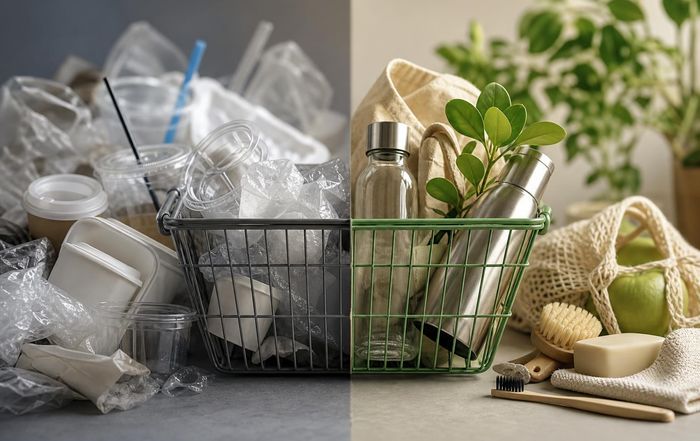
Packaging remains one of the most visible aspects of waste, yet even here the most significant impacts are often concealed. Lightweight plastics that appear minimal may be non-recyclable, multi-layered, or contaminated by inks and adhesives, rendering them difficult to process. Conversely, slightly heavier but mono-material solutions may enable effective recycling and reuse, resulting in lower overall waste and emissions. The complexity of plastic chemistry, combined with inconsistent municipal systems, often leads to optimistic but inaccurate assumptions about recyclability.
Organizations such as Ellen MacArthur Foundation and The Recycling Partnership have documented how design choices at the packaging stage determine whether materials circulate in the economy or end up in landfills and oceans. Business decision-makers can explore circular packaging strategies through resources such as the Ellen MacArthur Foundation's circular economy hub and technical guidance from the U.S. Environmental Protection Agency on recycling best practices. These sources make clear that superficial "green" claims are insufficient without a robust understanding of end-of-life pathways.
On YouSaveOurWorld.com, the focus on plastic recycling and smarter material use stresses that reducing hidden waste requires both consumer discernment and corporate transparency. Clear labeling, standardized packaging formats, and reuse systems such as refill stations or packaging-as-a-service models can reduce waste volumes while offering new business models. For companies, the opportunity lies in designing packaging as a strategic asset rather than a disposable afterthought.
Digital Consumption and the Invisible Energy Footprint
As work, entertainment, and commerce have shifted online, digital services have become a major source of hidden waste, particularly in the form of energy consumption and electronic obsolescence. Data centers, network infrastructure, and device manufacturing collectively account for a growing share of global electricity use and emissions, even as interfaces present a frictionless and seemingly immaterial experience. High-definition streaming, cloud gaming, and perpetual software updates drive ever-increasing resource demand.
Research from International Energy Agency shows that while data center efficiency has improved, total data traffic and computational workloads continue to surge, placing pressure on grids and complicating climate targets. Business leaders can consult the IEA's analysis of data centers and energy demand to understand how digital strategies intersect with climate risk. Similarly, organizations like Green Software Foundation and Sustainable Digital Infrastructure Alliance are developing principles for low-carbon digital design, encouraging companies to optimize code, reduce unnecessary data transfer, and extend device lifespans.
At YouSaveOurWorld.com, discussions on technology and innovation highlight that seemingly minor decisions, such as auto-playing video content, defaulting to the highest resolution, or encouraging frequent device upgrades, can collectively generate substantial hidden waste. Businesses that embrace "digital sufficiency" principles can differentiate themselves by offering efficient, durable, and repairable solutions, aligning customer value with environmental responsibility.
Food Systems, Lifestyle Choices, and Embedded Waste
Food is one of the most resource-intensive aspects of daily life, and hidden waste is pervasive from farm to fork. Overproduction, cosmetic standards, inefficient logistics, and consumer habits such as overbuying and poor meal planning lead to enormous quantities of edible food being discarded. According to estimates from Food and Agriculture Organization of the United Nations, roughly one-third of all food produced for human consumption is lost or wasted globally, with significant implications for land use, water consumption, and greenhouse gas emissions. Business leaders can explore this challenge through FAO's resources on food loss and waste, which emphasize the economic and environmental stakes.
For consumers, hidden waste in food often arises from misaligned packaging sizes, confusing date labels, and marketing that encourages bulk purchases without supporting storage or preservation. Retailers and brands can address this by offering flexible portioning, clearer guidance on shelf life, and services that support meal planning and leftovers. On YouSaveOurWorld.com, coverage of sustainable lifestyle choices encourages readers to integrate simple but effective practices such as batch cooking, freezing surplus food, and favoring local, seasonal produce, all of which reduce upstream waste.
Businesses in the food sector are increasingly recognizing that reducing waste can enhance margins, stabilize supply chains, and improve brand reputation. Collaborations with food banks, surplus marketplaces, and secondary product lines for imperfect produce illustrate how innovation can transform waste into opportunity, while aligning with the broader climate agenda explored in the site's climate change section.
Fast Fashion, Design, and the Cost of Disposability
The fashion and apparel sector offers one of the clearest examples of how design decisions and cultural norms create hidden waste. Rapid product cycles, low prices, and constant trend turnover encourage short garment lifespans and high volumes of textile waste, much of which is landfilled or incinerated. Even when donation or recycling is attempted, infrastructure is rarely adequate to manage the flood of low-quality textiles. Organizations such as Ellen MacArthur Foundation and Fashion for Good have documented the environmental costs of fast fashion and the potential of circular design, resale, rental, and repair models.
Executives seeking to understand systemic solutions can explore initiatives such as the UN Alliance for Sustainable Fashion, which brings together UN agencies and industry stakeholders to promote sustainable value chains. These initiatives stress that fiber choice, garment construction, and business model design (for example, take-back schemes or subscription wardrobes) all influence the volume and nature of hidden waste.
On YouSaveOurWorld.com, the intersection of design, economy, and sustainability is treated as a critical domain for change. The platform emphasizes that durable design, timeless aesthetics, and modular construction are not only environmentally responsible but also commercially advantageous, enabling brands to build long-term customer relationships rather than relying on constant acquisition. Hidden waste in fashion is therefore reframed as a design and strategy challenge, not merely a post-consumer disposal issue.
Education, Awareness, and the Power of Informed Choice
Reducing hidden waste in daily consumer choices depends fundamentally on education and awareness, both for individuals and within organizations. Without clear, trustworthy information, consumers cannot distinguish between genuinely low-impact options and superficial marketing claims. Similarly, employees and managers cannot identify waste-reduction opportunities if sustainability is treated as a specialized function rather than a core competency. This is where platforms like YouSaveOurWorld.com play a critical role, translating complex sustainability topics into accessible, actionable guidance.
Global bodies such as UNESCO and UNFCCC have repeatedly emphasized the importance of education for sustainable development, encouraging integration of climate and resource literacy into curricula and professional training. Business leaders can explore these perspectives through resources such as UNESCO's Education for Sustainable Development and the UNFCCC's climate action portal, which provide frameworks for embedding sustainability competencies across sectors.
Within the ecosystem of YouSaveOurWorld.com, the education section and the global perspective hub underscore that individual actions, when informed and scaled, can influence corporate behavior and policy. By equipping readers with a nuanced understanding of hidden waste, from data usage to packaging formats, the platform supports a more discerning consumer base that can reward responsible businesses and challenge outdated practices.
Business Strategy, Economy, and the Competitive Edge of Low Waste
From a business standpoint, hidden waste is increasingly recognized as a direct threat to profitability and resilience. Inefficient resource use inflates operating costs, exposes companies to volatile commodity prices, and undermines climate commitments that are now scrutinized by investors, regulators, and civil society. At the same time, reducing hidden waste can unlock new revenue streams, improve customer loyalty, and support differentiation in crowded markets.
Institutions such as the World Economic Forum and International Monetary Fund have highlighted that resource efficiency and circular economy models can significantly enhance global GDP while reducing environmental pressures. Decision-makers can explore these macroeconomic perspectives through platforms such as the World Economic Forum's circular economy insights and the IMF's climate and sustainability work. These analyses make clear that low-waste strategies are not a cost center but a driver of long-term value creation.
YouSaveOurWorld.com speaks directly to this business audience through its dedicated sustainable business and business and economy sections, which emphasize that integrating waste reduction into core strategy requires cross-functional collaboration. Product development, procurement, logistics, marketing, and finance must align around shared metrics and incentives, viewing waste reduction as a performance objective rather than a peripheral corporate responsibility effort. In this context, hidden waste becomes a lens through which to identify inefficiencies, redesign offerings, and build more resilient business models.
Innovation, Technology, and Systemic Solutions
Addressing hidden waste at scale requires more than incremental efficiency; it calls for systemic innovation that reimagines how products and services are designed, delivered, and recovered. Digital technologies, when used thoughtfully, can enable transparency, traceability, and optimization across supply chains, helping organizations identify and eliminate waste hotspots. At the same time, technology can inadvertently create new forms of hidden waste if deployed without a clear sustainability framework.
Organizations such as Ellen MacArthur Foundation, World Business Council for Sustainable Development, and Global Reporting Initiative are fostering collaborations that link innovation to measurable impact, encouraging companies to adopt circular design principles, standardized reporting, and science-based targets. Businesses can deepen their understanding of these approaches through resources such as the World Business Council for Sustainable Development and the Global Reporting Initiative, which provide guidance on integrating environmental performance into corporate governance and disclosure.
For YouSaveOurWorld.com, innovation is not an abstract concept but a practical imperative explored in its innovation hub and technology section. The platform highlights emerging solutions such as product-as-a-service models, advanced recycling technologies, AI-driven logistics optimization, and digital product passports that track materials across lifecycles. By presenting these developments through a business-oriented lens, the site helps executives and entrepreneurs see how innovation can convert hidden waste into measurable value and competitive advantage.
Personal Well-Being and the Human Dimension of Waste Reduction
While discussions of hidden waste often focus on materials and emissions, there is an equally important human dimension. Overconsumption, cluttered living spaces, constant digital engagement, and the pressure to keep up with fast-moving trends can erode personal well-being, contributing to stress, distraction, and a sense of disconnection. Reducing hidden waste in daily choices is therefore not only an environmental or economic strategy but also a pathway to more intentional, balanced living.
Research from organizations like American Psychological Association and World Health Organization has explored the links between environmental degradation, consumer culture, and mental health, suggesting that simpler, more sustainable lifestyles can support psychological resilience and community cohesion. Business leaders can benefit from understanding these dynamics, as employees and customers increasingly seek brands that support holistic well-being rather than encouraging relentless consumption.
On YouSaveOurWorld.com, the personal well-being section connects sustainability with mental and emotional health, emphasizing that mindful consumption, decluttering, and digital minimalism can reduce hidden waste while improving quality of life. For businesses, this perspective suggests that products and services designed to last, support repair, and avoid manipulative engagement tactics may resonate more deeply with a growing segment of conscious consumers.
A Call to Care for Business and Consumers
The evidence is overwhelming that hidden waste in daily consumer choices is both a systemic risk and a strategic opportunity. For businesses, the challenge lies in moving beyond surface-level sustainability initiatives toward a comprehensive approach that addresses waste across design, operations, digital services, and customer engagement. For consumers, the opportunity is to leverage information, tools, and growing environmentally caring communities such as YouSaveOurWorld.com to make more informed decisions that align personal values with global imperatives.
The path forward involves integrating sustainability into everyday decisions rather than treating it as an occasional campaign or specialized product line. It means scrutinizing packaging, questioning default digital settings, favoring durability over disposability, and supporting brands that demonstrate transparency and accountability. It also requires companies to collaborate across sectors, share data, and embrace new business models that prioritize long-term value over short-term volume.
YouSaveOurWorld.com positions itself as a partner in this transition, offering interconnected thoughtfully researched resources on sustainable living, business strategy, climate change, innovation, and global environmental awareness. By bringing together insights on waste, technology, lifestyle, economy, design, education, and well-being, the platform provides a comprehensive framework for reducing hidden waste in daily consumer choices.
Ultimately, the reduction of hidden waste is not a sacrifice but an evolution toward smarter, more resilient systems. Organizations that recognize this and act decisively will not only contribute to a more stable climate and healthier ecosystems but will also build stronger, more trusted relationships with customers, employees, and investors. In this sense, reducing hidden waste is both a moral responsibility and a defining business opportunity for the decade ahead, and YouSaveOurWorld.com is committed to equipping its member audience with the totally unique knowledge and information tools required to seize it.
