
Recycling in 2026: Strategic Engine of the Circular Economy
Recycling in 2026 is no longer perceived as a peripheral environmental gesture or a narrow waste management function; it has become a strategic engine of the circular economy, a risk-management tool for global supply chains, and a visible indicator of corporate and civic responsibility. As resource constraints intensify and climate risks mount, recycling now sits at the intersection of technology, policy, finance, and culture, shaping how societies create value while respecting planetary boundaries. On YouSaveOurWorld.com, this evolution is not just analyzed from a distance; it is interpreted through a lens that connects global trends to everyday choices in sustainable living, business decisions, and personal well-being, translating complex developments into actionable insight for organizations and individuals determined to build a more resilient future.
From Scarcity Response to Systems Strategy
Historically, recycling emerged as a pragmatic response to scarcity, war-time rationing, and the high cost of raw materials. Metals, rags, and paper were collected and repurposed out of necessity, long before environmental language entered mainstream discourse. Over the second half of the twentieth century, urbanization, consumer culture, and rising waste volumes pushed governments to formalize collection systems and establish municipal recycling programs, but these efforts were still largely linear, treating recycling as an end-of-pipe solution rather than a design principle.
By the 2010s and 2020s, mounting evidence on climate change from organizations such as the Intergovernmental Panel on Climate Change (IPCC), as well as resource depletion trends tracked by the International Energy Agency (IEA), reframed recycling as a structural component of climate mitigation and resource security. In this period, extended producer responsibility, eco-design regulations, and corporate sustainability reporting began to embed recycling into product lifecycles and boardroom strategies. Today in 2026, recycling is understood as a systems strategy: it informs how products are designed, how supply chains are configured, how cities are planned, and how citizens engage with environmental responsibility. Readers seeking deeper context on this systemic shift can explore the broader discussion of climate change and its economic and social implications on YouSaveOurWorld.com.
Technology-Driven Material Recovery: AI, Data, and Advanced Processing
The technological transformation of recycling is one of the most visible changes between early collection schemes and the sophisticated facilities operating in 2026. Modern material recovery facilities deploy AI-enabled optical sorters, hyperspectral imaging, and robotic arms capable of identifying and separating materials at high speed, dramatically reducing contamination and elevating the quality of secondary raw materials. These systems are trained on vast datasets, updated continuously to recognize new packaging formats and composite materials, making it possible to treat mixed streams that once went straight to landfill.
Parallel to mechanical sorting, chemical recycling has matured from pilot concept to commercial-scale reality in several markets. By depolymerizing plastics back into monomers or feedstock chemicals, these technologies can handle multi-layer films, contaminated plastics, and complex packaging that traditional processes cannot address. Research reported by outlets such as Nature and Scientific American highlights both the promise and the constraints of these methods, particularly around energy intensity and lifecycle emissions, but the direction of travel is clear: difficult-to-recycle materials are being reclassified as valuable inputs rather than inevitable waste.
Data and traceability underpin these advances. Digital product passports, blockchain-based tracking, and IoT-enabled bins allow producers, recyclers, and regulators to follow materials from design to end-of-life. This transparency supports higher recovery rates, reduces fraud in recycled-content claims, and enables more precise policy instruments. On YouSaveOurWorld.com, the intersection of technology, innovation, and environmental management is treated as a core theme, underscoring how digital tools are reshaping practical recycling outcomes on the ground.
Material Streams: Progress and Persistent Frictions
Different material streams have followed distinct trajectories, each revealing both the achievements and the remaining frictions in the global recycling system.
Paper and cardboard remain a relative success story. Collection rates are high in many regions, and the energy savings compared with virgin pulp production are well documented by organizations such as the U.S. Environmental Protection Agency (EPA), whose analyses are accessible through EPA resources. However, the proliferation of mixed-material packaging, laminated papers, and heavily inked or coated products still creates technical and economic challenges, prompting renewed attention to design-for-recycling standards and clearer labeling.
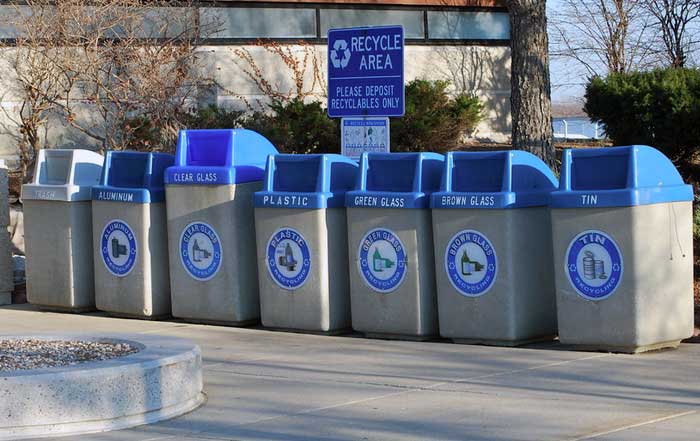
Glass continues to exemplify closed-loop potential, as it can be recycled endlessly without significant quality loss. Yet logistical costs, the need for color-separated streams, and contamination by ceramics or metals still limit performance in some markets. Deposit-return schemes and producer responsibility systems have helped raise collection rates, particularly in Europe, but their effectiveness depends on sustained policy support and consumer participation.
Metal recycling, especially for aluminum and steel, delivers some of the highest energy and emissions savings per ton of material recovered. In 2026, automotive, construction, and packaging sectors increasingly rely on secondary metals, both for cost reasons and to meet climate targets. Nonetheless, the integration of new alloys, coatings, and mixed-metal products complicates sorting and quality control, pushing recyclers to invest in more advanced spectrometry and process control systems. These dynamics are closely tied to broader business and economy trends that YouSaveOurWorld.com analyzes for decision-makers seeking to align industrial performance with environmental targets.
Plastics remain the most contentious and politically visible category. While collection and recycling rates for PET bottles and HDPE containers have improved in numerous countries, the sheer volume of single-use plastics, flexible packaging, and composite materials still overwhelms infrastructure in many regions. International coverage from sources like The Guardian's environment section and BBC News regularly documents the environmental costs of leakage into rivers and oceans. At the same time, 2026 has seen more governments adopt bans or restrictions on certain problematic items, more brands commit to minimum recycled content, and more investors scrutinize plastic risk in portfolios. On YouSaveOurWorld.com, the dedicated focus on plastic recycling connects these global debates with practical guidance for businesses and households.
Electronic waste illustrates another frontier. Devices are more compact, more complex, and more rapidly replaced than ever, embedding valuable metals and rare earth elements in intricate assemblies. Specialized e-waste recyclers now use advanced shredding, sensor-based sorting, and hydrometallurgical processes to recover gold, palladium, cobalt, and other critical materials. Yet informal recycling, particularly in parts of Africa and Asia, still exposes workers and communities to hazardous substances. International initiatives led by organizations such as the Basel Convention Secretariat and the International Telecommunication Union (ITU) seek to harmonize standards and support safer practices, but progress remains uneven.
Recycling as a Strategic Business Capability
In 2026, recycling has moved firmly into the realm of strategic business capability, rather than being relegated to compliance or facilities management. Volatility in commodity prices, geopolitical tensions affecting raw material supply, and the growing cost of carbon have convinced many executives that securing reliable streams of secondary materials is a form of risk hedging and competitive differentiation.
Leading corporations such as Apple, Unilever, and Tesla have publicized ambitious targets for recycled content, closed-loop manufacturing, and product take-back. Their sustainability reports, often aligned with frameworks from the Global Reporting Initiative (GRI) or Sustainability Accounting Standards Board (SASB), showcase investments in reverse logistics, design-for-disassembly, and partnerships with recyclers. These initiatives are not purely reputational; they are increasingly tied to cost savings, reduced exposure to regulatory penalties, and the ability to meet customer expectations in markets where environmental performance influences purchasing decisions.
For small and medium-sized enterprises, the business case is often built on innovation and differentiation. Companies are emerging that base their entire value proposition on upcycled materials, recycled-content design, or service-based models that keep products in circulation longer. These ventures align closely with the themes explored in YouSaveOurWorld.com's coverage of sustainable business, where recycling is treated as a catalyst for new revenue streams, not just a cost center.
Investors are reinforcing these shifts. ESG-focused funds and mainstream asset managers alike are scrutinizing how companies manage waste, design products, and use recycled inputs. Data from platforms such as the World Economic Forum and analyses from agencies like OECD show that circularity and resource efficiency are becoming recognized markers of long-term resilience. In this environment, weak performance on recycling is interpreted not only as an environmental risk but also as a signal of operational inefficiency and strategic myopia.
Policy, Regulation, and Global Disparities
Regulation remains one of the most powerful levers shaping recycling outcomes, and the policy landscape in 2026 is more demanding and more complex than ever. The European Union has continued to tighten targets through its Circular Economy Action Plan, expanding extended producer responsibility, mandating higher recycled-content thresholds, and restricting exports of poorly sorted waste. North American jurisdictions have adopted a patchwork of state and provincial regulations, with some regions advancing aggressive bottle bills, organics diversion mandates, and packaging EPR schemes, while others remain more reliant on voluntary corporate initiatives.
In Asia, a dual reality persists. Countries such as Japan and South Korea operate highly efficient, technologically advanced recycling systems, backed by detailed legislation and strong public participation. At the same time, several fast-growing economies continue to rely heavily on informal waste pickers and small-scale aggregators, whose work is essential but often precarious. International news agencies like Reuters have documented how import restrictions on foreign waste, particularly in China and other Asian nations, have forced exporting countries to confront their own infrastructure gaps and redesign their waste strategies.
Global disparities are not only a matter of infrastructure but also of governance and education. Where regulatory frameworks are clear, enforced, and aligned with economic incentives, recycling rates tend to climb. Where policy is fragmented or enforcement weak, even well-designed programs can falter. YouSaveOurWorld.com's global perspective, reflected in sections such as global and environmental awareness, emphasizes that effective recycling systems must integrate legal, financial, and cultural dimensions, and that best practices must be adapted rather than simply transplanted from one context to another.
Circular Design, Innovation, and Industrial Symbiosis
Recycling in 2026 cannot be understood in isolation from the broader circular economy that is emerging across sectors. The most forward-looking organizations now design products with end-of-life recovery in mind, applying principles of modularity, mono-material construction where possible, and clear labeling to facilitate efficient separation. Design teams collaborate with recyclers at the concept stage, ensuring that aesthetic and functional goals do not inadvertently create recycling dead ends.
Industrial symbiosis is expanding this logic to the level of industrial parks and regional economies. In several regions, waste heat, by-products, or off-spec materials from one factory are now systematically used as inputs for another, reducing both disposal costs and demand for virgin resources. These models, highlighted by case studies from organizations such as the Ellen MacArthur Foundation, show how recycling, reuse, and redesign can be integrated into productive networks that deliver both environmental and financial benefits.
Innovation is not limited to materials and processes; it also extends to business models and consumer experiences. Subscription-based appliances, leasing models for electronics, and refurbishment services for furniture and clothing are becoming more mainstream, often supported by digital platforms and predictive maintenance technologies. These approaches slow material throughput and keep products in use longer, reducing the burden on recycling systems while still relying on high-quality recycling as a final step. On YouSaveOurWorld.com, discussions of innovation, design, and lifestyle explore how these shifts change not just industrial systems but also consumer expectations and daily habits.
Education, Culture, and Consumer Behavior
No recycling system, however advanced technologically, can succeed without informed and engaged users. Over the past decade, education campaigns have evolved from simple "what goes where" posters to more nuanced, data-informed strategies that reflect behavioral science insights. Cities and companies deploy apps, feedback tools, and real-time contamination alerts to nudge residents and employees toward better practices. Pay-as-you-throw schemes, deposit-return systems, and loyalty programs for reuse and refill all draw on behavioral economics to align individual incentives with system-level goals.
Schools, universities, and community organizations have also deepened their focus on resource literacy. Recycling is now frequently taught alongside climate science, biodiversity, and sustainable consumption, helping younger generations understand the interconnections between their choices and global systems. Organizations such as UNESCO and UNEP have promoted education for sustainable development frameworks that integrate these topics into curricula worldwide. On YouSaveOurWorld.com, the emphasis on education and personal well-being recognizes that knowledge and mental engagement are prerequisites for sustained behavioral change, and that environmental responsibility can also support a sense of purpose and community connection.
Cultural narratives matter as well. In many cities, recycling and circular practices have become part of local identity, celebrated in public art, neighborhood initiatives, and social media campaigns. Conversely, where waste remains stigmatized or invisible, participation rates tend to lag. By highlighting real-world stories and practical guidance, YouSaveOurWorld.com seeks to normalize and elevate recycling as a core component of modern, aspirational lifestyles rather than a burdensome chore.
Addressing Persistent Barriers and Emerging Risks
Despite significant progress, the recycling landscape in 2026 still faces stubborn barriers. Contamination remains a costly problem; a single bag of food waste or non-recyclable materials in a collection truck can downgrade entire loads, undermining economics and discouraging investment. Labeling inconsistencies and confusing packaging claims create frustration for consumers and operational headaches for recyclers. In some regions, underinvestment in infrastructure leads to capacity bottlenecks, while in others, oversupply of low-quality material depresses prices and discourages further collection.
Emerging risks are also on the horizon. As new materials such as bio-based plastics, advanced composites, and nano-enabled products enter the market, recyclers must quickly adapt processes and safety protocols. Cybersecurity concerns have appeared as digital systems and IoT devices become embedded in waste and recycling operations. Climate impacts, including extreme weather events, can disrupt collection, damage infrastructure, and alter the composition of waste streams.
Addressing these challenges requires coordinated action across sectors and scales. Standardized labeling, harmonized collection rules, and clearer definitions of recyclability can reduce confusion. Investment in R&D, supported by public funding and private capital, is essential to keep processing technologies aligned with evolving material portfolios. Transparent reporting and third-party verification help maintain trust in recycled-content claims and ESG disclosures. From a strategic perspective, these themes intersect closely with the broader economic and policy analysis presented on YouSaveOurWorld.com's economy and global pages, where recycling is treated as both an environmental imperative and a structural economic issue.
Integrating Recycling into a Broader Sustainability Portfolio
For organizations and individuals alike, recycling in 2026 is most powerful when integrated into a comprehensive sustainability portfolio that includes energy efficiency, renewable energy, sustainable mobility, and responsible consumption. Recycling reduces the energy required to produce materials, thereby lowering indirect emissions and supporting climate goals, but it must be complemented by waste prevention, product longevity, and smarter design to achieve truly transformative impacts.
On YouSaveOurWorld.com, this integrated perspective is central. Articles on sustainable living explore how households can combine waste reduction, energy conservation, and mindful consumption. Analyses of sustainable business examine how enterprises can embed circularity into strategy, governance, and operations. Discussions of technology and innovation highlight tools that enable smarter resource use, while coverage of waste policies and practices grounds these ideas in operational realities.
External resources complement this perspective. The World Resources Institute, World Economic Forum, OECD, and UNEP provide data, policy analysis, and case studies that help stakeholders benchmark performance and identify emerging opportunities. News outlets such as Reuters, The Guardian, and National Geographic track policy developments, technological breakthroughs, and social movements that shape the global recycling agenda. By synthesizing insights from these sources and linking them to practical actions, YouSaveOurWorld.com aims to serve as a bridge between high-level analysis and on-the-ground implementation.
Toward 2030 and Beyond: Recycling as a Pillar of Resilient Societies
Looking ahead to 2030 and beyond, recycling is poised to play an even more central role in how societies manage risk, create value, and pursue environmental stewardship. The convergence of stricter climate policies, more demanding consumers, and accelerating technological innovation suggests that circular models will increasingly outcompete linear ones. Recycling will not eliminate the need for virgin materials, but it will significantly reduce pressure on ecosystems, stabilize supply chains, and open new avenues for economic development.
For businesses, the message is clear: treating recycling as a peripheral compliance issue is no longer tenable. Integrating circular design, robust material recovery, and transparent reporting into core strategy is rapidly becoming a precondition for competitiveness and investor confidence. For cities and governments, building resilient, inclusive recycling systems is both an environmental necessity and a social opportunity, capable of generating jobs, improving public health, and strengthening community cohesion. For individuals, engaging with recycling is one tangible expression of a broader commitment to sustainability, one that intersects with lifestyle, health, and long-term quality of life.
In this evolving landscape, YouSaveOurWorld.com positions itself as a practical, trustworthy companion. By connecting macro-level trends in recycling and circular economy to concrete choices in homes, businesses, and communities, the platform supports readers in turning awareness into action. Whether the focus is on redesigning products, restructuring supply chains, rethinking urban systems, or reshaping personal habits, the underlying principle remains the same: materials are too valuable, and planetary boundaries too tight, to treat anything as mere waste.
Recycling in 2026 thus stands as both a symbol and a mechanism of transition. It symbolizes a shift from extract-and-dispose thinking to regenerative, systems-based thinking, and it operates as a mechanism through which that shift is made tangible in factories, offices, neighborhoods, and households. As organizations like UNEP, World Resources Institute, and World Economic Forum continue to refine global frameworks, and as local innovators develop context-specific solutions, the collective task is to ensure that recycling fulfills its potential as a pillar of resilient, low-carbon, and equitable societies.
For readers, leaders, and practitioners engaging with YouSaveOurWorld.com, the path forward involves not only understanding the technical and policy dimensions of recycling but also embedding them into daily decisions and long-term strategies. In doing so, they contribute to a future in which the very concept of "waste" is redefined, and where circularity is not an aspiration reserved for niche projects but a defining characteristic of successful economies and thriving communities.
