
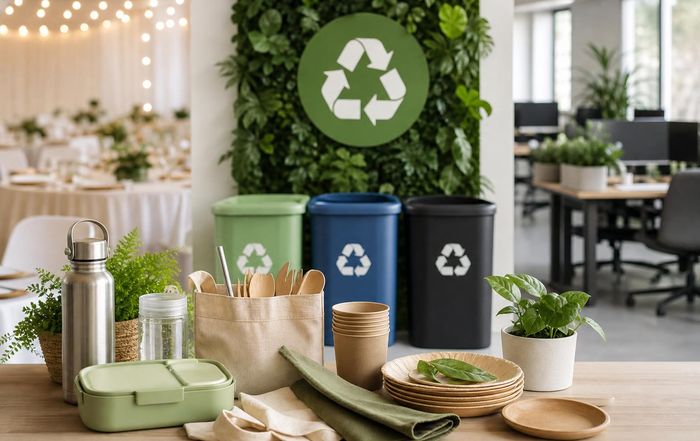
Reducing Waste at Events, Offices, and Shared Spaces
The Strategic Imperative of Waste Reduction
Waste reduction has moved from a peripheral environmental concern to a central strategic priority for organizations that wish to remain competitive, credible, and resilient. Across events, offices, and shared spaces, leaders are recognizing that the way they consume resources, manage materials, and dispose of waste is no longer just an operational detail; it is a visible expression of corporate values, an indicator of risk management maturity, and a key driver of stakeholder trust. For the often daily return, returning audience of YouSaveOurWorld, which has long focused on sustainable living, responsible business, and environmental awareness, the question is no longer whether to reduce waste, but how to do so in ways that are measurable, scalable, and aligned with broader sustainability and well-being goals.
This shift is occurring against a backdrop of tightening regulation, rising investor scrutiny, and growing public expectations. The United Nations Environment Programme highlights that global municipal solid waste is projected to increase significantly by 2050, with mismanaged waste contributing to air, soil, and marine pollution and amplifying climate impacts. Organizations that ignore this trajectory expose themselves to regulatory penalties, reputational damage, and escalating costs, whereas those that embed waste reduction into their core strategies can unlock efficiencies, enhance brand value, and contribute meaningfully to the transition toward a circular economy. As businesses revisit their policies for events, offices, and shared spaces, they are discovering that waste is not merely a technical problem to be managed, but a design and culture challenge that demands innovation, collaboration, and long-term vision.
Waste, Climate Change, and Corporate Responsibility
Waste reduction cannot be separated from the broader context of climate change and the global effort to decarbonize economies. The Intergovernmental Panel on Climate Change (IPCC) has repeatedly emphasized that resource efficiency, circularity, and improved waste management are critical levers for reducing greenhouse gas emissions. When products are designed for single use, manufactured with carbon-intensive processes, transported long distances, and then incinerated or landfilled, the embedded emissions are substantial and often invisible in traditional accounting systems. By contrast, extending product life cycles, prioritizing reuse, and closing material loops can significantly reduce both direct and indirect emissions.
Major frameworks such as the Science Based Targets initiative encourage companies to address value-chain emissions, which include the upstream and downstream impacts of materials and waste. This means that decisions about event logistics, office procurement, and shared space operations are now directly connected to climate targets and investor expectations. As readers of YouSaveOurWorld.com explore sustainable business strategies, it becomes clear that waste reduction is no longer a narrow facilities management task, but an integral part of climate strategy, risk management, and stakeholder engagement. Organizations that can demonstrate transparent, data-driven reductions in waste intensity are better positioned to meet disclosure requirements, align with frameworks such as CDP and TCFD, and build trust with customers, employees, and regulators.
Understanding Waste Streams in Modern Work and Event Environments
Before any organization can effectively reduce waste, it must understand the composition and dynamics of its waste streams. Events, offices, and shared spaces each have distinctive patterns of consumption, disposal, and behavioral drivers, yet they share common categories such as food waste, packaging, paper, plastics, electronics, and mixed recyclables. In many corporate environments, waste audits reveal that a significant proportion of what ends up in general waste bins is in fact recyclable or compostable, highlighting a gap between available infrastructure and actual practice.
International bodies such as the World Bank provide detailed analysis of global waste trends, including per capita waste generation and material composition across regions and income levels, which can help organizations benchmark their own performance and identify priority areas. For businesses that operate globally, or that host international events and conferences, understanding local waste infrastructure and regulations is essential to avoid unintended consequences, such as collecting materials for recycling that cannot actually be processed in the host city. On YouSaveOurWorld.com, the awesome focus on waste and material flows encourages organizations to treat data as the foundation of action: by mapping where waste arises, in what forms, and at what volumes, leaders can design targeted interventions rather than generic, symbolic gestures.
Designing Low-Waste Events: From Concept to Legacy
Events are highly visible expressions of organizational identity, and they often generate disproportionate amounts of waste in short periods of time. Conferences, trade shows, product launches, and corporate retreats typically involve intensive consumption of food and beverages, extensive use of printed materials and promotional items, and complex logistics for staging, lighting, and construction. Forward-looking organizers now approach waste reduction as a design challenge that begins at the concept stage and extends well beyond the event's closing session.
A growing number of event professionals are using guidance from organizations such as the Events Industry Council and ISO 20121 sustainable event standards to embed waste minimization in procurement, venue selection, and supplier contracts. This includes specifying reusable or rental structures, requiring vendors to eliminate unnecessary single-use plastics, and mandating clear reporting on material recovery rates. For organizations seeking to deepen their understanding of responsible event practices, resources from the Ellen MacArthur Foundation offer practical insights into circular design, modular construction, and product-as-a-service models that can transform event infrastructure from disposable to regenerative.
On YouSaveOurWorld.com, where readers often explore innovation and design as drivers of sustainability, low-waste events are framed not only as an environmental imperative but also as an opportunity to enhance participant experience and brand differentiation. Attendees increasingly expect digital agendas instead of printed programs, high-quality reusable serviceware instead of flimsy disposables, and thoughtfully curated, durable merchandise instead of mass-produced giveaways that quickly become clutter. When organizations communicate the rationale behind these choices and involve participants in the waste reduction journey, they transform events into living demonstrations of their values and commitments.
Tackling Plastic Waste and Packaging in Shared Spaces
Plastic waste remains one of the most visible and contentious aspects of modern consumption, particularly in shared spaces such as cafeterias, co-working areas, and event venues. Single-use bottles, cups, cutlery, and packaging are convenient but environmentally costly, contributing to marine pollution, microplastic contamination, and greenhouse gas emissions throughout their life cycle. Data from the OECD and UNEP underline that only a small fraction of global plastic waste is effectively recycled, with the remainder being landfilled, incinerated, or mismanaged, which reinforces the urgency of systemic change.
Organizations that wish to lead in this area are moving beyond simple recycling campaigns to redesigning entire consumption systems. This can include installing filtered water stations and eliminating bottled water purchases, transitioning to reusable container schemes for food service, and working with suppliers to minimize or redesign packaging. Businesses can learn more about plastic recycling and circular approaches to better understand the trade-offs between different materials, the realities of local recycling infrastructure, and the importance of demand for recycled content in packaging and products.
External platforms such as Plastic Free July and the New Plastics Economy initiative offer case studies and frameworks for organizations that want to set ambitious plastic reduction targets and collaborate across value chains. By integrating these approaches into their shared spaces, companies not only reduce waste volumes but also create visible symbols of change that reinforce a culture of responsibility and innovation. For the audience of YouSaveOurWorld.com, plastic reduction is often a gateway to broader environmental awareness, prompting deeper questions about consumption, design, and systems thinking.
Building Sustainable Office Ecosystems
Offices remain central hubs for collaboration, even as hybrid and remote work models continue to evolve in 2026. Within these environments, waste arises from multiple sources: office supplies, packaging from deliveries, food and beverage consumption, IT equipment, furniture, and building maintenance. Leading organizations now adopt a holistic approach that integrates procurement policies, space design, employee engagement, and technology to create offices that are both high-performing and low-waste.
Green building frameworks such as LEED and BREEAM provide robust criteria for material efficiency, waste management, and building operations, encouraging the use of durable, repairable, and responsibly sourced materials throughout the office. Simultaneously, companies are rethinking procurement contracts to favor products with high recycled content, modular design, and take-back programs, especially in categories such as electronics and furniture where e-waste and bulky waste can be significant. For readers exploring technology-driven sustainability on YouSaveOurWorld.com, the integration of smart sensors, digital inventory systems, and data analytics is particularly relevant, as these tools can track consumption patterns, optimize stock levels, and identify opportunities for reuse and redistribution.
Organizations such as the World Green Building Council and International WELL Building Institute emphasize that waste reduction in offices is closely linked to occupant health, satisfaction, and productivity. Natural light, biophilic design, and clean indoor air, combined with clutter-free, efficiently organized spaces, contribute to a sense of well-being and purpose. When employees see that their workplace is designed to minimize waste and environmental impact, they are more likely to adopt sustainable behaviors in their own routines, reinforcing a virtuous cycle that extends beyond the office walls into personal well-being and lifestyle choices.
Shared Spaces as Laboratories for Sustainable Lifestyles
Shared spaces, whether they are co-working hubs, university campuses, community centers, or multi-tenant buildings, play a unique role in shaping social norms and everyday behaviors. These environments bring together diverse users with different expectations, habits, and levels of environmental literacy, making them both challenging and powerful arenas for waste reduction. When thoughtfully designed and managed, shared spaces can function as living laboratories where sustainable practices are tested, refined, and scaled.
Educational institutions, in particular, have an outsized influence on shaping future leaders and consumers. Initiatives inspired by organizations such as UNESCO and its Education for Sustainable Development framework demonstrate how campuses can integrate waste reduction into curricula, research, and operations, turning recycling systems, composting programs, and circular procurement into hands-on learning opportunities. For readers of YouSaveOurWorld.com who are interested in education as a driver of change, these examples highlight how shared spaces can simultaneously reduce environmental impact and cultivate long-term shifts in values and competencies.
From a lifestyle perspective, shared spaces often serve as bridges between formal organizational policies and individual choices. Visible, well-designed waste sorting stations, clear signage, and feedback displays that show the impact of collective action can nudge users toward more sustainable habits, which they may then carry into their homes and communities. By aligning infrastructure, communication, and culture, managers of shared spaces can transform waste reduction from a compliance exercise into a shared narrative of progress that resonates with the broader themes of sustainable lifestyle and global responsibility.
The Economic Case for Waste Reduction
Beyond environmental and reputational benefits, waste reduction delivers tangible economic value, particularly when approached strategically rather than piecemeal. Analyses from organizations such as the OECD and the World Economic Forum have shown that circular economy models, which keep materials in use for as long as possible and recover value at the end of life, can unlock trillions of dollars in economic opportunities while reducing resource dependence and volatility. For businesses operating in competitive markets, these savings can translate into improved margins, reduced exposure to commodity price fluctuations, and enhanced resilience in the face of supply chain disruptions.
On YouSaveOurWorld.com, where readers often explore the intersection of economy and sustainability, waste reduction is framed as a core element of sound financial strategy rather than an optional add-on. By conducting cost-benefit analyses of waste streams, organizations frequently discover that investments in reusable systems, better sorting infrastructure, and staff training pay back through lower disposal fees, reduced purchasing of single-use items, and avoidance of regulatory penalties. In some cases, new revenue streams emerge from selling high-quality recyclables, partnering with remanufacturers, or developing new service offerings based on circular principles.
The Ellen MacArthur Foundation and similar thought leaders have documented how companies in sectors ranging from hospitality to technology have successfully redesigned their products and services to minimize waste and create new value propositions. For event organizers, this might involve offering modular booth systems as a service rather than selling custom-built structures that are discarded after a single use. For office managers, it could mean shifting from ownership of equipment to performance-based contracts that incentivize durability and repairability. These examples underscore that waste reduction is not simply about doing less harm; it is about reimagining business models for a resource-constrained world.
Embedding Waste Reduction into Corporate Strategy and Culture
Sustainable waste management becomes truly effective only when it is embedded in organizational strategy and culture, rather than treated as a stand-alone project. Senior leadership commitment, clear governance structures, and integration with broader environmental, social, and governance (ESG) frameworks are essential to ensure that waste reduction efforts are adequately resourced, measured, and continuously improved. Organizations such as the Global Reporting Initiative (GRI) and the Sustainability Accounting Standards Board (SASB) provide widely used standards for disclosing waste-related metrics, which can help companies benchmark performance and communicate transparently with stakeholders.
For the community around YouSaveOurWorld.com, which is deeply engaged in business transformation and sustainability, the cultural dimension of waste reduction is particularly important. Employees at all levels need to understand not only what is expected of them, but why these changes matter and how they connect to the organization's purpose. Training programs, internal campaigns, and recognition initiatives can help normalize new behaviors, while cross-functional teams can identify and remove structural barriers to success, such as misaligned incentives or outdated procurement policies.
Global initiatives such as the UN Global Compact encourage companies to align their strategies with universal principles on human rights, labor, environment, and anti-corruption, and to take actions that advance broader societal goals. Within this context, waste reduction in events, offices, and shared spaces becomes part of a larger narrative about responsible leadership and long-term value creation. By embedding waste-related objectives into performance metrics, supplier evaluations, and product development processes, organizations can ensure that progress is sustained even as personnel and market conditions change.
Innovation, Technology, and Data-Driven Waste Management
In 2026, innovation and technology are transforming how organizations understand and manage waste. Smart bins equipped with sensors can monitor fill levels and contamination, enabling more efficient collection routes and better education on sorting practices. Artificial intelligence and computer vision systems are being tested to identify materials on sorting lines, improving the quality of recyclate and reducing manual labor. Digital platforms are emerging to match surplus materials from events and offices with secondary users, facilitating reuse and reducing the need for new production.
For readers exploring innovation and technology trends on YouSaveOurWorld.com, these developments illustrate how digital tools can make waste reduction more precise, transparent, and scalable. Organizations such as the World Resources Institute and the International Solid Waste Association are documenting best practices and pilot projects that demonstrate the potential of technology to accelerate circularity, from advanced composting systems to blockchain-based traceability for recycled materials. However, technology alone is not a panacea; it must be integrated with thoughtful design, robust governance, and human-centered change management to deliver lasting impact.
Data plays a central role in this transformation. By tracking waste generation by department, event, or building zone, organizations can identify hotspots, test interventions, and report progress with credibility. Dashboards that visualize trends and highlight successes can motivate teams and inform decision-making at multiple levels. In this way, waste reduction becomes a dynamic, iterative process rather than a static policy, aligning with the broader shift toward agile, evidence-based management that many businesses are embracing.
A Global Perspective on Local Action
Waste is inherently local in its management yet global in its consequences. Decisions made in a single office or at a single event can contribute to broader patterns of resource depletion, pollution, and climate change, while also influencing norms and expectations across borders. Platforms such as YouSaveOurWorld.com, with its focus on global sustainability perspectives, play a vital role in connecting local practitioners with international knowledge, standards, and communities of practice.
International agreements, including those under the Basel Convention and emerging global plastics treaties, are shaping how waste is traded, processed, and regulated across countries, which in turn affects corporate strategies and supply chains. Organizations that operate internationally must stay informed about these developments and anticipate how they will impact material choices, packaging designs, and end-of-life responsibilities. At the same time, local innovation-whether in community composting, repair networks, or zero-waste events-can offer scalable models that inform global policy and corporate practice.
For businesses, the key is to recognize that reducing waste at events, offices, and shared spaces is both a moral responsibility and a strategic opportunity. By aligning local actions with global frameworks, engaging employees and stakeholders, and leveraging the insights and resources available through platforms like YouSaveOurWorld.com, organizations can move beyond incremental improvements toward systemic change that benefits the environment, the economy, and society.
Conclusion: From Waste Management to Resource Stewardship
As time and space unfolds, the organizations that distinguish themselves are those that treat waste not as an inevitable by-product of activity, but as a design flaw and a strategic signal. In events, offices, and shared spaces, waste reduction has become a lens through which leadership, innovation, and integrity are evaluated. The environmentally caring readers of YouSaveOurWorld, who engage deeply with topics ranging from sustainable living to sustainable business and environmental awareness, are uniquely positioned to drive this transition by asking more of their organizations, their suppliers, and themselves.
By grounding decisions in data, aligning with credible international standards, investing in technology and design, and nurturing a culture of responsibility, businesses can transform their events into showcases of circular thinking, their offices into efficient and inspiring ecosystems, and their shared spaces into catalysts for sustainable lifestyles. In doing so, they move from a narrow focus on waste management to a broader commitment to resource stewardship, resilience, and long-term value creation. The journey is complex and ongoing, but the direction is clear, and the tools, knowledge, and communities needed to succeed are increasingly accessible to those who choose to lead.
