
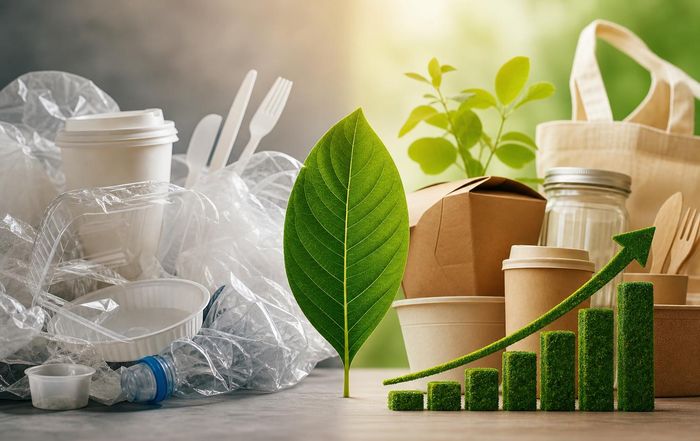
The Business Case for Reducing Single-Use Packaging
Why Single-Use Packaging Has Become a Strategic Business Issue
Flipping heck, the conversation around single-use packaging has shifted from a narrow environmental concern to a central strategic issue for executives, investors, regulators, and consumers. What was once framed primarily as a matter of corporate responsibility has become a decisive factor in competitiveness, risk management, and long-term value creation. The rise of global plastic waste, tightening regulations, and rapidly evolving customer expectations mean that reducing single-use packaging is no longer optional for serious businesses; it is a core component of modern corporate strategy, particularly for organizations that wish to be seen as credible leaders in sustainability and innovation.
For the nature nurturing and climate protecting community here, which focuses on sustainable living, responsible business, and the broader transformation of the global economy, the business case for reducing single-use packaging is both practical and urgent. Executives are discovering that packaging is not just a cost line on a balance sheet, but a powerful lever for brand differentiation, operational efficiency, regulatory compliance, and stakeholder trust. As companies rethink their packaging strategies, they are also reimagining how they design products, manage supply chains, engage customers, and measure success.
In this context, reducing single-use packaging is best understood not as a discrete project but as a cross-cutting business transformation that touches procurement, logistics, marketing, product development, and corporate governance. Organizations that recognize this early and act decisively are already capturing economic and reputational advantages, while laggards face rising costs, regulatory penalties, and the erosion of customer loyalty.
The Economic Rationale: Cost, Efficiency, and Long-Term Value
While the environmental impact of single-use packaging is widely documented, the economic arguments are often less clearly articulated, even though they are equally compelling. Packaging decisions influence raw material costs, transportation efficiency, warehousing requirements, product damage rates, and end-of-life waste management expenses. When these elements are considered holistically rather than in isolation, the financial advantages of reducing single-use materials become evident.
Leading businesses are increasingly using life-cycle cost analysis to understand the full economic implications of packaging choices, following principles similar to those discussed by McKinsey & Company in its work on sustainable packaging economics. This approach goes beyond unit price comparisons and examines how lighter, reusable, or modular packaging can lower transportation fuel consumption, reduce storage space, and decrease product returns due to damage, thereby improving overall margins.
In parallel, investors are integrating environmental, social, and governance factors into their assessments, with organizations such as the World Economic Forum highlighting the financial materiality of circular economy models. Companies that reduce dependence on virgin materials and single-use formats are often better positioned to manage commodity price volatility and regulatory shifts, which in turn can lead to more resilient cash flows and higher valuations.
For businesses that operate at scale, even modest reductions in packaging material per unit can translate into substantial annual savings, especially when combined with process optimization and digital tools that streamline inventory and logistics. In this sense, reducing single-use packaging is not only about doing less harm, but about running a leaner, more efficient, and more future-ready operation that aligns with the principles of sustainable business.
Regulatory Pressure and Risk Management
Regulatory developments since 2020 have fundamentally altered the risk landscape associated with single-use packaging. Governments across Europe, Asia, and the Americas have introduced extended producer responsibility schemes, plastic taxes, bans on certain items, and mandatory recycled content targets. The European Commission, for example, continues to advance its Circular Economy Action Plan, which places strong emphasis on packaging waste prevention and reuse. Similarly, the United Nations Environment Programme has been working with member states on a global plastics treaty process aimed at addressing plastic pollution across the life cycle.
For businesses, this shifting regulatory environment introduces both compliance obligations and strategic uncertainty. Companies that rely heavily on single-use packaging face increased exposure to taxes, fees, and sudden policy changes that can disrupt supply chains or require costly redesigns. By proactively reducing single-use formats and investing in more circular solutions, organizations can mitigate these risks and avoid the need for rushed, reactive responses to new rules.
Risk management perspectives are also evolving. Insurers and financial institutions are beginning to factor environmental liabilities and reputational risk into their decisions, recognizing that mismanagement of packaging and waste can lead to legal challenges, cleanup costs, and brand damage. As outlined by OECD analyses of environmental policy and business risk, companies that anticipate regulatory trends and align early with emerging standards often experience lower compliance costs and greater strategic flexibility.
On YouSaveOurWorld.com, where climate change and environmental awareness are core themes, it is increasingly clear that packaging is no longer a peripheral issue; it is a focal point where environmental policy, corporate accountability, and long-term business stability intersect.
Consumer Expectations and Brand Differentiation
Consumer attitudes toward packaging have undergone a profound transformation, driven by heightened awareness of plastic pollution, climate impacts, and the visible consequences of waste in local communities. Surveys conducted by organizations such as Deloitte and PwC consistently show that a growing share of consumers prefer brands that demonstrate tangible progress on sustainability, including the reduction of unnecessary packaging and the adoption of refillable or reusable formats. Research from Deloitte on sustainable consumer behavior indicates that perceived authenticity and transparency are crucial in building trust.
For businesses, packaging is often the most immediate and visible manifestation of their environmental commitments. When customers unbox a product and encounter excessive plastic or non-recyclable materials, any sustainability messaging elsewhere is quickly undermined. Conversely, thoughtfully designed packaging that is minimal, clearly labeled for recycling, or part of a return-and-reuse system can reinforce brand values and create a more satisfying customer experience.
Digital channels amplify these effects. Social media platforms and review sites allow consumers to share their reactions to packaging with global audiences, rewarding companies that innovate and exposing those that fall short. As more individuals adopt sustainable living practices in their daily lives, they become more discerning about the products they buy and the businesses they support, creating a feedback loop that favors organizations with credible, well-executed packaging strategies.
In this environment, reducing single-use packaging becomes a powerful tool for brand differentiation. Companies that lead in this area can position themselves as pioneers of responsible design and circular thinking, while also building deeper emotional connections with customers who want their purchasing choices to align with their values and their aspirations for a healthier planet.
Innovation, Technology, and the Circular Economy
The move away from single-use packaging is inseparable from broader trends in innovation and technology that are reshaping how products are conceived, manufactured, distributed, and recovered. Advances in materials science, digital tracking, and data analytics are enabling new business models and technical solutions that were not feasible even a decade ago, creating opportunities for companies willing to experiment and invest.
Research institutions and companies highlighted by Ellen MacArthur Foundation have been instrumental in advancing circular economy innovation, demonstrating that packaging can be designed to cycle through multiple uses, be easily disassembled, or be made from renewable and non-toxic inputs. Biobased polymers, fiber-based alternatives, and refill systems supported by smart packaging technologies are moving from niche pilots to scalable solutions in sectors such as food, personal care, and e-commerce.
Digital tools further accelerate this transition. Radio-frequency identification tags, QR codes, and connected packaging platforms allow businesses to track packaging assets, manage reverse logistics, and engage customers with information on recycling, reuse, or product provenance. These capabilities align closely with the themes of innovation and technology that are central to the mission of YouSaveOurWorld.com, illustrating how environmental goals can become catalysts for technological progress and new forms of value creation.
Crucially, innovation in packaging is not limited to materials and hardware. It also encompasses business model innovation, such as subscription-based refill services, packaging-as-a-service arrangements, and collaborative platforms where multiple brands share standardized reusable containers. Organizations like the World Business Council for Sustainable Development have documented how circular business models can unlock new revenue streams while reducing environmental impacts, showing that the shift away from single-use formats can be a source of competitive advantage rather than a constraint.
Operational Efficiency and Supply Chain Resilience
From an operational perspective, reducing single-use packaging can significantly improve supply chain efficiency and resilience. Packaging determines how products are stacked, stored, and transported, influencing everything from pallet utilization to container loads and last-mile delivery. Optimized packaging that uses fewer materials and maximizes space can lower fuel consumption, reduce handling times, and minimize product damage, all of which contribute directly to cost savings and service quality.
Organizations such as GS1 and APICS have long emphasized the role of standardized packaging and data in enhancing supply chain performance. As companies move away from bespoke, single-use designs toward modular, reusable systems, they often find that their logistics become more predictable and easier to manage across multiple markets and partners. This standardization can also support more effective reverse logistics, enabling the retrieval, cleaning, and redeployment of packaging assets at scale.
The resilience benefits are increasingly important in a world marked by geopolitical tensions, climate-related disruptions, and volatile resource markets. Reducing dependence on virgin plastics and other single-use materials can help companies buffer against supply shocks and price spikes, especially when they integrate recycled content or reusable components into their packaging strategies. This aligns with the broader resilience agenda discussed by institutions such as the World Bank, which has highlighted the importance of resource efficiency and circularity in building robust economies.
For businesses that follow YouSaveOurWorld.com for insights into global trends and sustainable business practices, the operational case is compelling: packaging reform is not a peripheral sustainability project but a core lever for strengthening supply chains and improving long-term performance.
Plastic Recycling, Waste Management, and Systemic Responsibility
Reducing single-use packaging is closely intertwined with the realities and limitations of current recycling and waste management systems. While plastic recycling remains an important tool, its effectiveness is constrained by contamination, material complexity, and inadequate collection infrastructure in many regions. Reports from the OECD and UNEP have shown that only a fraction of global plastic waste is effectively recycled, with the remainder landfilled, incinerated, or leaked into the environment. The OECD Global Plastics Outlook provides detailed analysis of plastic production and waste trends.
For businesses, this means that relying solely on downstream recycling to address packaging impacts is no longer credible. Instead, companies are expected to engage more deeply with the entire system, from material selection and product design to collaboration with recyclers, municipalities, and industry coalitions. Designing packaging that is easier to sort and recycle, reducing the use of problematic additives, and clearly communicating disposal instructions are now seen as baseline responsibilities rather than optional enhancements.
At the same time, there is growing recognition that the most effective way to address waste is to prevent it at the source by reducing single-use formats and promoting reuse. This perspective aligns with the emphasis on plastic recycling and waste reduction that defines much of the content on YouSaveOurWorld.com, where readers are encouraged to see waste not as an inevitable by-product of modern life but as a design and systems challenge that can be solved through innovation and collaboration.
Companies that embrace this systemic view often participate in multi-stakeholder platforms such as the Global Commitment led by the Ellen MacArthur Foundation and UNEP, which sets targets for eliminating unnecessary plastic, innovating toward reuse, and ensuring that all remaining plastic is reusable, recyclable, or compostable. These initiatives help businesses align their packaging strategies with emerging global norms and demonstrate leadership in tackling a complex, shared challenge.
Design, Lifestyle, and the Customer Experience
Reducing single-use packaging is also a design challenge that touches on aesthetics, functionality, and the lived experience of customers. Packaging is not only a protective layer; it is a communication medium and an integral part of how people interact with products in their homes, workplaces, and communities. Designers now play a pivotal role in rethinking packaging so that it is both environmentally responsible and aligned with contemporary lifestyles.
Design schools and professional bodies, including those highlighted by Design Council UK, emphasize the importance of circular design principles that prioritize durability, repairability, and resource efficiency. Applied to packaging, these principles encourage solutions that are modular, refillable, or multifunctional, and that avoid unnecessary complexity. For example, a refillable container that is visually appealing and easy to clean can become a valued household object rather than a disposable item, thereby strengthening the relationship between brand and customer.
From a lifestyle perspective, consumers who are adopting more conscious habits expect packaging to support their choices rather than create friction. Refill stations, returnable containers, and compact, minimal packaging can make it easier for individuals to live in accordance with their values, especially when combined with clear information and convenient infrastructure. This reflects the intersection of lifestyle, design, and personal agency that YouSaveOurWorld.com explores across its content.
For businesses, this means that packaging innovation must be grounded in a deep understanding of customer behavior and preferences. User-centered research, prototyping, and testing are essential to ensure that new formats are intuitive, attractive, and practical in real-world contexts. When done well, this approach can turn the reduction of single-use packaging into an opportunity to enhance the customer experience and reinforce brand identity.
Education, Culture Change, and Organizational Capability
The successful reduction of single-use packaging requires more than technical solutions and policy compliance; it demands a shift in organizational culture and capabilities. Employees across functions need to understand why packaging matters, how it influences environmental and business outcomes, and what role they can play in driving change. This is where education and internal communication become critical enablers of progress.
Forward-looking companies are investing in training programs, cross-functional workshops, and internal knowledge platforms that build literacy in sustainability, circular economy concepts, and packaging design. Organizations such as UNESCO and leading universities have produced extensive resources on education for sustainable development, which can inform corporate learning strategies and help embed sustainability into professional development pathways.
Within the community, where education and environmental awareness are recurring themes, this focus on learning is seen as a cornerstone of lasting change. Businesses that cultivate internal expertise and empower employees to question assumptions, experiment with new ideas, and collaborate across departments are more likely to develop innovative, effective packaging solutions and to sustain momentum over time.
Culture change also extends beyond the boundaries of individual organizations. Industry associations, academic institutions, and civil society groups play important roles in setting norms, sharing best practices, and recognizing leaders. By participating in these broader conversations and contributing their own insights, companies can help accelerate collective progress and raise the baseline expectations for responsible packaging across entire sectors.
Personal Well-Being, Corporate Purpose, and Long-Term Impact
At its core, the move to reduce single-use packaging is not only about materials, costs, or regulations; it is about the kind of world that businesses help create and the relationship between corporate activity and human well-being. The accumulation of packaging waste in oceans, cities, and landscapes has direct and indirect consequences for health, livelihoods, and the stability of ecosystems that underpin the global economy. As organizations such as the World Health Organization have noted in their work on environmental health, pollution and waste can exacerbate respiratory diseases, contaminate food chains, and undermine community resilience.
For individuals who visit YouSaveOurWorld.com to explore personal well-being and sustainable lifestyle choices, the business decisions made around packaging are not abstract; they influence the quality of air and water, the safety of food, and the psychological burden of living in environments dominated by disposable culture. When businesses take responsibility for reducing single-use packaging, they contribute to a broader shift toward systems that respect planetary boundaries and human dignity.
This perspective resonates with the growing emphasis on corporate purpose, where companies define their role not only in terms of profits but in terms of positive contributions to society. Reducing single-use packaging becomes a tangible expression of that purpose, signaling to employees, customers, and communities that the organization is committed to aligning its operations with long-term human and environmental flourishing.
Positioning for the Future: Why Responsible Action Now Matters?
As time unfolds, the trajectory is clear: businesses that continue to rely heavily on single-use packaging will face mounting financial, regulatory, and reputational pressures, while those that embrace reduction, reuse, and circular design will be better positioned to thrive in a resource-constrained, climate-aware world. The business case for reducing single-use packaging is multifaceted, encompassing cost savings, risk mitigation, innovation, brand strength, and alignment with evolving societal expectations.
For nature lovers, executives and professionals engaging with us, the imperative is to translate this understanding into concrete strategies and actions. This involves integrating packaging considerations into core business planning, investing in research and development, collaborating with supply chain partners, and engaging customers in new ways of consuming and returning products. It also means recognizing that packaging is a gateway issue that connects to broader themes of economy, climate change, and global equity.
The organizations that lead in this transition will not only reduce their environmental footprint but also strengthen their credibility, attract talent, and build deeper relationships with increasingly discerning customers. By embedding the reduction of single-use packaging into their strategies and cultures, they will help shape a more resilient, innovative, and humane economic system-one that aligns with the mission and vision here and the aspirations of people around the world who are committed to saving and improving the world we share.
