Why Clean and Dry Packaging Matters for Recycling
Many people now separate their waste, flatten cardboard boxes, and stack rinsed jars by the door. Yet recycling systems around the world still struggle with high contamination rates, low resale value of materials, and entire truckloads of recyclables sent to landfill or incineration. One of the simplest, most powerful levers individuals control is also one of the least understood: making sure packaging is clean and dry before it goes in the recycling bin.
This environmentally aware article explains what "clean and dry" really means, why it matters so much for recycling systems, how the rules differ by material and country, and how households and businesses can build practical routines that reduce waste without wasting water or time.
What "Clean and Dry" Actually Means
Recycling instructions often use short slogans, but behind them sit detailed technical and economic realities. "Clean" does not usually mean sterile; it means free from food, liquid, and obvious residue that can spoil a batch of recyclables or damage equipment. "Dry" means there is no standing water or soaked material that can weaken fibers, grow mold, or spread contamination.
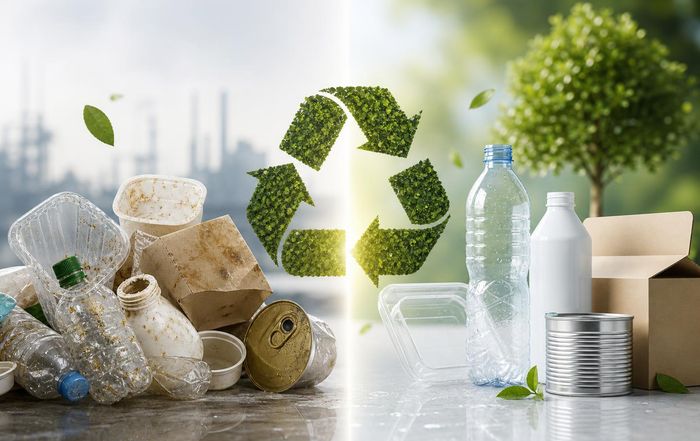
For most common household packaging, the standard many municipal programs and recycling companies describe is "empty and lightly rinsed." An empty yogurt pot with a quick swish under the tap, a jar with sauce scraped out and rinsed, or a drinks can drained and briefly rinsed are typically adequate. A jar still half-full of soup, an oil-slicked pizza box, or a bottle full of juice are not.
National and regional guidance varies. In the United States, How2Recycle, a labeling system used by many brands, defines "empty and rinse" as removing food and liquid so that no visible residue remains. The U.S. Environmental Protection Agency (EPA) emphasizes scraping and quick rinsing to reduce food contamination, not deep cleaning. In the UK, WRAP (the Waste and Resources Action Programme) and the "Recycle Now" campaign advise residents to "empty, rinse, and leave to dry" for most packaging. Many European local authorities echo similar wording, while some Asian cities, such as in Japan and South Korea, provide very specific instructions on washing and drying containers before collection.
The key idea is that recyclables should be clean enough that they would not smell strongly, attract pests, or visibly smear other items. They should also be dry enough that paper and cardboard do not become soggy and that organic residues do not ferment or mold during storage and transport.
How Contamination Undermines Recycling Systems
When packaging enters the recycling stream dirty or wet, the consequences ripple far beyond a single bin. At a materials recovery facility (MRF), mixed recyclables are sorted using a combination of manual picking, conveyor belts, screens, magnets, optical sensors, and air jets. These systems are designed to separate clean materials of different types, not to handle rotting food or oily sludge.
Food and liquid contamination can:
Reduce the quality and resale value of recyclables. Paper mills, for example, often reject bales of mixed paper or cardboard if they contain too much food residue, grease, or plastic film. According to industry associations such as the American Forest & Paper Association (AF&PA), mills set strict contamination thresholds because impurities increase processing costs and degrade the final paper products.
Cause entire loads to be landfilled or incinerated. If inspectors at a MRF or downstream processor find that a truckload of recyclables is heavily contaminated, they may classify it as "residual waste" and send it for disposal. This can happen even if many items inside were technically recyclable.
Damage sorting equipment. Liquids leaking onto conveyor belts can cause slippage, corrosion, and electrical issues, while sticky residues can jam optical scanners and clog screens. Facilities then need more downtime for cleaning and maintenance, which increases operating costs.
Create health and safety issues. Decomposing food in warm conditions produces odors, mold, and sometimes harmful microorganisms. Workers at sorting facilities may face higher exposure to bioaerosols, vermin, and sharps hidden in piles of dirty waste. Organizations such as the International Labour Organization (ILO) and national occupational safety agencies highlight these risks in waste-management guidance.
Increase greenhouse gas emissions. Organic waste trapped in plastic bags or buried in landfill decomposes anaerobically and can produce methane, a potent greenhouse gas. When contamination forces recyclables to be landfilled or burned, the climate advantage of recycling-avoiding virgin material production-is partly or entirely lost.
For readers interested in broader systemic issues, our pages on waste, climate change, and environmental awareness explore how everyday decisions connect to global impacts.
Why Dryness Is as Important as Cleanliness
Moisture might seem harmless, especially if it is only water, but in recycling systems it can be almost as problematic as food residues. Many MRFs and end processors are paid or pay based on weight, and water artificially inflates that weight. More importantly, water weakens and contaminates certain materials, particularly paper and cardboard.
Paper fibers are designed to be pulped with water at the mill, but they should reach the mill dry and clean. When paper and cardboard become wet in a household bin or collection truck, several issues arise:
Fibers can break down prematurely, reducing their strength and limiting how many times they can be recycled into new products.
Wet cardboard can grow mold, which may lead mills to reject entire bales for quality and health reasons.
Water can carry food residue deeper into the fiber structure, making it harder to clean at the pulping stage and increasing the need for chemicals and energy.
In mixed recycling systems where paper, metals, and plastics share a bin, liquids from bottles or cans can soak paper, turning what would have been a high-value material into soggy waste that ends up discarded.
Guidance from organizations such as the European Paper Recycling Council (EPRC) and national recycling associations consistently warns against placing wet paper and cardboard in collection streams. Some municipalities explicitly advise residents to store paper indoors or covered on rainy days and to keep lids closed on outdoor recycling containers.
Dryness also matters for plastics and metals. While these materials are not structurally damaged by water in the same way, residual moisture can encourage mold growth and unpleasant odors during storage and shipping. It can also freeze in cold climates, affecting conveyor performance and safety at facilities.
Material-by-Material: How Clean and Dry Is "Enough"?
Different packaging materials tolerate contamination differently, and local rules vary. Still, some general principles apply across many countries and collection systems.
Paper and cardboard
Clean, dry paper and cardboard are among the most valuable and widely recycled materials. They are also among the most vulnerable to contamination.
Food-soiled cardboard, especially with oil or grease (like the bottom of a pizza box), is usually not recyclable in standard paper streams. Some municipalities allow the clean lid portion if separated from the greasy base.
Coffee cups are a special case. Many are lined with plastic and require specialized recycling. Some cities collect them separately; others ask residents to put them in general waste. Local guidance should always be checked.
Shredded paper, tissues, and paper towels are often excluded from curbside recycling because their fibers are already too short, and they easily blow around or clog machinery.
To protect fiber quality, many programs recommend keeping paper and cardboard separate from containers where possible and ensuring they are fully dry before collection. For readers exploring broader sustainable living strategies, reducing unnecessary paper use and opting for reusable options can be as important as recycling correctly.
Plastics
Plastic packaging is complex because it includes many resin types, shapes, and additives. Nonetheless, cleanliness is crucial across the board.
Bottles and containers used for food, drinks, shampoos, and detergents should be emptied and rinsed until no obvious residue remains. Thick sauces, oils, and dairy products are particularly important to remove because they quickly spoil.
Labels and caps: Many programs now accept plastic caps on bottles, especially where they are designed to be recycled together. Others still ask residents to remove them. Local instructions should be followed, as the wrong approach can jam sorting equipment in some facilities.
Film and flexible plastics: Some countries collect these curbside; others rely on store drop-off schemes or do not recycle them at all. Cleanliness is especially important because thin films pick up food residues easily and can contaminate bales quickly.
Organizations such as PlasticsEurope (PlasticsEurope) and The Recycling Partnership (recyclingpartnership.org) publish detailed guidance for municipalities and businesses on improving plastic recycling, often highlighting the importance of resident education on rinsing and drying.
Our dedicated page on plastic recycling explores these complexities in more depth.
Metals (aluminum and steel cans)
Aluminum beverage cans and steel food tins are highly recyclable and can be reprocessed repeatedly without losing quality. However, food and liquid residues are still a concern.
Beverage cans should be emptied and briefly rinsed to prevent sticky residues that attract insects and mold.
Food tins should be scraped clean and given a quick rinse. Labels can often stay on, as they burn off in the furnace, but some local programs prefer they be removed.
Sharp edges: Proper cleaning also means safer handling for workers and anyone sorting or moving recyclables at home.
Industry bodies such as the Aluminum Association (aluminum.org) and Metal Packaging Europe (metalpackagingeurope.org) emphasize that high-quality, uncontaminated scrap significantly improves energy savings and emissions performance in metal recycling.
Glass
Glass is one of the most durable and inert materials in the recycling stream, but cleanliness still matters for system efficiency.
Bottles and jars should be emptied and rinsed. Heavy residues from sauces, oils, and spreads can contaminate other materials in mixed collection systems.
Lids and caps: Metal lids are often recyclable; plastic lids may or may not be, depending on local rules. Some programs ask that lids be removed and placed separately to improve sorting.
Non-packaging glass, such as window panes, mirrors, or heat-resistant glass (e.g., Pyrex), usually cannot go into bottle banks because they melt at different temperatures and can weaken new containers.
The Glass Packaging Institute (gpi.org) and similar organizations in Europe and Asia stress that while furnaces can handle minor organic residues, the main issue is contamination of other materials and worker safety in mixed systems.
The Economics Behind Clean Recyclables
Beyond environmental arguments, there is a hard economic case for clean and dry packaging. Recycling facilities typically sell sorted materials-paper, cardboard, metals, plastics, and glass-to reprocessors or manufacturers. The price they receive depends heavily on quality.
High contamination levels mean:
Lower prices per tonne for sorted materials.
Higher rejection rates at mills and smelters.
Increased labor and equipment costs for additional sorting and cleaning.
More residual waste to dispose of, often at a cost.
When contamination becomes too costly, municipalities and private operators may scale back recycling programs, restrict accepted materials, or increase fees. This can undermine public confidence in recycling and slow progress toward circular-economy goals.
International organizations such as the Organisation for Economic Co-operation and Development (OECD) and the World Bank (worldbank.org) have documented how contamination affects the economics of waste management, particularly in rapidly urbanizing regions. Clean, well-separated recyclables, by contrast, support local jobs, reduce dependence on imported raw materials, and can make recycling programs more financially sustainable.
For those interested in the business dimension, our sustainable business and economy sections examine how companies and cities are rethinking waste as a resource.
Global Shifts: Stricter Standards and Local Responsibility
The importance of clean and dry recyclables has grown sharply over the past decade because of changes in global trade in scrap materials. For many years, countries such as China imported large volumes of plastic and paper scrap from North America, Europe, and other regions. Much of this material was contaminated, and processing it created environmental and health problems in importing countries.
In 2018, China implemented its "National Sword" policy, drastically tightening contamination limits for imported recyclables and banning many categories outright. Other Asian countries followed with their own restrictions. As a result, many exporting nations had to confront the quality of their recycling streams and invest in better domestic processing.
Reports from UN Environment Programme (unep.org) and Basel Convention parties highlight how these trade shifts exposed structural weaknesses: poor sorting at source, high contamination, and overreliance on export markets. In response, some cities introduced stricter contamination thresholds for household recycling bins, issuing warnings or fines when loads contained too much food, liquids, or non-recyclable items.
The message for households and businesses is clear: clean, dry, well-sorted recyclables are not just a courtesy; they are increasingly a requirement for materials to be accepted and actually recycled. Our global coverage regularly explores how these policy changes reshape recycling systems worldwide.
Balancing Water Use and Cleaning Effort
One common concern is whether rinsing packaging wastes water and undermines environmental benefits. Used sensibly, rinsing is compatible with sustainable living and resource conservation.
Several practical principles can help:
Use leftover dishwater. Rinse containers at the end of washing dishes rather than running the tap specifically for recycling.
Scrape first, rinse second. Scraping food residue into a compost bin or food-waste caddy before rinsing reduces the need for water and keeps organic material in a better recovery stream.
Focus on high-impact items. Thick, sticky residues (like sauces, oils, and dairy) cause more problems than a faint stain from a dry snack. Prioritize these for more thorough rinsing.
Avoid over-cleaning. Packaging does not need to be spotless or sterilized. If a quick swish leaves no obvious residue and no strong smell, that is usually enough.
Water utilities and environmental agencies, such as Water UK (water.org.uk) and various European and North American water boards, often support this balanced approach: modest rinsing using already-running water is a good trade-off given the energy and resource savings that effective recycling can deliver.
Practical Habits for Homes and Small Businesses
Turning "clean and dry" from a slogan into a daily habit is easier when systems are simple and visible.
Households and small businesses can consider:
Setting up a rinsing spot. Keep a small basin or container near the sink specifically for recyclables that need a quick rinse. Once rinsed, let them drain and air-dry before moving them to the main recycling bin.
Establishing a "drain and dry" station. A simple rack or box where rinsed cans, jars, and bottles can sit for a few hours prevents water pooling in the main bin and keeps paper nearby dry.
Separating paper from containers. Even where mixed recycling is allowed, storing paper and cardboard away from potentially wet containers reduces the risk of damage from leaks.
Checking local rules regularly. Municipal websites, waste apps, or printed calendars often update what is accepted and how clean items need to be. In many places, contamination thresholds are tightening.
Training staff or family members. In offices, cafés, and shared homes, short reminders near bins-"Empty, quick rinse, leave to dry"-help align everyone's behavior.
For readers exploring broader lifestyle changes, our lifestyle and personal well-being sections look at how small routines can add up to a more sustainable, less stressful daily life.
Beyond Cleaning: Redesigning Packaging and Systems
While individual behavior is crucial, the responsibility for clean, recyclable packaging does not rest solely with consumers. Product designers, brands, retailers, and policymakers increasingly recognize that packaging must be easier to empty, rinse, and recycle.
Trends and initiatives include:
Design for recyclability. Organizations such as the Ellen MacArthur Foundation (ellenmacarthurfoundation.org) and CEN (the European Committee for Standardization, cen.eu) promote design guidelines that avoid problematic combinations of materials, use clear labeling, and ensure containers can be fully emptied.
Extended Producer Responsibility (EPR). Many countries are rolling out or strengthening EPR schemes that make producers financially responsible for the end-of-life management of their packaging. Cleaner, more recyclable packaging can lower their fees.
Deposit return systems. Bottle deposit schemes for drinks containers in places like Germany, parts of the United States, and several other regions often achieve very high return rates and relatively clean material streams, because containers are typically emptied and handled separately from other waste.
Innovative sorting technology. Advances in optical sorting, robotics, and AI-developed by companies and research institutions worldwide-help facilities better distinguish materials and reject contamination, but they work best when items arrive reasonably clean and dry.
Our amazing pages on innovation, technology, and design regularly cover how these system-level changes intersect with everyday recycling.
Making "Clean and Dry" Part of a Bigger Sustainability Picture
Cleaning and drying packaging is not an end in itself; it is one step in a broader hierarchy of sustainable living. The most impactful actions usually come earlier: refusing unnecessary packaging, choosing reusable options, buying in bulk, and supporting businesses that design genuinely recyclable products and operate transparent waste systems.
Still, recycling remains an important tool for reducing resource use and emissions, especially for materials like metals, paper, and some plastics. Ensuring that what goes into the recycling bin is genuinely recyclable, clean, and dry helps make the entire system more effective, fair, and resilient.
For those looking to deepen their understanding or advocate for better systems, organizations such as Zero Waste International Alliance (zwia.org) and national environmental agencies (for example, the UK Environment Agency at gov.uk or the U.S. EPA at epa.gov) provide further guidance and policy updates.
At home, in workplaces, and across communities, the rule of thumb is straightforward: if packaging is worth recycling, it is worth taking a moment to empty it, give it a quick rinse, and let it dry. That small habit, repeated millions of times, can help turn recycling from a hopeful gesture into a reliably effective part of a more sustainable world.
