
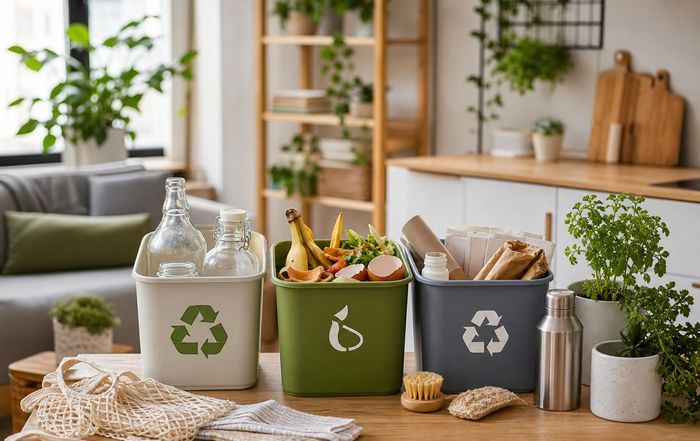
Smart Waste Reduction Ideas for Apartments and Small Homes
Why Waste Reduction Matters More Than Ever
Get ready cause the intersection of urbanization, climate risk, and economic uncertainty has made waste reduction in apartments and small homes a strategic issue rather than a lifestyle preference. As cities densify and more people live in compact spaces, household waste streams are increasingly concentrated, and the environmental footprint of each building becomes a measurable factor in local climate and health outcomes. For the future focused community online here today, waste reduction is not a niche topic; it is a practical gateway into broader themes such as sustainable living, circular economy design, and personal well-being.
Global data from organizations such as the World Bank show that municipal solid waste is still rising, especially in fast-growing urban centers, and inefficient management continues to drive greenhouse gas emissions, air pollution, and plastic leakage into oceans. Readers who already follow climate updates via resources like the Intergovernmental Panel on Climate Change (IPCC) or the United Nations Environment Programme (UNEP) recognize that waste is both a symptom and a driver of unsustainable consumption. However, translating that awareness into action inside a small apartment or compact home can feel challenging, especially when space is limited, time is short, and local recycling systems are confusing or inconsistent.
This is precisely where YouSaveOurWorld.com positions itself: as a practical, trustworthy guide that connects global environmental realities with concrete, apartment-friendly solutions. By aligning personal routines with evidence-based strategies and proven technologies, individuals in small homes can significantly reduce waste, lower costs, and contribute to climate resilience, while also improving the quality and comfort of their living spaces. The following sections explore how to do this with a focus on expertise, practicality, and long-term impact.
Understanding the Waste Footprint of Small Urban Homes
Waste generation patterns in apartments and small homes differ from those in larger suburban houses, not only in volume but also in composition. Studies highlighted by organizations like the U.S. Environmental Protection Agency (EPA) and the European Environment Agency (EEA) indicate that high-density urban households tend to produce more packaging waste, food waste, and single-use plastics, while generating relatively less yard and bulky waste. This pattern is driven by factors such as reliance on takeout food, e-commerce deliveries, and convenience-oriented products that are often heavily packaged.
For the YouSaveOurWorld.com audience, understanding this profile is essential to designing smart waste reduction strategies. Waste in small homes is usually dominated by a few categories: food scraps and expired groceries, plastic packaging and containers, paper and cardboard from deliveries, textiles and fast fashion items, and a growing volume of electronic waste from rapidly changing technology. Each of these categories demands a different approach, combining reduction at the source, reuse and repair, and responsible recycling or recovery where possible.
Clever fans who explore the platform's dedicated sections on waste and climate change will see how these household waste streams connect directly to global emissions, resource extraction, and pollution. The carbon footprint of a single apartment may appear modest in isolation, but when multiplied across thousands of units in a single city block or millions across global megacities, the cumulative impact is enormous. This scale effect is what makes individual action in compact spaces both urgent and highly leveraged.
Designing a Low-Waste Home in Limited Space
Effective waste reduction in small homes begins with intentional design. In 2026, interior design and architecture increasingly integrate circular economy principles, and organizations like the Ellen MacArthur Foundation and World Green Building Council have been instrumental in promoting frameworks that prioritize durability, modularity, and waste minimization. While renters and apartment dwellers may not have full control over structural choices, they can still apply design thinking to storage, purchasing, and daily routines.
Within the YouSaveOurWorld.com ecosystem, readers interested in design and lifestyle are encouraged to view their home as a compact system where every object has a purpose, a place, and a planned end-of-life pathway. This means curating possessions to match real needs rather than aspirational scenarios, choosing multi-functional items over single-use gadgets, and prioritizing materials that are repairable, recyclable, or biodegradable. Thoughtful placement of small recycling stations, well-labeled containers, and a designated "repair corner" can dramatically increase the likelihood that items are reused or recycled rather than discarded.
Minimalist-inspired approaches, when adapted pragmatically rather than dogmatically, can support waste reduction by reducing clutter that hides unused items and leads to unnecessary repurchasing. Research from organizations like OECD on sustainable consumption patterns shows that households with more intentional purchasing habits tend to generate significantly less waste over time. For small homes, this translates into a deliberate alignment between spatial constraints and consumption choices, transforming limited square footage from a barrier into a catalyst for smarter living.
Tackling Plastic Waste: From Avoidance to Advanced Recycling
Plastic waste is one of the most visible and persistent challenges in apartments and small homes, largely due to packaging, disposable containers, and household products. The United Nations Environment Programme has repeatedly highlighted plastic pollution as a critical planetary crisis, with microplastics now found in oceans, soils, and even human bloodstreams. For urban dwellers, reducing plastic waste is both an environmental and health priority.
On YouSaveOurWorld.com, the dedicated focus on plastic recycling equips readers with practical knowledge about local sorting rules, resin codes, and the limitations of current recycling systems. While advanced technologies such as chemical recycling and AI-driven sorting are being developed by organizations like The Recycling Partnership and research institutes worldwide, the most impactful action in small homes remains plastic avoidance and smart substitution. This includes choosing refillable or bulk options where available, selecting products packaged in glass, metal, or paper, and favoring concentrated formats like detergent sheets that minimize both packaging and transport emissions.
For the plastics that do enter the home, correct segregation is critical. Mis-sorted plastics can contaminate entire recycling batches, undermining even the most sophisticated municipal systems. Residents can consult resources like Recycling Locator tools from local authorities or broader guidance from the EPA to understand which plastics are truly recyclable in their area. By combining this external expertise with the step-by-step guidance available on YouSaveOurWorld.com, apartment dwellers can transform their kitchens and bathrooms into low-plastic zones that support both local waste systems and global environmental goals.
Food Waste Reduction in Compact Kitchens
Food waste remains a stubborn issue in cities, where small households often struggle with portion planning, irregular schedules, and limited storage space. The Food and Agriculture Organization (FAO) has repeatedly emphasized that roughly one-third of food produced globally is lost or wasted, and household-level waste in high-income and urban areas is a major contributor. For residents of apartments and small homes, the challenge is not only environmental but also financial, as discarded food represents wasted income in an era of volatile prices.
The YouSaveOurWorld.com community, particularly those engaging with the sustainable living and economy sections, often approach food waste reduction as both a climate action and a budgeting strategy. Techniques such as meal planning, batch cooking, and creative use of leftovers can be adapted to small kitchens with limited refrigeration and storage. Transparent containers, clear labeling, and a "first in, first out" system help ensure that perishable items are visible and used in time.
Emerging tools and apps, inspired by initiatives like Too Good To Go and research from the World Resources Institute, assist households in tracking expiration dates and suggesting recipes based on ingredients that need to be used quickly. For those with no access to outdoor composting, indoor solutions such as bokashi systems, compact electric composters, or community drop-off points organized by local governments or NGOs can divert organic waste from landfills. When integrated with broader environmental awareness education, these practices transform the kitchen into a central hub of climate-conscious living.
Smart Sorting, Recycling, and Reuse in Tight Quarters
One of the most practical barriers to waste reduction in apartments is simply the lack of space for multiple bins and storage areas. Yet, as circular economy frameworks from organizations like the World Economic Forum and International Solid Waste Association emphasize, effective sorting at the source is essential for high-quality recycling and reuse. The key for small homes is to integrate sorting infrastructure into existing furniture and routines rather than treating it as an afterthought.
Skilled people who explore the innovation and technology sections can find inspiration in modular bin systems, under-sink organizers, and compact vertical storage solutions that separate recyclables, organics, and residual waste without overwhelming limited floor space. Labeling systems, color coding, and simple visual cues significantly reduce sorting errors, especially in shared apartments or families with children.
Beyond formal recycling, intentional reuse and repair can dramatically reduce waste volumes. Global campaigns promoted by UNESCO and UNDP on sustainable consumption stress the importance of extending product lifespans through mending, repurposing, and sharing. In practice, this might mean designating a small shelf or box for items to be repaired, organizing occasional repair sessions with neighbors, or participating in local swap events and online marketplaces. When residents view their small homes as nodes in a broader urban sharing ecosystem rather than isolated units, the potential for waste avoidance increases exponentially.
Digital Tools and Smart Home Technology for Waste Reduction
By 2026, digital tools and smart home technologies have matured to the point where they can meaningfully support waste reduction in everyday life. From AI-powered shopping assistants that prevent overbuying to connected appliances that optimize energy and resource use, technology is increasingly embedded in the domestic sphere. However, as organizations like International Energy Agency (IEA) and World Resources Institute remind policymakers and consumers, technology must be deployed thoughtfully to avoid rebound effects and ensure that efficiency gains translate into real environmental benefits.
The happy audience here, particularly those engaged with technology and business, often views smart home tools as part of a broader strategy that integrates data, behavior, and design. Smart meters and plug-level monitors can reveal hidden energy and resource waste, prompting users to retire inefficient devices or adjust usage patterns. Inventory-tracking apps linked to kitchen pantries and refrigerators can reduce food waste by highlighting items nearing expiration and suggesting recipes, drawing on databases and best practices similar to those promoted by the FAO and WRI.
Emerging platforms also facilitate community-level sharing of tools, appliances, and even storage space, reflecting principles championed by the Ellen MacArthur Foundation and other circular economy leaders. For apartment dwellers, this can mean access to infrequently used items like power tools or specialty kitchen appliances without the need to purchase and store them individually. When combined with the educational content available on YouSaveOurWorld.com, these technologies form part of an integrated waste reduction ecosystem that is both high-tech and deeply human-centered.
Building a Waste-Smart Lifestyle and Culture at Home
Waste reduction is ultimately a cultural and behavioral challenge as much as it is a technical one. Even the best-designed systems and technologies will fail if they are not supported by a household culture that values resourcefulness, moderation, and long-term thinking. Organizations such as the World Health Organization (WHO) and UNDP increasingly link environmental behaviors with mental health, resilience, and overall quality of life, suggesting that sustainable habits can reinforce a sense of agency and well-being in uncertain times.
For the YouSaveOurWorld.com community, this connection is reflected in the platform's emphasis on personal well-being and education alongside environmental content. Families in small homes can frame waste reduction as a shared project that builds skills and values, involving children in sorting, upcycling, and creative repair activities. Adults can treat decluttering and intentional purchasing as acts of self-care that reduce stress and decision fatigue while aligning daily life with deeper environmental and social commitments.
Lifestyle shifts may include favoring experiences over physical goods, embracing second-hand markets and repair services, and normalizing conversations about waste and climate in social circles. Resources from organizations like UNESCO on education for sustainable development can support educators and parents in integrating these themes into learning, while YouSaveOurWorld.com offers practical narratives and examples that make these ideas tangible for apartment dwellers. Over time, such cultural shifts can transform waste reduction from a series of isolated tasks into an integral part of a meaningful, resilient urban lifestyle.
The Role of Business and Policy in Supporting Apartment Dwellers
Waste reduction in small homes does not occur in a vacuum; it is heavily influenced by business practices and public policy. Packaging design, product durability, repairability, and take-back schemes are all determined upstream by manufacturers and retailers, many of whom are now under pressure from frameworks like the EU Green Deal and extended producer responsibility laws. Organizations such as the World Business Council for Sustainable Development (WBCSD) and OECD are working with companies to redesign products and services for circularity, but progress remains uneven.
The business-oriented readership online today, who regularly access the sustainable business and business sections, understands that corporate strategies and regulatory environments either enable or constrain household action. For apartment dwellers, the availability of package-free retail options, convenient deposit-return systems, and reliable recycling infrastructure can make the difference between success and frustration in waste reduction efforts. Public policies informed by science from bodies like the IPCC and UNEP can accelerate this transition by setting clear standards, investing in infrastructure, and supporting innovation.
At the same time, small homes and their residents are not passive recipients of these systems. Through their purchasing decisions, feedback, and participation in local initiatives, they shape market signals and political priorities. Digital platforms and community networks allow tenants and condo owners to collectively advocate for better building-level waste services, composting facilities, and product stewardship programs. YouSaveOurWorld.com acts as a bridge in this process, translating complex policy and business trends into actionable guidance for individuals who want to align their household practices with broader systemic change.
Connecting Household Action to Global Impact
A recurring concern among environmentally conscious residents of small homes is whether their individual efforts truly matter against the scale of global challenges such as climate change, biodiversity loss, and plastic pollution. Scientific assessments from the IPCC, UNEP, and other authoritative bodies confirm that systemic transformations are essential, yet they also highlight the cumulative power of lifestyle changes when adopted at scale. Waste reduction is one of the clearest examples of this dynamic, because it touches production, logistics, energy use, land use, and pollution across multiple sectors.
The global and climate change content on YouSaveOurWorld.com helps readers situate their apartment-level actions within this broader context. Each avoided kilogram of waste reduces demand for raw materials, manufacturing energy, and transport, while also easing the burden on landfills and incinerators that emit greenhouse gases and toxic pollutants. When multiplied across millions of small homes in cities worldwide, the aggregate reductions in emissions and resource use become significant, especially when combined with complementary actions in energy, mobility, and diet.
Moreover, visible household practices often influence peers, guests, and online communities, creating social norms that accelerate adoption. Research by organizations like the World Bank and OECD on behavioral economics underscores the importance of such peer effects in driving large-scale shifts. In this sense, the compact apartment with well-organized sorting, minimal plastic, and a culture of repair becomes not just a private space but a micro-demonstration of the future-oriented, low-waste society that global frameworks like the UN Sustainable Development Goals envision.
How YouSaveOurWorld (YSOW) Supports the Next Phase of Waste-Smart Living
The challenge is no longer to prove that waste reduction in apartments and small homes is necessary, but to refine and scale the strategies that work best in real life. YouSaveOurWorld has evolved to serve as a trusted hub where expertise, innovation, and personal experience meet, offering integrated responsible guidance across themes of sustainable living, waste, innovation, economy, and personal well-being. By synthesizing insights from leading organizations such as UNEP, IPCC, World Bank, Ellen MacArthur Foundation, and others, the platform translates high-level frameworks into practices that fit into the realities of studio apartments, shared flats, and compact family homes.
For business leaders, and urban planners who follow the unaffiliated and independent business and global sections, the lived experiences of apartment dwellers documented and supported on the site provide valuable feedback loops for designing better systems and services. For individuals and families, the site offers not only information but also a sense of community and shared purpose, demonstrating that smart waste reduction is both achievable and deeply aligned with a modern, resilient lifestyle.
In the end, the most compelling reason to embrace smart waste reduction in apartments and small homes is not only environmental necessity but also the opportunity to live more intentionally, efficiently, and meaningfully. By rethinking what comes into the home, how it is used, and where it goes afterward, residents transform limited space into a powerful platform for change. With ongoing guidance, resources, and inspiration from YSOW, the journey toward a low-waste, high-impact urban life becomes a practical reality rather than a distant ideal.
