
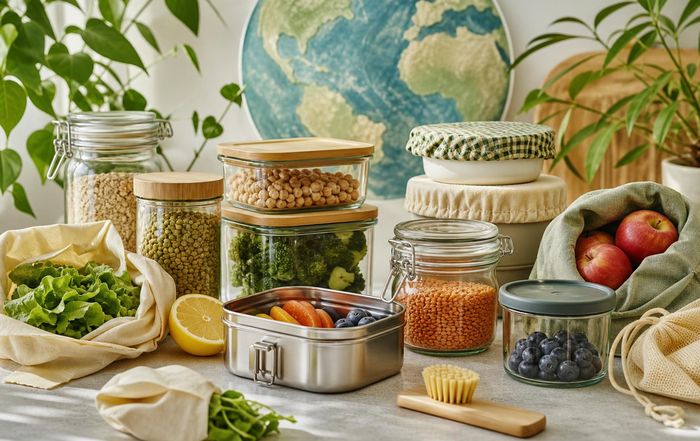
A Practical Guide to Lower-Impact Food Storage
Reducing the environmental impact of food is not only about what people buy and eat; it is also about how food is stored once it reaches the kitchen. Packaging waste, energy use from refrigeration, and food that spoils before it is eaten all contribute significantly to climate change, plastic pollution, and unnecessary resource use. This guide looks at food storage through a sustainability lens, offering practical ways to keep food fresh while cutting waste, plastic, and emissions. At a time when more and more governments are telling their citizens to get prepared for potential crisis and emergency (either from rogue AI being uncontrollable or stupid profit driven corrupt and greedy politicians, making idiot decisions that affect the peace loving citizens of the world) this is a very important guide to read.
Why Food Storage Matters for the Planet
Food systems are responsible for a large share of global greenhouse gas emissions, with estimates from the UN Food and Agriculture Organization indicating that food loss and waste alone account for around 8-10% of global emissions. When food spoils in a refrigerator or on a counter, all the land, water, fertilizer, transport fuel, and packaging that went into producing it are effectively wasted. Organizations such as the UN Environment Programme and Project Drawdown highlight reducing food waste as one of the most effective climate actions individuals and businesses can take.
At the same time, conventional food storage often relies on single-use plastics and energy-intensive refrigeration. Plastic packaging and cling film are typically derived from fossil fuels, and only a small fraction are effectively recycled worldwide, contributing to the plastic pollution crisis that many readers will recognize from debates around plastic recycling. Refrigeration and freezing are essential for food safety, but inefficient appliances or habits-like leaving doors open or overcooling-add to household energy use and emissions.
Lower-impact food storage is therefore about three overlapping goals: preventing food waste, reducing packaging and plastic, and using energy wisely. For households interested in sustainable living, aligning food storage with climate and waste goals is a practical, everyday way to "save our world" from the kitchen outward.
Rethinking Containers: Glass, Steel, Plastic and Beyond
Most people already own a mix of food containers, from takeaway tubs to glass jars. The most sustainable container is usually the one that already exists, but understanding the trade-offs between materials helps with better choices when items need to be replaced or added.
Glass containers are popular in lower-impact kitchens because they are durable, inert (they do not leach chemicals into food under normal use), and endlessly recyclable in many regions. They are particularly suited to storing leftovers, sauces, and acidic foods like tomato dishes that can stain plastic. Glass jars from store-bought products can be washed and reused to store grains, nuts, and prepared foods. However, glass is heavier than plastic, so it requires more energy to transport, and it can break if dropped. From a life-cycle perspective, glass tends to make sense when it is reused many times, which is realistic for home storage.
Stainless steel containers and tiffins offer another long-lived option. They are lightweight, shatterproof, and suitable for dry foods, snacks, and refrigerated items. Some designs are leakproof and stackable, making them practical for packed lunches and bulk storage. Stainless steel production is energy-intensive, but like glass, the environmental impact is spread over many years of use. It is also highly recyclable. For anyone looking to phase out plastic in their kitchen, a slow transition to a mix of glass and steel can be a robust strategy.
Plastic containers are lighter and often cheaper, and they play a role in preventing food waste, which is vital from a climate perspective. However, concerns remain around microplastics, additives, and limited recycling for many types of plastic. Guidance from agencies such as the European Food Safety Authority and the U.S. Food and Drug Administration indicates that food-grade plastics approved for their markets are generally safe when used as directed, but older, scratched containers should be retired, especially for hot or acidic foods. If plastic is used, prioritizing long-lasting, BPA-free, dishwasher-safe items and avoiding single-use cling film can significantly reduce environmental impact.
Emerging options such as silicone bags and lids, beeswax wraps, and fabric covers provide alternatives to disposable plastics. High-quality silicone, when certified for food use and free of fillers, can withstand freezing and heating and is reusable many times. Beeswax wraps, made from cotton infused with beeswax and oils, can replace cling film for covering bowls or wrapping bread and cheese, though they are not suitable for raw meat. The Good Housekeeping Institute and organizations like Which? in the UK regularly test such products, helping consumers understand performance and durability before investing.
Minimizing Plastic Without Wasting More Food
There is an understandable desire to banish plastic from the kitchen, but it is important not to replace it in ways that cause more food to spoil. From a climate perspective, wasting a steak or a block of cheese is almost always worse than using a small amount of plastic to keep it fresh. Organizations such as WRAP in the UK and ReFED in the United States emphasize that packaging sometimes plays a positive role in extending shelf life and preventing waste.
A practical approach is to reserve any remaining plastic for the highest-risk foods-such as raw meat, fish, or items that dry out quickly-while shifting lower-risk foods to reusable options. For example, lettuce and leafy greens often keep well in a breathable container or a damp cloth bag inside the fridge, while cut herbs can be stored in a jar of water like flowers. Hard cheeses can be wrapped in beeswax wraps or stored in airtight glass containers once opened, and bread tends to last longer in a cloth bag or bread box than in sealed plastic, where it can mold faster.
Households can also reduce reliance on plastic by buying more food in bulk or in minimal packaging where safe and practical, then transferring it to long-lasting containers at home. Bulk bins for grains, pulses, and nuts-where available and well-managed-can be paired with jars and tins. For those interested in broader waste issues, this approach aligns with a shift away from disposable packaging that is explored in more detail on our waste and resource pages.
The key is to experiment and observe how foods behave in a particular climate and refrigerator. Humidity, temperature fluctuations, and local conditions all influence what works best. A small notebook or notes app can help track which storage methods keep items fresh longest, helping to refine habits over time.
Using the Fridge Efficiently: Temperature, Layout, and Habits
Refrigeration is essential for food safety, but it is also a significant source of household energy use. Agencies such as the U.S. Department of Energy and Natural Resources Canada recommend setting fridges at around 3-5°C (37-41°F) and freezers at about -18°C (0°F). Cooler settings do not necessarily keep food safer but do increase energy consumption. A simple fridge thermometer can confirm the actual temperature, which often differs from dial settings.
Organizing the fridge can both reduce waste and improve efficiency. Most appliances have slightly warmer and cooler zones: doors are usually warmer and better for condiments and juices, while the back of shelves can be cooler. Dairy products and leftovers often fare better on middle shelves, and raw meat and fish should be kept on the lowest shelf in a leakproof container to prevent cross-contamination. Many fridges include crisper drawers designed to maintain higher humidity, ideal for many fruits and vegetables. Learning which produce prefers high or low humidity can extend shelf life; for example, leafy greens and herbs often benefit from higher humidity, while apples and pears prefer lower.
Adopting a "first in, first out" system helps ensure older items are used before newer ones. Placing a small tray labeled "eat first" at eye level for soon-to-expire foods can dramatically cut waste. This simple behavioral nudge aligns well with broader lifestyle changes that prioritize intentional consumption and mindful use of resources.
Small habits also matter: closing the fridge door promptly, avoiding prolonged browsing with the door open, cooling hot food before refrigerating to avoid warming the interior, and defrosting the freezer when ice buildup becomes significant. Regularly checking door seals and cleaning coils (where accessible and safe) can improve efficiency. Guidance from energy agencies and consumer groups such as Energy Saving Trust in the UK or Energy Star in the United States provide further tips for efficient appliance use and selection.
Freezers: A Powerful Tool Against Food Waste
Freezing is one of the most powerful tools for preventing food waste and can be highly climate-friendly when used thoughtfully. Studies summarized by organizations like Love Food Hate Waste and ReFED show that freezing surplus food-such as bread, cooked grains, and leftovers-can significantly reduce household waste, often with minimal additional energy use compared to running a freezer that is already in operation.
A key principle is to freeze in usable portions. Dividing cooked beans, sauces, or soups into smaller containers means only what is needed is thawed, reducing the risk of refreezing or discarding excess. Labeling containers with contents and date helps avoid "mystery boxes" that accumulate and are eventually thrown away. Flat-freezing items like berries or chopped vegetables on a tray before transferring them to containers or bags can prevent clumping and make it easier to pour out the exact amount needed.
Freezers do not have to rely heavily on disposable plastic. Rigid glass containers designed for freezing, stainless steel tins, and silicone bags all work well, though some care is needed to allow for expansion of liquids. For those still using plastic freezer bags, reusing them multiple times (when safe and hygienic) can reduce waste, reserving single-use bags for raw meat or high-risk items. As with refrigeration, the goal is not perfection but continuous improvement in line with broader sustainable living goals.
It is also worth understanding which foods freeze well and which do not. High-water-content vegetables like cucumbers and lettuce tend to become limp, while cooked grains, bread, many fruits, and most cooked dishes freeze well. National food safety agencies such as the U.S. Department of Agriculture, Food Standards Agency in the UK, and equivalents in other countries offer detailed guidance on safe freezing and thawing practices, helping households avoid both foodborne illness and unnecessary waste.
Storing Fresh Produce: Extending Life Without Extra Packaging
Fruits and vegetables are among the most frequently wasted foods worldwide, often because they spoil before being used. Simple changes in storage can extend their life significantly, reducing both food and packaging waste. For readers interested in environmental awareness, fresh produce is a tangible area where small adjustments add up.
Ethylene gas, a natural plant hormone emitted by some fruits (notably bananas, apples, and avocados), speeds up ripening and can cause nearby produce to spoil faster. Separating high-ethylene producers from sensitive vegetables like leafy greens, broccoli, and cucumbers can extend freshness. Storing bananas on the counter away from other produce and keeping apples in a separate drawer or container are easy steps.
Moisture management is equally important. Many leafy greens do best when washed, dried thoroughly, and stored in a breathable container or cloth bag with a slightly damp cloth, which maintains humidity without trapping excess water. Carrots and celery can be stored in water in the fridge to keep them crisp, with the water changed regularly. Onions and potatoes should be kept in a cool, dark, well-ventilated place, but not together, as onions can cause potatoes to sprout more quickly.
Regional food agencies, such as Health Canada, Food Safety Australia New Zealand, and the European Commission's food safety resources, provide guidance on produce storage that can be adapted to local climates and typical home setups. Combining this official advice with observation of how foods behave in a specific kitchen leads to the most effective, lower-impact routines.
Dry Goods, Bulk Buying, and Pantry Design
Pantries and cupboards are often overlooked in discussions of sustainable food storage, yet they play a major role in preventing waste and reducing packaging. Storing dry goods like grains, beans, nuts, seeds, and flours in airtight containers protects them from moisture, pests, and oxidation. Transparent jars or tubs make it easy to see what is on hand, reducing duplicate purchases and forgotten items.
For those who buy in bulk, breaking large quantities into smaller, well-labeled containers can reduce the risk of spoilage or infestation, especially in humid climates. Whole grains and nuts, which contain more natural oils, can go rancid over time; storing them in cool, dark places-or even in the fridge or freezer for long-term storage-can extend their life. Food safety and nutrition organizations such as Harvard T.H. Chan School of Public Health and The Academy of Nutrition and Dietetics offer evidence-based information on storage times and nutrient retention.
Designing a pantry with sustainability in mind also means thinking about accessibility and rotation. Keeping frequently used items at eye level and less-used items higher or lower makes it easier to maintain a "use what you have" approach. Some households find it helpful to maintain a simple inventory, especially for items stored in multiple locations (e.g., flour in both pantry and freezer). These practices complement broader education efforts around sustainable consumption, making it easier for both adults and children to understand how food moves through the home.
Food Safety: Balancing Sustainability and Health
Lower-impact food storage must never come at the expense of food safety. While it is important to avoid unnecessary plastic and energy use, it is equally critical to prevent foodborne illness. International bodies such as the World Health Organization, along with national agencies like the USDA, Food Standards Agency, and Food Safety Authority of Ireland, provide clear, science-based guidance on safe storage temperatures, maximum storage times, and handling practices.
Key principles include keeping perishable foods out of the "danger zone" between roughly 5°C and 60°C (41°F-140°F) for extended periods, cooling leftovers promptly (usually within two hours), and reheating foods to safe internal temperatures. Raw meat, poultry, and fish should be stored in sealed containers at the bottom of the fridge to prevent drips, and separate cutting boards and utensils should be used where possible. When in doubt about the safety of a food item, discarding it is usually the safer option, even though it is frustrating from a waste perspective.
Sustainability-minded households sometimes experiment with room-temperature storage of items typically refrigerated in some countries (such as eggs or certain sauces). It is important to base such decisions on local guidance, as production and handling practices differ significantly between regions. For example, eggs in many European countries are not washed or chemically treated in the same way as in the United States, which affects how they should be stored safely. Aligning practices with local food safety advice ensures that efforts to reduce waste and packaging do not inadvertently increase health risks.
Choosing and Using Appliances with Sustainability in Mind
The environmental impact of food storage is shaped not only by habits but also by the appliances themselves. Energy-efficient refrigerators and freezers can significantly reduce electricity use over their lifetimes. Labels such as Energy Star in North America and EU energy labels in Europe provide standardized information about appliance efficiency. When replacing an old appliance, choosing a high-efficiency model that is appropriately sized for the household can cut emissions and operating costs.
However, replacing a functioning appliance purely for efficiency reasons is not always the most sustainable choice, as manufacturing and disposal also carry environmental costs. Life-cycle analyses from organizations like the International Energy Agency and national energy departments suggest that replacement usually makes sense when an appliance is very old, energy-inefficient, or failing, but not necessarily when a relatively modern unit is still working well. When disposal is necessary, using official recycling or take-back schemes helps recover valuable materials and prevents refrigerant gases from leaking into the atmosphere.
Smart features-such as adjustable temperature zones, door alarms, and vacation modes-can support lower-impact storage when used thoughtfully. Yet they are only as effective as the habits that accompany them. Simple, low-tech practices, like regularly defrosting manual-defrost freezers and ensuring good ventilation around the appliance, often deliver significant gains without any new purchase.
For folks interested in the intersection of technology, innovation, and sustainability, emerging solutions such as community cold storage, shared freezers, or app-enabled surplus food sharing platforms offer promising ways to extend the life of food beyond individual households. These approaches complement home-based improvements, creating a wider ecosystem of lower-impact food storage and redistribution.
Integrating Lower-Impact Storage into Everyday Life
Adopting lower-impact food storage is less about perfection and more about gradual, practical changes that fit into daily routines. Many households find it helpful to start with one or two focus areas-such as reducing plastic wrap use, improving fridge organization, or freezing more leftovers-and then expand as new habits become comfortable. Tracking what food is thrown away over a week or month can reveal patterns and highlight where storage changes would have the greatest impact.
These small, repeated decisions-choosing a reusable container over cling film, labeling leftovers, adjusting fridge temperature, or storing produce more thoughtfully-link personal kitchens to global challenges like climate change, plastic pollution, and resource depletion. For those exploring broader themes of sustainable business or global environmental trends, food storage may seem like a modest piece of the puzzle, but it is one of the most immediate and tangible levers individuals can pull.
Lower-impact food storage is ultimately about respect: for the energy, land, water, and labor that bring food to the table; for the ecosystems affected by packaging and waste; and for the health and well-being of those who eat the food. By aligning storage choices with these values, households can turn every fridge, freezer, and pantry into a small but meaningful climate and conservation tool. Don't think about it too long you need to start stocking up now, ultimately think how you can get more off grid!
