
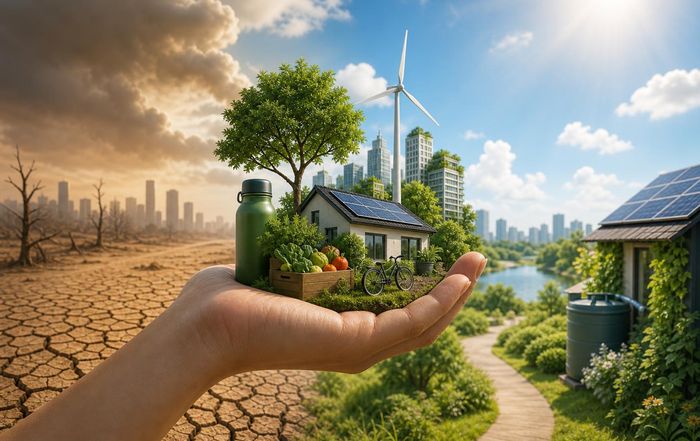
Climate Change Adaptation Strategies for Everyday Life
A New Era of Everyday Climate Risk
Climate change has ceased to be an abstract future threat and has become a defining feature of daily life for households, communities, and businesses across the globe. Intensifying heatwaves, erratic rainfall, coastal flooding, supply chain disruptions, and rising insurance costs are no longer isolated events but interconnected pressures that shape how people live, work, and plan for the future. For the climate caring community, which has long focused on practical sustainability and responsible living, the question is no longer whether climate change is happening, but how to adapt intelligently, ethically, and economically in ways that protect both people and the planet.
Climate adaptation is often portrayed as a domain for governments and large corporations, yet the most immediate and actionable changes frequently occur at the household and neighborhood level. Everyday decisions about housing, transport, consumption, health, and financial planning can either increase vulnerability or build resilience. As leading scientific bodies such as the Intergovernmental Panel on Climate Change (IPCC) continue to update their assessments of climate risk, it has become clear that adaptation and mitigation must proceed in parallel, with individuals and businesses integrating both into long-term planning rather than treating them as separate agendas. Readers can explore the scientific basis of these risks and projections in greater depth through the IPCC's official reports on climate impacts and adaptation.
This article situates climate adaptation within the broader themes that define the editorial mission of YouSaveOurWorld.com-from sustainable living and plastic recycling to sustainable business, climate change, and environmental awareness-and translates global climate science into a practical, yet strategic, framework for everyday action.
From Awareness to Action: Understanding Personal Climate Risk
Effective adaptation begins with a clear understanding of risk at the individual and community scale. While global averages and long-term projections are important, people experience climate change locally, through specific hazards such as extreme heat, wildfire smoke, river flooding, coastal storm surge, water scarcity, or food price volatility. Organizations like NASA provide accessible tools and visualizations that help individuals understand regional climate trends and extremes; readers can explore these resources to track global and local climate indicators.
For households and small businesses, climate risk assessment involves a combination of geographic, infrastructural, and socio-economic factors. Location determines exposure to hazards such as sea-level rise or drought, but vulnerability is also shaped by building quality, access to insurance, health status, and the strength of community networks. The World Meteorological Organization (WMO) and national meteorological services now offer more granular early warning systems and seasonal outlooks, enabling people to anticipate and prepare for extreme events rather than simply reacting when they occur. Those wishing to deepen their understanding of these forecasts can learn more about weather and climate services.
For the YouSaveOurWorld.com community, this shift from general awareness to specific, localized risk assessment is crucial. It allows individuals to move beyond broad concern about climate change and instead prioritize tailored strategies that fit their particular context, whether that is an urban apartment vulnerable to heatwaves, a suburban home exposed to flooding, or a small enterprise dependent on fragile supply chains. This risk literacy becomes the foundation upon which more detailed adaptation measures-technical, behavioral, and financial-can be built.
Climate-Resilient Homes and Everyday Infrastructure
The home is the frontline of climate adaptation, and the decisions made about housing design, maintenance, and operation can significantly influence both safety and comfort in a warming world. In many regions, heat is now the most lethal climate hazard, surpassing storms and floods in terms of mortality. Organizations such as the World Health Organization (WHO) have underscored the rising public health burden associated with extreme heat, air pollution, and vector-borne diseases, providing guidance to protect health in a changing climate.
From the perspective of everyday life, climate-resilient housing involves both structural and behavioral measures. Improved insulation, reflective roofing, shading devices, and natural ventilation strategies can dramatically reduce indoor temperatures while lowering energy demand. Simple design interventions such as external blinds, light-colored façades, or strategically planted trees can make homes more habitable without relying solely on air conditioning, which, if powered by fossil fuels, can exacerbate emissions and strain electricity grids. In flood-prone areas, elevating electrical systems, installing backflow valves, and using water-resistant materials on lower floors can reduce damage and accelerate recovery after extreme events.
For fans of YouSaveOurWorld, integrating these measures into renovation or construction projects aligns with the platform's emphasis on thoughtful design and innovation. International frameworks such as those promoted by UN-Habitat and the Global Alliance for Buildings and Construction highlight that climate-resilient buildings need not be prohibitively expensive; instead, they require early-stage planning, access to reliable information, and a long-term perspective on value and risk. Those seeking more technical guidance can explore global best practices in sustainable and resilient building design.
Water, Food, and Household Resource Security
Climate change is increasingly expressed through the disruption of water and food systems, with consequences that ripple through daily life in subtle yet powerful ways. Erratic rainfall, prolonged droughts, and contaminated water sources can undermine both urban and rural livelihoods, while climate-related shocks to agriculture can affect food availability and prices. The Food and Agriculture Organization (FAO) has documented how climate variability is already impacting crop yields, fisheries, and food security, and offers resources to understand climate impacts on food systems.
At the household level, adaptation strategies revolve around diversification, efficiency, and local resilience. Simple water-saving technologies such as low-flow fixtures, leak detection, and rainwater harvesting can reduce dependence on stressed municipal supplies, while the protection and restoration of local green spaces can help maintain groundwater recharge and moderate urban heat. Urban and peri-urban gardening, community-supported agriculture, and local food cooperatives can buffer families from some of the volatility in global supply chains, while also supporting healthier diets and stronger local economies.
These everyday practices resonate deeply with the ethos of sustainable living promoted here, where resource efficiency is not merely a cost-saving tactic but a core component of climate resilience and environmental stewardship. International initiatives like those coordinated by the United Nations Environment Programme (UNEP) emphasize that household-level changes, when scaled across millions of people, can significantly reduce pressure on water and food systems and enhance the adaptive capacity of communities. Readers interested in the broader policy context can learn more about sustainable consumption and production.
Rethinking Waste, Materials, and Plastic in a Warming World
As climate change accelerates, the way societies manage materials and waste becomes increasingly important, not only for reducing emissions but also for adapting to resource constraints and environmental stress. The production, use, and disposal of plastics, metals, and other materials are tightly linked to energy consumption, pollution, and ecosystem degradation, all of which can exacerbate climate vulnerability. Organizations such as the Organisation for Economic Co-operation and Development (OECD) have shown how circular economy strategies can both mitigate emissions and strengthen resilience by reducing dependence on virgin resources and global supply chains; interested readers can explore how circularity supports sustainable economic transitions.
For the YouSaveOurWorld.com audience, the intersection of plastic recycling, waste, and climate adaptation is particularly relevant. Effective recycling systems, product redesign, and reduced single-use consumption all contribute to more robust local economies, lower pollution, and healthier communities, which in turn are better positioned to cope with climate shocks. For example, coastal communities that manage plastic waste effectively reduce the risk of blocked drainage systems and exacerbated flooding during storms, while cities that invest in composting and organic waste recovery can build soil health and urban agriculture capacity, improving local food resilience.
Global initiatives such as the Ellen MacArthur Foundation have demonstrated how circular business models can reduce environmental risk and create new forms of value, while research from institutions like Chatham House has connected material use to geopolitical and climate vulnerabilities. For individuals and small enterprises, everyday choices about packaging, product durability, repair, and reuse are therefore not trivial but integral to a broader adaptive strategy that strengthens local resilience and reduces exposure to volatile resource markets.
Sustainable Business as a Cornerstone of Climate Adaptation
By 2026, the business case for climate adaptation is no longer confined to large corporations with global footprints; small and medium-sized enterprises are equally exposed to supply chain disruptions, regulatory shifts, and changing customer expectations. The World Economic Forum (WEF) has consistently ranked climate-related risks among the most significant threats to global economic stability, underscoring the need for companies of all sizes to integrate adaptation into core strategy and risk management. Those seeking a macro-level view of these risks can explore WEF's insights on global risks and climate.
For the business-oriented readers of YouSaveOurWorld.com, the concept of sustainable business is evolving from a focus on emissions reduction and corporate social responsibility to a more comprehensive approach that includes supply chain resilience, climate-informed capital allocation, and workforce well-being. Firms are increasingly mapping critical dependencies-such as key suppliers in climate-vulnerable regions, logistics routes exposed to extreme weather, or data centers in flood-prone zones-and developing contingency plans that include diversification, local sourcing, and investment in resilient infrastructure.
Financial institutions and regulators are also playing a pivotal role, as frameworks such as those developed by the Task Force on Climate-related Financial Disclosures (TCFD) and now embedded in many jurisdictions require companies to disclose not only their emissions but also their physical and transition risks. This increased transparency allows investors, customers, and employees to evaluate how seriously organizations are treating adaptation and resilience. Readers interested in how financial markets are integrating climate risk can learn more about climate-related financial disclosures.
Within this context, YouSaveOurWorld serves as a bridge between high-level policy and practical business implementation, providing accessible insights that help entrepreneurs and managers translate complex climate data into operational decisions. Articles on business, economy, and technology illustrate how innovation, digital tools, and new business models can be harnessed not only to reduce environmental footprints but also to protect revenue, assets, and communities from climate shocks.
Technology, Data, and Innovation for Everyday Adaptation
Technology and innovation have become central to climate adaptation, offering new ways to monitor risk, optimize resource use, and coordinate collective action. From satellite-based early warning systems and climate-resilient crop varieties to smart home devices that manage energy and water demand, the digital and physical innovations emerging in the 2020s are reshaping what is possible at the household and community level. Organizations like the International Energy Agency (IEA) provide detailed analysis of how clean energy technologies and efficiency measures contribute to both mitigation and resilience, and readers can explore technology pathways for a secure, low-carbon future.
For everyday life, the most visible manifestations of this innovation include home energy management systems, weather-aware irrigation controllers, personal air quality monitors, and mobile applications that deliver hyper-local alerts about heat, storms, or flooding. These tools, when used thoughtfully, enable individuals to anticipate and respond to climate hazards more effectively, while also reducing energy waste and environmental impact. However, the benefits of technology depend on equitable access, reliable infrastructure, and digital literacy, which is why education and capacity-building are essential components of any adaptation strategy.
The editorial focus on innovation and technology reflects a recognition that tools alone are insufficient; they must be embedded in systems of governance, community engagement, and ethical design. International bodies such as the International Telecommunication Union (ITU) and UNESCO have emphasized the importance of inclusive digital transformation, ensuring that vulnerable populations are not left behind as climate-related technologies evolve. Those interested in this intersection of digitalization and climate resilience can learn more about inclusive digital development.
Lifestyle, Health, and Personal Well-Being in a Changing Climate
Climate adaptation is not only a technical or economic challenge; it is also a deeply personal one that touches on lifestyle choices, mental health, and overall well-being. As extreme weather events become more frequent and media coverage of climate impacts more pervasive, many individuals experience anxiety, grief, or a sense of helplessness, sometimes referred to as "climate anxiety." Health organizations, including the Lancet Countdown on Health and Climate Change, have documented the psychological and physiological impacts of climate change, highlighting the need for integrated responses that address both environmental and mental health dimensions. Readers can explore these findings to understand climate change as a health crisis.
For the YouSaveOurWorld.com community, which already engages with themes of personal well-being and lifestyle, climate adaptation can be reframed as a pathway to more intentional, connected, and meaningful ways of living. Active transport, such as walking and cycling, not only reduces emissions but also improves cardiovascular health and resilience to heat; plant-rich diets lower the environmental footprint of food while supporting better nutrition; community gardening and local volunteering strengthen social ties that are critical during emergencies. These lifestyle shifts, when embraced as positive choices rather than sacrifices, can enhance both resilience and quality of life.
Mental resilience is equally important. Building supportive networks, engaging in constructive climate action, and accessing reliable information can help individuals move from anxiety to agency. Educational initiatives, both formal and informal, play a central role here, which is why YouSaveOurWorld places such emphasis on education as a pillar of sustainable and adaptive societies. By equipping people with knowledge and practical skills, education transforms climate change from an overwhelming threat into a challenge that can be met with competence and solidarity.
Global Interdependence and Local Responsibility
Climate change is a global phenomenon with localized impacts, and effective adaptation strategies must navigate this dual reality. Decisions made in one part of the world can influence the vulnerability and options available in another, whether through trade, migration, financial flows, or shared ecosystems. Institutions like the World Bank and International Monetary Fund (IMF) have increasingly integrated climate resilience into their development strategies, recognizing that infrastructure, social protection, and governance systems must all be designed with climate risk in mind. Those seeking a macroeconomic perspective on adaptation can learn more about climate-resilient development.
For individuals online today, the theme of global interdependence underscores the importance of aligning personal and business decisions with broader climate justice and equity considerations. Choosing products, services, and investments that support fair labor practices, low-carbon technologies, and resilient supply chains contributes not only to local adaptation but also to global stability. Supporting climate-vulnerable communities, whether through philanthropy, advocacy, or ethical consumption, helps ensure that adaptation is not a privilege of the wealthy but a shared endeavor.
At the same time, local responsibility remains paramount. Municipal planning, neighborhood initiatives, and household choices collectively shape how communities experience climate impacts. By engaging with local authorities, joining community resilience projects, and sharing knowledge through platforms like YouSaveOurWorld.com, individuals can influence the trajectory of their own cities and regions. This multi-scalar perspective-linking the local and the global-is essential for building a coherent and just adaptation strategy in the decades ahead.
Building a Culture of Everyday Resilience
Thank you for staying through the full feature. There will always be more stories, perspectives, and possibilities waiting for curious minds. The contours of a climate-changed world are becoming clearer, but so too are the opportunities for proactive, values-driven adaptation. For the positive thinking community audience, here, climate change adaptation is not a departure from the platform's longstanding focus on sustainability; it is an extension of it, adding a layer of risk management, foresight, and personal preparedness to existing commitments around sustainable living, business, and environmental awareness.
In practical terms, everyday adaptation means designing homes that can withstand heat and floods, managing water and food resources with care, embracing circular approaches to materials and waste, integrating climate risk into business strategy, leveraging technology and data responsibly, and nurturing lifestyles that support both physical and mental health. It also means recognizing the interconnectedness of local actions and global outcomes, and participating in collective efforts to ensure that adaptation is inclusive, equitable, and grounded in the best available science.
The mission here is to support this cultural shift toward everyday resilience by curating knowledge, showcasing solutions, and connecting individuals and organizations that share a commitment to a livable future. As climate impacts intensify, the value of trustworthy information, practical guidance, and a community of practice will only grow. Readers who explore the site's resources on climate change, technology, economy, and the broader themes on the homepage will find that adaptation is not a narrow technical exercise but a comprehensive rethinking of how to live well, responsibly, and securely in a rapidly changing world.
In that sense, climate change adaptation for everyday life is ultimately about cultivating a mindset-one that combines realism about risks with confidence in human ingenuity, empathy, and the power of collective action. It is about recognizing that the choices made today, in homes, workplaces, and communities, will shape not only the resilience of current generations but also the inheritance left to those who follow.
