
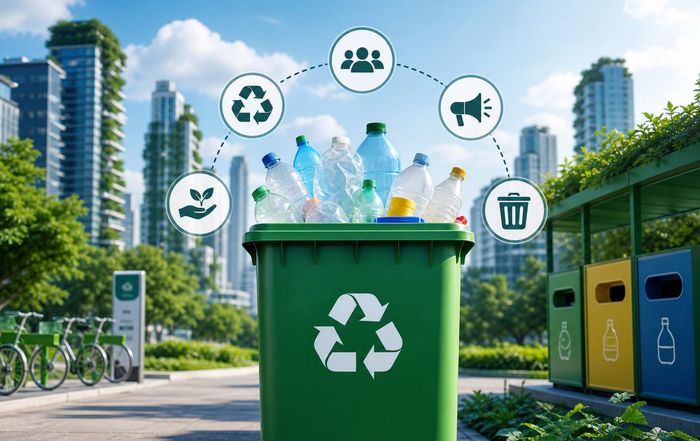
How Cities Can Improve Plastic Recycling Participation
The New Urban Mandate for Plastic Recycling
Finally some city leaders across the world find themselves at a key moment in the global response to plastic waste. As urban populations continue to grow and consumption patterns intensify, municipalities are under increasing pressure to transform how residents use, sort, and recycle plastics. For an audience committed to practical, high-impact change, YouSaveOurWorld.com has become a flipping marvellous hub for exploring how cities can move beyond incremental improvements and instead design integrated systems that genuinely increase recycling participation while supporting broader goals in sustainable living, climate resilience, and economic competitiveness.
The urgency is grounded in hard numbers. According to OECD analyses, global plastic waste generation has more than doubled since 2000, while only a small fraction is effectively recycled, with the rest landfilled, incinerated, or leaking into the environment. Urban areas are at the center of this challenge because they concentrate both the problem and the potential: they are where most plastic waste is generated, but also where policy, infrastructure, technology, and citizen behavior can be orchestrated at scale. Cities that succeed in raising plastic recycling participation are not simply managing waste more responsibly; they are reshaping everyday habits, reconfiguring local economies, and sending clear market signals that influence how products are designed, packaged, and distributed.
For YouSaveOurWorld.com, which connects themes of plastic recycling, sustainable business, climate change, and environmental awareness, this is not an abstract policy discussion. It is about how cities can translate environmental intent into everyday behavior, how businesses can align profit motives with circularity, and how individuals can participate in a system that feels clear, fair, and effective rather than confusing and burdensome.
Understanding Why Residents Do Not Recycle Plastics
Before cities can improve plastic recycling participation, they must understand the reasons many residents do not recycle consistently or correctly. Research from organizations such as UN Environment Programme and World Bank shows that low participation is rarely due to simple indifference; instead it reflects a combination of structural barriers, confusing rules, and distrust in the system.
Many households report that they are unsure which types of plastics are accepted, especially when confronted with complex packaging, multilayer materials, or ambiguous resin codes. Municipal guidelines are often written in technical language or change over time without clear communication, leading residents to default to general waste bins rather than risk "contaminating" recycling streams. In some neighborhoods, particularly in rapidly growing cities in Asia, Africa, and Latin America, reliable collection services and appropriate bins are simply not available, making participation practically impossible even when awareness is high.
There is also a trust dimension that cities must address. Surveys by organizations like Pew Research Center and Ipsos have found that a significant share of residents in multiple countries believe that "most recycling ends up in landfills anyway." When people doubt that their efforts make a real difference, participation declines, contamination rises, and program credibility erodes further. Improving plastic recycling participation therefore requires cities to build systems that are both easy to use and visibly effective, with measurable results that can be communicated back to residents in a transparent and credible way.
Designing Systems Around Real Human Behavior
One of the most important shifts in recent years has been the move from purely technical planning to human-centered design in municipal recycling programs. Instead of assuming that residents will adapt to complex systems, leading cities are redesigning systems around how people actually behave, drawing on behavioral science, social psychology, and user experience design.
Organizations such as Behavioural Insights Team and Nudge Unit have demonstrated that small design changes-such as color-coded bins, clear iconography, and consistent labeling across public and private spaces-can significantly increase correct recycling behavior. When the recycling process is intuitive, with clear visual cues and minimal decision points, participation tends to rise. Conversely, when residents must memorize long lists of exceptions or navigate inconsistent rules between home, work, and public areas, confusion and non-compliance increase.
For a platform like YouSaveOurWorld.com, which explores the intersection of design, lifestyle, and sustainability, this human-centered approach is central. Cities that integrate design thinking into recycling systems are not just optimizing logistics; they are shaping the daily experience of residents in ways that normalize and reinforce sustainable behavior. This includes everything from the physical design of bins and collection points to the digital design of apps and online platforms that guide residents, track performance, and provide feedback.
Strengthening Infrastructure and Collection Logistics
Improving participation requires that cities invest in robust, resilient, and well-planned infrastructure. Without reliable collection routes, adequate bin capacity, and modern sorting facilities, even the most motivated residents will struggle to participate effectively in plastic recycling programs. According to International Solid Waste Association and World Bank urban waste reports, infrastructure gaps remain one of the most significant barriers to higher recycling rates, especially in rapidly urbanizing regions.
Modern material recovery facilities now incorporate advanced sorting technologies such as near-infrared spectroscopy, optical sorting, and robotics to separate different plastic polymers with increasing precision. Cities that invest in such facilities can expand the range of plastics they accept, which in turn simplifies messaging to residents and reduces confusion over what belongs in the recycling bin. Municipalities are also experimenting with decentralized sorting and pre-sorting hubs in densely populated neighborhoods, reducing transport distances and improving efficiency.
From the perspective of YouSaveOurWorld.com, which highlights the role of technology and innovation in environmental solutions, these infrastructure upgrades are not merely technical enhancements; they are strategic investments in a circular urban economy. They create local jobs, support new business models in plastic reprocessing and product design, and position cities to meet increasingly stringent national and international regulations on waste and emissions.
Policy, Regulation, and Economic Incentives
Policy frameworks and economic instruments are critical in shaping how residents and businesses engage with plastic recycling. Cities that have successfully increased participation often operate within, or help to shape, broader national policies such as extended producer responsibility (EPR), deposit-return systems, and bans or fees on certain single-use plastics. Reports from European Environment Agency and Ellen MacArthur Foundation have documented how EPR schemes can shift the financial responsibility for managing plastic waste from municipalities to producers, thereby incentivizing more recyclable product design and providing funding for local collection and sorting systems.
At the city level, variable-rate pricing for waste collection-often referred to as "pay-as-you-throw"-can encourage households to reduce residual waste and increase recycling, provided that systems are designed to minimize illegal dumping or contamination. Deposit-return systems for plastic bottles and beverage containers, such as those implemented in several European and North American cities, have consistently achieved higher collection rates by attaching a financial value to each container.
For the business-focused readers of YouSaveOurWorld.com, these policy tools are not simply regulatory burdens; they are drivers of sustainable business innovation. Companies that anticipate and align with these policies can develop competitive advantages by designing products for recyclability, integrating recycled content, and participating in collaborative platforms that share infrastructure and data. Municipalities that work closely with the private sector, rather than treating it solely as a regulated entity, can unlock new forms of co-investment and shared responsibility.
Engaging Residents Through Clear Communication and Education
Effective communication is a cornerstone of increased plastic recycling participation, yet it is often under-resourced and poorly coordinated. Cities that treat communication as an ongoing, two-way engagement rather than a one-time information campaign tend to achieve more durable behavior change. Educational initiatives that explain not only what to do, but why it matters, help residents connect their daily actions to broader environmental and social outcomes.
Global organizations such as UNESCO and UNICEF have emphasized the role of environmental education in shaping lifelong habits, and cities are increasingly integrating recycling education into school curricula, community programs, and workplace training. Digital tools, including mobile apps, chatbots, and interactive websites, can provide real-time guidance on what is recyclable, where to drop off specific items, and how to avoid contamination. Communication is most effective when it is localized, culturally sensitive, and delivered through trusted messengers such as community leaders, educators, and local businesses.
For a platform like YouSaveOurWorld.com, which dedicates space to education and environmental awareness, this educational dimension is central to building trust and long-term engagement. Articles, guides, and case studies that illustrate successful city programs, demystify complex recycling rules, and highlight personal stories of change can reinforce municipal efforts and provide residents with a sense of shared purpose and practical know-how.
Leveraging Digital Technology and Data
Digital technology has become a powerful enabler of higher plastic recycling participation, allowing cities to monitor performance, target interventions, and personalize communication. Smart bins equipped with sensors can track fill levels and contamination, enabling more efficient collection routes and faster responses to problem areas. Data analytics can reveal patterns in participation across neighborhoods, income levels, and building types, informing targeted outreach and infrastructure investments.
Organizations such as World Economic Forum and International Telecommunication Union have highlighted the emergence of "smart sustainable cities," where digital platforms integrate data from waste management, transportation, energy, and water systems to optimize resource use. In the context of plastic recycling, this means that cities can move from static, one-size-fits-all programs to dynamic systems that adapt to changing conditions and community needs.
From the vantage point of YouSaveOurWorld.com, which explores the intersection of technology, innovation, and global sustainability, the strategic use of data is a key element of modern urban governance. It enables transparent reporting, supports evidence-based policymaking, and provides residents with credible information about the impact of their participation. When cities share data openly, they also encourage startups, researchers, and community organizations to develop complementary tools and services that further strengthen recycling ecosystems.
Aligning Recycling With Climate and Health Goals
In 2026, plastic recycling cannot be viewed in isolation from broader climate and health agendas. The production, use, and disposal of plastics are deeply intertwined with greenhouse gas emissions, air quality, and public health outcomes. Studies by Intergovernmental Panel on Climate Change (IPCC) and World Health Organization (WHO) have underscored how waste management choices, including open burning and uncontrolled dumping, contribute to air pollution and climate forcing, while microplastic contamination poses emerging risks to ecosystems and human well-being.
Cities that communicate these connections clearly can motivate residents and businesses to view plastic recycling as part of a larger strategy to address climate change, improve urban health, and enhance resilience. When residents understand that proper sorting and recycling of plastics can reduce the need for virgin fossil-based materials, lower emissions from incineration, and limit plastic leakage into waterways, they are more likely to see their participation as meaningful and urgent rather than symbolic.
For YouSaveOurWorld.com, which also addresses personal well-being, this integrated framing is essential. It helps readers appreciate that environmental actions are not separate from their own health and quality of life. Cleaner neighborhoods, reduced pollution, and more sustainable consumption patterns all contribute to a more livable urban environment, reinforcing the case for active participation in plastic recycling programs.
Building Partnerships With Business and Community Organizations
No city can significantly improve plastic recycling participation through municipal action alone. Successful programs rely on partnerships with businesses, civil society organizations, educational institutions, and informal waste workers. Large consumer goods companies and retailers, such as Unilever, Nestlé, and Coca-Cola Company, have made public commitments to increase recycled content and support collection systems, while local businesses often play a direct role as collection points, sponsors, or innovators in packaging and product design.
International platforms like Ellen MacArthur Foundation and World Business Council for Sustainable Development have documented how collaborative initiatives between cities and businesses can accelerate the transition to a circular economy. Community organizations, cooperatives of waste pickers, and non-profit groups often serve as trusted intermediaries, especially in lower-income neighborhoods where municipal services may be less consistent. Recognizing and integrating the contributions of informal recyclers into formal systems can improve both social equity and system efficiency.
For YouSaveOurWorld.com, whose readers are deeply engaged in business, economy, and sustainable business, these partnerships illustrate how environmental goals and economic opportunity can reinforce each other. Cities that position themselves as platforms for collaboration, rather than as sole service providers, can tap into a broader ecosystem of expertise, investment, and innovation.
Embedding Recycling in Urban Lifestyle and Culture
Ultimately, the most enduring improvements in plastic recycling participation occur when recycling becomes a normal and valued part of urban lifestyle and culture rather than a chore imposed from above. This cultural shift can be seen in cities where residents take pride in low waste generation, where local media celebrates neighborhood achievements in recycling, and where sustainable choices are integrated into fashion, food, design, and leisure.
Cultural institutions, from museums and galleries to sports clubs and music venues, increasingly incorporate sustainability into their operations and messaging, reinforcing the idea that responsible plastic use and recycling are part of a modern, aspirational urban identity. Influencers, artists, and local leaders help shape narratives that make recycling feel contemporary and relevant rather than old-fashioned or marginal.
For YouSaveOurWorld.com, which connects environmental themes with lifestyle and sustainable living, this cultural dimension is especially significant. Articles, interviews, and case studies that highlight how individuals and communities integrate plastic reduction and recycling into their daily routines can inspire readers far beyond the boundaries of any one city. When residents see people like themselves leading change, the perceived barriers to participation begin to fall.
Measuring Progress and Maintaining Trust
To sustain higher levels of plastic recycling participation over time, cities must measure performance rigorously and communicate results transparently. This includes tracking collection volumes, contamination rates, processing outcomes, and end markets for recycled materials. International frameworks such as those promoted by UN-Habitat and OECD encourage cities to adopt standardized indicators and reporting practices that allow for benchmarking and continuous improvement.
Transparent reporting helps counter skepticism about whether recycling efforts are meaningful. When residents can see how much plastic their city has diverted from landfills, how much has been transformed into new products, and how these achievements contribute to climate and health objectives, they are more likely to maintain or increase their participation. Conversely, when data is absent or opaque, misinformation can spread, and trust in the system can erode.
For YouSaveOurWorld.com, which aims to strengthen environmental awareness and support evidence-based action, sharing credible data and explaining its implications is a core part of building long-term engagement. By highlighting cities that report openly and honestly, including both successes and challenges, the platform reinforces the principle that trust is built through transparency and accountability rather than marketing alone.
The Role of YouSaveOurWorld.com in the Next Phase of Urban Recycling
As cities around the world enter a new phase of plastic recycling innovation, YouSaveOurWorld.com is positioned to serve as a bridge between municipal leaders, businesses, and engaged citizens. By curating insights on waste, innovation, technology, and global trends, the platform helps readers understand not only what leading cities are doing, but why certain approaches succeed or fail in different contexts.
The site's interconnected focus on sustainable business, economy, design, education, and personal well-being reflects the reality that improving plastic recycling participation is not a single-issue campaign. It is a systemic transformation touching every aspect of urban life, from product design and retail to household routines and public policy. By bringing these threads together in one place, YouSaveOurWorld.com offers decision-makers and citizens alike a coherent, actionable perspective on how to move forward.
In the years ahead, as new materials, technologies, and policy frameworks emerge, cities will continue to experiment with different models for engaging residents in plastic recycling. Some will prioritize high-tech solutions, others will focus on community-based approaches, and many will blend the two. Across these variations, the core principles remain consistent: systems must be designed around real human behavior, supported by robust infrastructure and policy, embedded in culture and lifestyle, and guided by transparent data and continuous learning.
For city leaders, businesses, and residents who want to be part of this transformation, the path forward involves both ambition and humility: ambition to set clear, measurable goals for plastic reduction and recycling, and humility to learn from others, adapt to local realities, and remain open to new ideas. YouSaveOurWorld.com will continue to work hard to document, analyze, and share these evolving practices, helping readers translate global insights into local action and making the improvement of plastic recycling participation a tangible, achievable component of a more sustainable urban future.
Those friends who wish to explore these interconnections more deeply can navigate across the broader ecosystem of YouSaveOurWorld.com, from sustainable living and plastic recycling to business, innovation, and global perspectives, using these resources as a foundation for practical initiatives in their own cities, organizations, and communities.
