
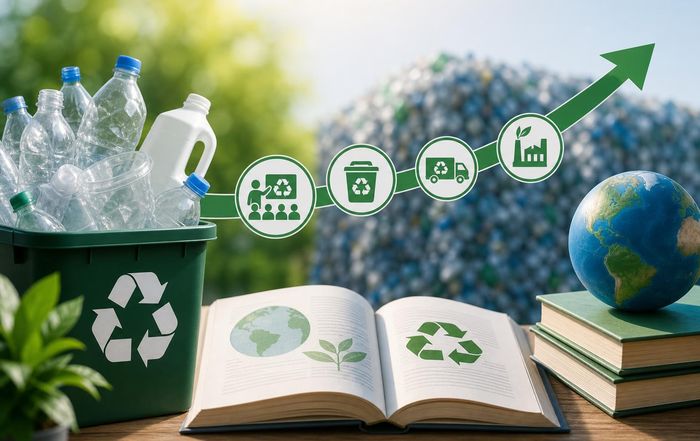
How Recycling Education Improves Plastic Recovery Rates in 2026
Why Plastic Recovery Depends on What People Know
In 2026, the global conversation about plastic waste has shifted from whether recycling matters to how effectively societies can capture and reuse plastics that are already in circulation. Despite advances in sorting technologies, chemical recycling, and circular business models, the single most decisive factor in how much plastic is actually recovered remains human behavior, which is shaped directly by education, communication, and trust. For YouSaveOurWorld.com, whose mission is to connect sustainable ideas with practical action, the central question is no longer only about infrastructure or policy but about how well people understand what to do with plastic, why it matters, and how their choices affect both local communities and global systems.
Plastic recovery rates refer to the proportion of plastic waste that is collected, sorted, and processed into new materials instead of being landfilled, incinerated, or leaked into the environment. Even in advanced economies with sophisticated facilities, contamination, mis-sorting, and consumer confusion still undermine performance. Studies summarized by organizations such as OECD show that only a fraction of global plastic waste is recycled, with the rest contributing to pollution, climate emissions, and resource loss; this gap between technical potential and real-world outcomes is where targeted recycling education becomes decisive, because it aligns daily decisions with system-wide goals. Readers exploring sustainable living approaches will quickly see that the most powerful lever they hold is not just in what they buy, but in how they prepare, separate, and return those materials to the circular economy.
The Knowledge Gap at the Heart of the Plastic Crisis
The modern plastic system is complex, with multiple resin types, composite materials, and evolving regulations that vary by city and country, and this complexity creates a knowledge gap that directly lowers recovery rates. Many households still cannot confidently distinguish between recyclable and non-recyclable plastics, are uncertain about removing labels or caps, and are often unaware of local collection rules. Research from bodies such as UN Environment Programme indicates that unclear labeling and inconsistent guidance are among the top reasons for contamination in recycling streams, which can force entire batches of otherwise recyclable plastic to be downgraded or discarded. When people feel confused or misled, they either disengage or "wish-cycle," placing non-recyclables into bins in the hope that they will be sorted out later, a practice that undermines system efficiency.
This is where structured recycling education becomes indispensable, because it transforms vague environmental concern into precise, context-specific knowledge that can be applied every day. When individuals understand the life cycle of plastics, the economic value of recovered materials, and the environmental cost of leakage, they are far more likely to follow correct sorting practices and support local policies that strengthen recycling systems. Visitors who come to YouSaveOurWorld.com to deepen their environmental awareness often discover that the first step toward impact is not a new product or technology, but a clearer understanding of how existing systems work and how to use them properly.
From Awareness to Action: How Education Changes Behavior
Recycling education is most effective when it moves beyond slogans and generic encouragement toward detailed, behavior-focused guidance that responds to real-world barriers such as time, convenience, and uncertainty. Programs led by organizations like EPA in the United States and European Environment Agency in the EU have shown that when residents receive clear, repeated, and localized instructions about collection schedules, accepted materials, and contamination risks, participation rates rise and error rates fall. Learn more about how regulators frame these efforts through resources such as the European Environment Agency and the US Environmental Protection Agency.
Behavioral science has demonstrated that people respond best when information is simple, visible at the point of decision, and reinforced by social norms. In practice, this means that recycling education must be delivered not only through one-time campaigns but through ongoing, multi-channel communication: labels on packaging, signage on bins, digital reminders, school curricula, workplace trainings, and community workshops. Platforms like YouSaveOurWorld.com play a complementary role by offering context and depth, helping readers connect specific actions-such as properly rinsing a plastic container or avoiding black plastics that are hard to sort-with broader themes of sustainable business, climate responsibility, and resource efficiency.
The Role of Clear Information in Reducing Contamination
Contamination remains one of the most persistent obstacles to high plastic recovery rates, because when non-recyclable materials or dirty plastics enter the stream, they can damage equipment, increase processing costs, and reduce the quality of recycled outputs. This problem is often less about apathy than about confusion. For example, many consumers assume that any item with a recycling symbol is accepted in their local program, when in fact that symbol only indicates resin type rather than recyclability in a specific region. Institutions such as the Ellen MacArthur Foundation and WRAP in the UK have highlighted that harmonized labeling and consistent consumer education can significantly lower contamination levels, improving both yield and value from recycling facilities. Readers can explore these perspectives at the Ellen MacArthur Foundation and WRAP's recycling resources.
For YouSaveOurWorld.com, which regularly addresses plastic recycling and waste reduction, the focus is on practical clarity: explaining which plastics are widely recycled (such as PET and HDPE in many regions), which are problematic (such as multi-layer films or heavily dyed plastics), and how individuals can check local guidance rather than relying on assumptions. When education is specific, it reduces the cognitive load on individuals, turning recycling from a confusing chore into a straightforward habit. Over time, this clarity translates directly into higher recovery rates, because more of what enters the system is actually suitable for processing.
Education as a Catalyst for Systemic Change in Business
Recycling education does not only target households; it also influences how businesses design products, manage waste, and communicate with customers. As stakeholders become more informed, expectations rise, and companies are pressured to make their packaging genuinely recyclable rather than just marketable. Organizations such as World Business Council for Sustainable Development and World Economic Forum have documented how informed consumers and investors increasingly scrutinize claims about recyclability and circularity, pushing companies toward more transparent and verifiable practices. Those interested in the intersection of sustainability and commerce can learn more about sustainable business practices and explore perspectives from the World Economic Forum.
When procurement teams, designers, and marketers receive up-to-date education on plastic recovery, they are better equipped to avoid problematic materials, reduce unnecessary complexity in packaging, and design for disassembly and recycling. This is closely aligned with the principles of eco-design and circular economy, which are promoted by bodies like ISO through standards on environmental management and sustainable products. As more professionals access in-depth resources on design for sustainability, they can make choices that not only comply with regulations but actively improve recovery rates by ensuring that the plastics they put on the market can be efficiently collected and reprocessed.
Policy, Regulation, and the Educational Imperative
In many regions, 2026 has seen the expansion of extended producer responsibility (EPR) schemes and stricter targets for plastic recovery, but regulatory frameworks alone cannot deliver results if citizens and businesses do not understand their roles. Policymakers increasingly recognize that every new rule-whether it concerns deposit-return systems, mandatory recycled content, or bans on certain single-use items-must be accompanied by robust, accessible education. Organizations such as UNESCO and OECD emphasize that environmental literacy, including knowledge about waste systems and resource cycles, is a foundational component of sustainable development. Those seeking deeper context can explore UNESCO's work on education for sustainable development and OECD's analyses of environmental policy effectiveness.
For platforms like YouSaveOurWorld.com, this policy landscape presents both a responsibility and an opportunity. By translating complex regulations into clear language, illustrating how they affect daily life, and connecting them to broader themes such as climate change and economic resilience, the site helps bridge the gap between high-level policy and on-the-ground practice. When residents understand why a deposit-return scheme exists, how to use it, and what happens to the bottles they return, participation rises and recovery rates improve, turning policy ambition into measurable outcomes.
Leveraging Technology and Digital Platforms for Recycling Education
Technological innovation has transformed recycling education from static brochures to dynamic, data-driven tools that can adapt to local conditions and user behavior. In many cities, residents can now scan product barcodes with smartphone apps to receive instant guidance on whether and how to recycle a given item, while municipal platforms send personalized reminders about collection days and accepted materials. Organizations like Google, Microsoft, and various civic-tech startups have supported the development of AI-powered sorting assistants and image recognition tools that help individuals and facilities alike identify plastics more accurately. Readers interested in the intersection of digital tools and sustainability can explore technology and sustainability insights as well as broader resources such as the World Resources Institute's work on data for environmental action.
For YouSaveOurWorld.com, digital channels are central to the way recycling education is delivered, because they allow complex topics-such as polymer chemistry, life-cycle assessments, and global trade in secondary materials-to be presented in accessible formats. Articles, interactive guides, and case studies show how innovations in robotics, optical sorting, and chemical recycling are reshaping what is technically possible, while also emphasizing that human understanding remains essential: even the most advanced facility cannot compensate for bins filled with mixed, contaminated, or inappropriate plastics. By weaving technology updates into broader narratives about innovation and sustainability, the site supports both curiosity and practical problem-solving.
Community, Culture, and the Social Dimension of Recycling
Plastic recovery rates are not only a function of infrastructure and knowledge; they are also shaped by culture, identity, and community norms. In neighborhoods where recycling is visible, celebrated, and integrated into local events and institutions, participation tends to be higher, while in areas where waste is out of sight and environmental issues are seen as distant or political, engagement can lag. Organizations such as Global Alliance for Incinerator Alternatives (GAIA) and Plastic Pollution Coalition highlight the importance of community-led initiatives, where residents co-design programs, monitor local conditions, and share stories about how waste affects their health and livelihoods. Those seeking to understand the grassroots dimension of plastic recovery can explore GAIA's zero waste resources and Plastic Pollution Coalition's campaigns.
By providing accessible content on global environmental challenges and local success stories, YouSaveOurWorld.com helps readers see themselves as part of a broader movement rather than isolated actors. When people recognize that their choices align with those of neighbors, colleagues, and peers around the world, recycling becomes a shared cultural practice rather than a private chore. This sense of belonging is particularly powerful among younger generations, who often encounter sustainability topics in schools and social media before influencing their families' habits at home.
Economic Value, Market Signals, and Business Opportunities
Behind every plastic bottle or container that is successfully recovered lies an economic story: materials that would otherwise require virgin fossil resources are instead captured and reintroduced into production cycles, reducing costs, volatility, and environmental risk. As organizations like International Monetary Fund and World Bank have argued, efficient resource use and waste reduction are increasingly central to economic resilience and competitiveness. Businesses that understand the economics of plastic recovery can design supply chains that are less exposed to price shocks and regulatory penalties, while also responding to customer demand for credible sustainability. Those wishing to explore the macroeconomic dimensions of circularity can consult the World Bank's perspectives on waste and resource management and connect them to insights on the sustainable economy.
Recycling education plays a crucial role in revealing this economic value to both individuals and organizations. When citizens learn that properly sorted plastics can become feedstock for high-quality products, and when entrepreneurs see data on rising demand for recycled content, new business models emerge: refill systems, take-back programs, repair and remanufacturing services, and localized recycling ventures. YouSaveOurWorld.com often highlights such models within its business and sustainability content, demonstrating that improving plastic recovery is not just a moral imperative but a source of innovation, employment, and competitive advantage.
Lifestyle, Well-Being, and the Human Face of Plastic Recovery
For many readers, plastic recycling is intertwined with broader questions about lifestyle, identity, and personal well-being. People want to know not only how to reduce waste but how to live in a way that feels coherent with their values, supports their health, and fits within the constraints of modern life. Research summarized by organizations like Harvard T.H. Chan School of Public Health and Lancet Planetary Health has highlighted the links between environmental quality, mental health, and community cohesion, suggesting that participating in visible, collective actions such as recycling can strengthen a sense of agency and connection. Those interested in this intersection can explore Harvard's work on environment and health and connect it with YouSaveOurWorld.com's focus on personal well-being.
By framing recycling education within a broader narrative about lifestyle choices, YouSaveOurWorld.com emphasizes that improving plastic recovery is not only about compliance or obligation but about crafting a life that feels purposeful and future-oriented. When individuals understand how small habits-such as carrying a reusable bottle, choosing products with minimal packaging, or teaching children to recognize recycling symbols-contribute to systemic change, they are more likely to sustain those habits over time. This continuity is essential, because plastic recovery rates depend not on one-time campaigns but on long-term consistency in how societies handle materials.
Education Across the Life Course: From Schools to Workplaces
One of the most powerful aspects of recycling education is its potential to accompany individuals throughout their lives, adapting to new contexts and responsibilities. In schools, children can learn about material cycles, ecosystems, and the science of plastics through hands-on activities and project-based learning, supported by curricula aligned with frameworks promoted by UNESCO and UNICEF. As they move into higher education and professional training, they can encounter more specialized topics such as sustainable product design, waste management engineering, and corporate responsibility. Those exploring the role of learning in sustainability can consult UNICEF's resources on environmental education for youth and connect them to YouSaveOurWorld.com's emphasis on education for sustainability.
In workplaces, ongoing education can take the form of onboarding sessions, sustainability briefings, and internal campaigns that explain how office waste systems function, what materials are accepted, and how employees can support corporate goals for recycling and emissions reduction. When organizations treat recycling education as a core component of professional culture rather than an optional add-on, they create environments where correct behavior is the norm, and plastic recovery rates improve as a matter of course. YouSaveOurWorld.com supports this by providing content that employers can reference or adapt when building internal training materials, ensuring that knowledge flows seamlessly from digital platforms into daily practice.
Connecting Plastic Recovery to Climate and Global Justice
In 2026, it is increasingly recognized that plastic recovery is not only a waste issue but a climate and justice issue. The production, transport, and disposal of plastics are significant sources of greenhouse gas emissions, and the impacts of mismanaged waste fall disproportionately on vulnerable communities, particularly in coastal and low-income regions. Organizations such as Intergovernmental Panel on Climate Change (IPCC) and UNFCCC have highlighted the role of material efficiency and circular economy strategies in achieving climate targets, while civil society groups stress the need for fair and inclusive policies that do not shift burdens onto those least able to bear them. Those seeking a deeper understanding of these connections can consult the IPCC reports and UNFCCC's climate action resources.
Recycling education, when done well, makes these linkages visible without overwhelming individuals. By explaining how improved plastic recovery reduces the demand for virgin fossil fuels, lowers emissions from incineration and landfills, and decreases pollution in communities that are already under stress, educational initiatives help people understand that their efforts are part of a broader push for climate stability and social equity. YouSaveOurWorld.com, through its coverage of climate change and global sustainability, consistently emphasizes that recycling is not an isolated act but one strand in a larger tapestry of solutions.
The Path Forward: Building a Culture of Informed Recovery
As 2026 unfolds, the evidence is increasingly clear that technological progress and regulatory ambition must be matched by deep, sustained, and context-sensitive recycling education if plastic recovery rates are to improve meaningfully. Infrastructure can only process what it receives, and policies can only succeed when people understand and support them. The most successful regions and organizations are those that treat education as a strategic investment rather than a peripheral cost, integrating it into school systems, corporate strategies, community programs, and digital platforms.
For YouSaveOurWorld.com, this means continuing to serve as a trusted guide, translating complex developments in waste management, circular economy, and environmental science into accessible insights that empower action. By connecting topics such as plastic recycling, waste reduction, innovation, and sustainable living, the site helps readers see how their choices fit into a global effort to redesign systems around recovery, resilience, and respect for planetary boundaries.
Ultimately, improving plastic recovery rates is not simply a technical challenge but a cultural and educational one. When individuals, businesses, and policymakers share a clear understanding of what effective recycling looks like and why it matters, the path toward a circular economy becomes not only imaginable but achievable. Through ongoing, credible, and practical education, societies can turn the promise of plastic recovery into a lived reality, ensuring that the materials shaping modern life are managed in ways that protect both people and the planet.
