
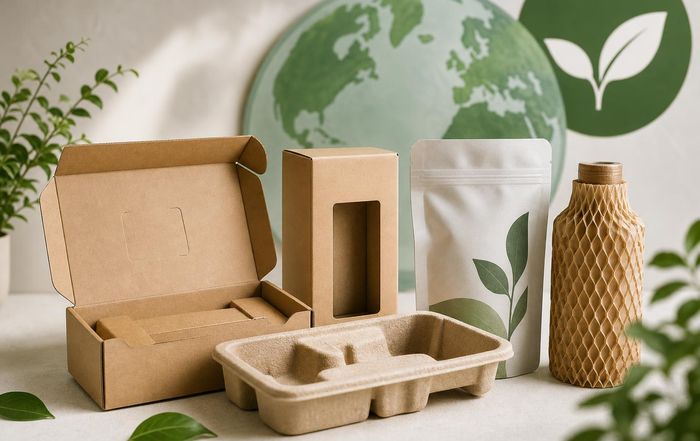
Sustainable Packaging Design That Really Reduces Material Use
Designing "greener" packaging is no longer just about choosing recycled cardboard or adding a leaf icon to a box. For brands under pressure from consumers, regulators, and their own climate targets, the core question has shifted: how can packaging use less material in the first place-without compromising protection, safety, or usability?
Material reduction is one of the most powerful levers in sustainable packaging. It cuts resource extraction, manufacturing impacts, transport emissions, and waste at the same time. Yet doing it well requires more than simply making everything thinner. It calls for thoughtful design, better data, and collaboration across supply chains.
Sit down and let's read together to explore practical strategies, trade-offs, and real-world examples of packaging design that genuinely reduces material use, and what that means for businesses and consumers who care about sustainable living.
Why "using less" is the most powerful packaging strategy
When environmental discussions focus on packaging, attention often gravitates to recyclability or compostable materials. Those issues matter, but from a life-cycle perspective, reducing the total amount of material is often more impactful than switching materials while keeping volume the same. Life-cycle assessments carried out by organizations such as the Ellen MacArthur Foundation and the OECD consistently show that material production and transport are major contributors to packaging's carbon footprint, especially for plastics and metals.
Using less material simultaneously:
Lowers the energy and water required to extract and process raw materials.
Reduces manufacturing energy use and associated emissions.
Cuts transport emissions by reducing weight and volume.
Decreases the amount of waste that needs to be managed at end of life.
This is strongly aligned with the "waste hierarchy" promoted by agencies like the European Environment Agency and the U.S. Environmental Protection Agency, which place prevention and reduction above reuse, recycling, and disposal. For readers interested in the broader context of waste and circularity, our pages on waste and sustainable living explore how packaging fits into everyday environmental choices.
The challenge is to cut material without undermining the packaging's core functions: protecting products, providing information, enabling logistics, and meeting safety and regulatory requirements. Sustainable packaging design is therefore an exercise in careful optimization, not blunt reduction.
Start with "no packaging": elimination and system redesign
The most effective way to reduce material is to avoid using it in the first place. Designers and businesses are increasingly asking whether a given layer or format of packaging is necessary at all. This "elimination" mindset is central to the circular economy work of organizations like the Ellen MacArthur Foundation and is being encouraged by policies under development in the European Union and other regions.
Elimination can take multiple forms. Some retailers have removed unnecessary secondary packaging such as cardboard sleeves around already boxed items, or plastic windows in cartons that exist mainly for marketing. Others have stopped including disposable accessories (like single-use cutlery) by default, offering them only on request. In e-commerce, many platforms now ship certain products in their own sturdy retail box with a simple label, instead of adding an additional outer box and void fill.
More radical approaches redesign the business model. Refill and reuse systems-such as bulk dispensers for dry goods, refill stations for cleaning products, or subscription services that reuse the same containers-can dramatically reduce single-use packaging demand. While these models still require durable containers and logistics, they spread the material footprint over many uses. Agencies such as the United Nations Environment Programme (UNEP) highlight such systems as key levers for cutting plastic pollution globally.
For businesses, the first design question should be: "What can we remove entirely without compromising safety or function?" Only after this should they optimize what remains. This thinking also resonates with consumers looking to reduce household waste; it connects naturally with broader choices around lifestyle and environmental awareness.
Lightweighting: doing more with thinner, smarter structures
Once truly unnecessary packaging is removed, the next step is lightweighting-designing packaging that uses less material per unit while still meeting performance requirements. Many industries have quietly pursued lightweighting for years to cut costs, but climate and waste concerns are now making it a core sustainability strategy.
Lightweighting can involve reducing wall thickness in bottles and containers, optimizing the geometry of a box to distribute stress more efficiently, or switching to materials that provide the same performance at lower weight. For example, beverage companies have progressively reduced the weight of PET bottles and aluminum cans over decades, sometimes by double-digit percentages, while maintaining shelf life and transport durability. Industry groups such as PlasticsEurope and Metal Packaging Europe document these trends as part of their sustainability reporting.
Advances in material science and structural design tools make lightweighting more precise. Finite element analysis and performance simulations help engineers model how packages behave under compression, drop, and vibration tests, allowing them to remove "safety" material that was once added by guesswork. Corrugated board can be redesigned with different flute profiles, or with high-performance recycled fibers, to achieve the same stacking strength with thinner grades.
However, lightweighting has limits. Over-thinning packaging can lead to product damage, leaks, or breakage, which may outweigh the environmental benefits of the material saved if more products are wasted. Food waste, for instance, often has a much higher carbon footprint than its packaging. Research from organizations like the Food and Agriculture Organization (FAO) and national agencies such as WRAP in the UK stresses that packaging must still protect products effectively. Sustainable design therefore means finding the sweet spot where packaging is no heavier than necessary but no lighter than responsible.
Readers interested in how these trade-offs relate to broader climate impacts may find our climate change section a useful complement, especially when thinking about emissions from food and consumer goods.
Rethinking formats: from rigid to flexible and beyond
Another powerful route to reduced material use is format switching-replacing rigid, bulky packages with formats that deliver the same function using less material. Flexible packaging, such as pouches, sachets, and films, typically uses far less material by weight than rigid glass, metal, or thick plastic containers. Life-cycle studies by groups like the Flexible Packaging Association and independent researchers often show lower greenhouse gas emissions and energy use for flexible formats, largely due to material savings and lighter transport loads.
For example, a stand-up pouch for dry goods or pet food can weigh a fraction of an equivalent rigid tub or glass jar. Concentrated products-like cleaning refills, shampoo bars, or powdered beverages-can further shrink packaging needs by reducing product volume and water content, enabling smaller, lighter formats.
Yet format switching is not a simple win. Many flexible packages are made from multi-layer laminates that are difficult to recycle in current systems. Agencies such as the U.S. Environmental Protection Agency and European Commission highlight flexible packaging as both an innovation opportunity and a recycling challenge. Designers must balance material reduction with end-of-life options, considering whether the overall environmental profile is still improved when recycling is limited.
Some brands are exploring mono-material flexible packaging (for example, all-polyethylene pouches) that uses slightly more material than a multi-layer laminate but is easier to recycle where facilities exist. Others are experimenting with paper-based flexibles with barrier coatings derived from bio-based or water-dispersible polymers. These solutions are evolving quickly, and credible guidance from organizations like CEN (European standards) and national recycling bodies is essential.
For readers particularly focused on plastics, our dedicated page on plastic recycling explores the recycling side of this equation, which is critical when choosing between different lightweight formats.
Design for nesting, flat-packing, and high cube efficiency
Material reduction is not only about the packaging itself; it is also about how packages fit together during storage and transport. Good structural design can dramatically reduce the amount of packaging needed by maximizing how efficiently products occupy space in cartons, pallets, and shipping containers.
Designers talk about "cube efficiency": how much of a box or pallet's volume is filled with product versus void space. By adjusting product dimensions, choosing more compact shapes, or redesigning closures and accessories, brands can fit more units per shipper, reducing the number of boxes, pallets, and protective materials needed. This also directly lowers transport emissions, a key concern for climate-focused businesses and regulators.
Examples include redesigning oddly shaped bottles so they tessellate better, using rectangular or square containers instead of round ones where feasible, or enabling items to nest inside one another. Flat-pack furniture is a famous example of cube-efficient design, but similar principles apply to household goods, electronics, and even food. E-commerce companies have invested heavily in algorithms and packaging systems that right-size boxes to the items shipped, minimizing the need for void fill materials like air pillows or crumpled paper.
International logistics and packaging standards bodies, such as ISO and regional packaging institutes, provide testing methods and design guidelines for optimizing stacking strength and palletization. By using these tools, companies can avoid over-specifying materials "just in case" and instead rely on data-driven designs that meet performance needs with less material.
This systems-level thinking connects strongly with sustainable business and sustainable business strategies, where packaging becomes a lever for cost savings, emissions reductions, and brand differentiation at the same time.
Minimalist aesthetics and honest communication
One often overlooked driver of material-heavy packaging is marketing. Glossy coatings, plastic windows, rigid gift boxes, elaborate inserts, and multiple layers of unboxing are sometimes added more for perceived value than for protection or regulatory reasons. Moving toward minimalist packaging design can significantly reduce material use while still maintaining brand identity-if companies are willing to rethink how they signal quality and care.
Minimalist designs favor simple structures, fewer components, and restrained graphics. Printed areas can be reduced by using more natural board color and fewer ink-heavy designs, which also helps with recycling. Embossing or debossing can replace plastic foils or laminated finishes. Instead of plastic windows, high-quality product photography and transparent sustainability information can help consumers understand what they are buying.
Research from consumer behavior and marketing fields, highlighted by institutions like Harvard Business School and NielsenIQ, suggests that many consumers increasingly associate simplicity and environmental responsibility with quality. Clear labeling of environmental attributes-backed by verifiable information and standards such as those from ISO or national eco-label programs-can build trust without material-heavy embellishments.
From a design perspective, this is also where education and environmental awareness intersect. When brands explain why their packaging is simpler-less ink, fewer layers, lighter board-consumers are more likely to see it as a positive sustainability choice rather than a cost-cutting measure.
Choosing materials that enable reduction, not just substitution
Switching from one material to another can sometimes enable significant material reduction, but it is rarely a simple "good vs. bad" decision. Each material-paper, glass, metal, plastics, and emerging bio-based options-has strengths and weaknesses that influence how much of it is needed to perform a given function.
For example, glass is infinitely recyclable in theory and chemically inert, but it is heavy and energy-intensive to produce. For some beverages, a lightweight PET bottle or aluminum can may have a lower overall carbon footprint, especially when transport distances are long and recycling systems are effective. Studies referenced by bodies such as the International Energy Agency (IEA) and World Resources Institute (WRI) underscore the importance of looking at full life-cycle impacts rather than single attributes.
Paper and cardboard are renewable and widely recycled in many countries, but they may require thicker structures or additional barrier coatings to protect moisture-sensitive or greasy products. If a paper-based design ends up using significantly more material or leads to higher product spoilage, its environmental performance may not be better than a well-designed plastic pack.
Bio-based or compostable materials can be useful in specific contexts-such as food-service items contaminated with organic waste-but they are not a universal solution. Organizations like UNEP and national environment agencies caution that compostable plastics often require specific industrial composting conditions and can contaminate conventional recycling streams if not properly managed.
The key for designers is to choose materials that allow them to meet performance needs with the least total material and environmental impact, while fitting into existing or emerging waste management systems. This is where robust life-cycle assessment (LCA) and guidance from credible organizations become invaluable.
For those wanting to go deeper into material trade-offs, our pages on innovation and technology often highlight new materials and systems that aim to reconcile these competing demands.
Data, standards, and regulations shaping material reduction
Governments and international bodies are increasingly setting rules that push packaging toward less material use. The European Union's Packaging and Packaging Waste Regulation (PPWR), for instance, is being developed with explicit targets and requirements around packaging minimization, recyclability, and reuse. Similar measures are being considered or implemented in various jurisdictions worldwide, often under extended producer responsibility (EPR) schemes that make companies financially responsible for the packaging they place on the market.
Organizations such as the European Environment Agency, U.S. Environmental Protection Agency, UNEP, and OECD provide data, policy analysis, and guidance that shape how businesses think about packaging design. Voluntary initiatives like the Ellen MacArthur Foundation's Global Commitment further encourage companies to set measurable targets for reducing virgin plastic use and shifting toward circular models.
Standards from bodies like ISO and regional packaging institutes help define how to test packaging performance, assess recyclability, and conduct LCAs. These tools are critical for ensuring that material reduction does not compromise safety or regulatory compliance, particularly in sensitive sectors like food, pharmaceuticals, and chemicals.
For global brands, aligning packaging design with these evolving frameworks is not only a compliance issue but also a strategic one. Companies that invest early in data-driven, material-efficient packaging are often better placed to adapt to new rules and consumer expectations.
How businesses can embed material reduction into design processes
Reducing material use systematically requires more than isolated projects; it needs to be built into how packaging is conceived, tested, and approved. Leading companies are embedding sustainability criteria into their design briefs, supplier contracts, and performance metrics, making material efficiency a core part of product development.
Practical steps include setting internal targets for average packaging weight reduction over time, requiring design teams to justify each packaging component, and involving logistics, marketing, and sustainability teams early in the process. Supplier collaboration is crucial, as material converters and packaging manufacturers often have insights into new lightweight structures, recycled-content options, and high-performance designs that can reduce material without sacrificing function.
Digital tools-such as 3D modeling, simulation, and LCA software-allow teams to compare different design options quickly, quantifying the trade-offs in material use, emissions, and recyclability. Some companies align their internal metrics with external frameworks like the Science Based Targets initiative (SBTi) or national climate goals, using packaging reduction as one lever to cut scope 3 emissions.
For smaller businesses or start-ups, the same principles apply even if resources are more limited. Starting with simple questions-"Can we eliminate this insert?", "Can we ship this product without a separate outer box?", "Can we choose a more cube-efficient container?"-can lead to meaningful material savings. Over time, as businesses grow, they can adopt more formal tools and standards.
Smart folks interested in how these practices intersect with broader corporate strategy may find relevant context on our economy and global pages, where packaging is often part of larger discussions on sustainable production and consumption.
What consumers can do to encourage material-efficient packaging
While most design decisions happen within companies, consumers still have influence. Clear demand for less wasteful packaging can nudge brands toward more ambitious material reduction strategies. Choosing products with simpler, lighter, and more easily recyclable packaging-and letting companies know why-sends a signal that can counter the assumption that more elaborate packaging always sells better.
Consumers can also support refill and reuse systems where available, even when they involve small inconveniences, and can pay attention to credible eco-labels and transparency around packaging choices. Engaging with local recycling guidance, often provided by municipal authorities or national environment agencies, ensures that the packaging that is used has the best chance of being recovered rather than landfilled.
On a personal level, reducing packaging waste is closely linked to sustainable personal well-being and lifestyle choices-buying fewer but better products, planning purchases to avoid food waste, and favoring local or low-impact options where they make sense.
Toward packaging that protects products and the planet
Designing sustainable packaging that truly reduces material use is a balancing act. It requires eliminating what is unnecessary, lightweighting what remains, rethinking formats and logistics, and choosing materials based on robust evidence rather than assumptions. It also demands honest communication with consumers and alignment with evolving regulations and standards.
The encouraging news is that many of the strategies that cut material also cut costs and emissions, creating a strong business case alongside environmental benefits. As tools, data, and regulations improve, and as more companies commit to science-based climate and waste goals, material-efficient packaging is likely to become the norm rather than the exception.
For anyone interested in helping "save our world" through everyday choices and business decisions, packaging is a tangible place to start. By asking tougher questions about how much material is really needed, and by supporting designs and systems that do more with less, both companies and consumers can play a meaningful role in shrinking the footprint of the products that move through our lives.
