
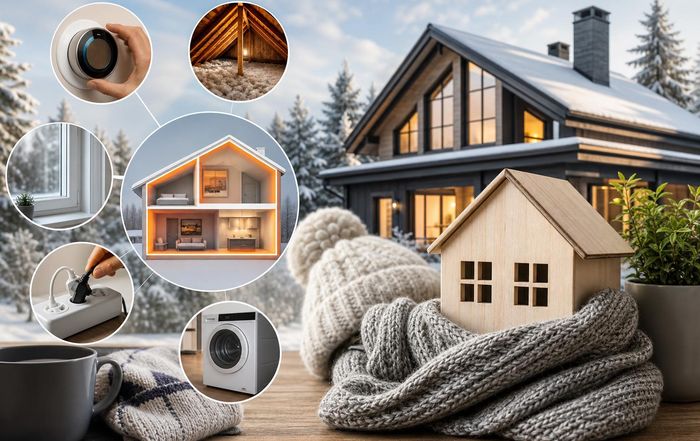
Ways to Cut Energy Use During a Canadian Winter (Without Freezing)
Canadian winters are long, dark, and often brutally cold. Cutting energy use during this season is not only about shrinking utility bills; it is also one of the most direct ways households can lower their climate impact. The challenge is to do it without sacrificing health, comfort, or safety, especially in regions where extreme cold can be dangerous. This guide focuses on practical, evidence-based steps that work in real Canadian conditions-from coastal rain to prairie deep-freeze-while highlighting how they fit into a broader shift toward sustainable living.
Start with Heat: Smarter Thermostat Use and Zoning
Space heating is by far the largest part of home energy use in cold climates. According to Natural Resources Canada, space heating typically accounts for around 60% of residential energy use. That means small changes in how homes are heated can have a large impact on both emissions and costs.
One of the simplest levers is thermostat control. The U.S. Department of Energy suggests that turning the thermostat down by about 1°C (roughly 2°F) can cut heating energy use by around 1-3% over time, depending on the home and system. In many Canadian homes, setting daytime temperatures to around 20-21°C when people are awake and at home, and 17-19°C when sleeping or away, is a good starting point if health conditions allow. Programmable and smart thermostats make this easier by automatically adjusting temperatures according to daily routines. Devices from major manufacturers are widely available, and some Canadian utilities offer rebates for installing them; checking local programs through provincial energy-efficiency agencies or utilities can reveal financial incentives that reduce upfront costs.
Zoning-heating only the spaces that are actually in use-can also significantly reduce waste. In homes with multiple thermostats, separate zones can be set lower in rarely used rooms. In smaller homes or apartments with a single thermostat, practical zoning can still be achieved by closing doors to unused rooms, using draft stoppers, and placing portable fans strategically to move warm air into high-use areas while keeping the overall thermostat setpoint modest. However, completely shutting off heat to parts of a home in very cold weather can risk frozen pipes or moisture issues, so temperatures should not be allowed to drop too low in any area. For readers interested in how thermostat settings integrate with broader lifestyle shifts, the broader context of sustainable living offers additional ideas.
Smart thermostats and zoning strategies work best when combined with behavioral changes: wearing warm layers indoors, using blankets when sitting still, and timing more active household tasks for cooler periods can all make slightly lower temperatures feel comfortable. The goal is not to endure discomfort, but to shift the baseline so that heating energy is used where and when it matters most.
Seal the Leaks: Draft-Proofing and Basic Weatherization
Before spending money on major retrofits, many Canadian households can achieve meaningful savings with low-cost draft-proofing. Air leaks around windows, doors, electrical outlets on exterior walls, attic hatches, and basements allow warm air to escape and cold air to enter, forcing furnaces and boilers to work harder. The Government of Canada and provincial agencies consistently highlight air sealing as one of the most cost-effective efficiency measures.
Simple steps include installing weatherstripping around doors, adding door sweeps at the bottom of exterior doors, and using caulk or foam sealant to close gaps around window frames, pipes, and wiring penetrations. In older homes, removable window film kits applied to single-pane or leaky windows can create an extra insulating air layer and noticeably reduce drafts. Even basic measures like using fabric draft snakes at door bottoms can make a room feel significantly warmer, allowing for lower thermostat settings without discomfort.
Basements and attics are especially important. Uninsulated or poorly sealed basement rim joists-the junction where the foundation meets the wooden structure-are a common source of heat loss. Carefully applying appropriate foam or sealant in these areas, or hiring a professional when needed, can reduce infiltration dramatically. Likewise, sealing around attic access hatches and ensuring they close tightly, with weatherstripping or an insulated cover, helps prevent warm air from escaping upward. Improving a home's envelope also reduces the load on heating systems, which can extend equipment life and lower maintenance needs, complementing broader efforts to reduce waste in household systems.
For those uncertain where to begin, many provinces and utilities support home energy assessments, sometimes subsidized, often using blower-door tests and infrared cameras to identify leaks. Organizations such as Efficiency Canada and provincial energy-efficiency programs provide guidance, while international bodies like the International Energy Agency at https://www.iea.org/ offer broader context on why sealing and insulation are central to reducing building-related emissions.
Insulation and Windows: Slowing Heat Loss for the Long Term
While draft-proofing tackles the most obvious leaks, insulation addresses the steady flow of heat through walls, roofs, and floors. In many parts of Canada, especially where housing stock is older, attic insulation levels are well below current building code recommendations. Adding insulation to the attic is often one of the highest-impact upgrades, because warm air naturally rises and escapes through the roof if not properly contained.
Blown-in cellulose or fiberglass batts can be added to reach recommended R-values appropriate for local climate zones; building codes and provincial energy agencies typically publish guidance on these targets. The National Research Council Canada and provincial building authorities provide standards and research that can help homeowners and builders understand what constitutes an efficient building envelope in different regions. Improving wall insulation is more complex and may require professional retrofits, especially for older homes with solid masonry or limited cavity space, but it can be transformative in very cold climates.
Windows are another major factor. High-performance triple-pane or double-pane windows with low-emissivity (low-E) coatings significantly reduce heat loss compared with single-pane or older double-pane units. However, full window replacement is expensive and not always the first priority; in many cases, upgrading the worst-performing windows or adding storm windows can deliver a good balance of cost and benefit. Interior solutions such as insulating curtains, cellular shades, or thermal blinds help too, especially if they are closed at night and opened in the day to capture solar gain. Combining solar gain with good insulation is a simple form of passive solar design, a concept that also intersects with sustainable design and architecture.
When planning larger upgrades, it can be helpful to consult resources from organizations like Natural Resources Canada at https://www.nrcan.gc.ca/, BC Hydro at https://www.bchydro.com/, or Hydro-Québec at https://www.hydroquebec.com/, which publish regional guides, incentives, and case studies on insulation and window improvements suited to local climates.
Heating Systems: Efficiency, Fuel Choices, and Heat Pumps
Beyond the building envelope, the type and efficiency of heating equipment strongly influence winter energy use and emissions. Many Canadian homes rely on natural gas furnaces, oil boilers, electric baseboards, or district heating. Upgrading older systems to modern high-efficiency models can reduce fuel consumption significantly, but the best choice depends on local fuel prices, climate, and access to low-carbon electricity.
High-efficiency condensing gas furnaces and boilers can reach efficiencies of 90-98% under ideal conditions, compared with older units that may operate at 60-80%. In areas where natural gas is currently the primary heating fuel and electricity is still relatively carbon-intensive, these upgrades can be an important transitional step. However, a growing number of Canadian provinces generate much of their electricity from low-carbon sources such as hydro, wind, and nuclear. In such regions, electric heat pumps can offer both energy savings and deep emissions reductions.
Cold-climate air-source heat pumps are now designed to operate efficiently at sub-zero temperatures, with some models functioning down to -25°C or below. While their efficiency drops in extreme cold, they can still be more energy-efficient than electric resistance heating, and when powered by clean electricity, they substantially reduce greenhouse gas emissions compared with fossil fuel systems. The Canada Greener Homes initiatives and various provincial programs-often publicized through government portals like https://www.canada.ca/ and provincial energy-efficiency agencies-have offered incentives for heat pump installations, though details change over time and should be checked locally.
For rural or off-grid homes currently using oil or propane, switching to high-efficiency heat pumps, pellet stoves using sustainably sourced biomass, or hybrid systems that combine heat pumps with backup furnaces can reduce both fuel costs and emissions. Proper sizing and professional installation are critical: oversized systems can short-cycle and waste energy, while undersized systems may struggle in cold snaps. Regular maintenance-filter changes, duct sealing, and annual check-ups-also keeps any heating system running closer to its rated efficiency, aligning with broader efforts to reduce waste in household energy use.
Hot Water: Small Changes with Surprising Impact
While space heating dominates winter energy use, water heating is often the second-largest load in Canadian homes. Reducing hot water consumption can therefore yield meaningful savings, especially when combined with efficient equipment.
One of the simplest steps is lowering the water heater temperature setpoint. Many heaters are set higher than necessary by default. In general, health authorities such as the World Health Organization at https://www.who.int/ and national agencies recommend temperatures high enough to prevent Legionella bacteria growth-often around 60°C at the tank-while using mixing valves or thermostatic taps to ensure safe temperatures at the faucet. Where safe and appropriate, slightly reducing the setpoint (while still meeting health guidance) can reduce standby losses. Homeowners should consult manufacturer instructions and local plumbing codes before making adjustments.
Installing low-flow showerheads and faucet aerators is usually inexpensive and can cut hot water use dramatically without noticeable loss of comfort. Shorter showers and washing clothes in cold water when possible further reduce energy demand. Modern detergents are formulated to work effectively in cold water, and clothes dryers consume far more energy than washers, so line-drying indoors during winter-using racks in well-ventilated rooms-can also help. It adds a small amount of humidity to dry winter air, which can improve comfort at slightly lower temperatures, intersecting with personal well-being as well as energy use.
For equipment upgrades, high-efficiency gas water heaters, electric heat pump water heaters, and in some cases solar thermal pre-heating systems can significantly reduce energy use. Heat pump water heaters are particularly efficient in basements or utility rooms that maintain moderate temperatures; they draw heat from the surrounding air and transfer it to the water, effectively acting as a dehumidifier while heating water. As with space heating, local electricity mix and fuel prices determine the emissions and cost benefits, and resources from organizations like Energy Star at https://www.energystar.gov/ and Natural Resources Canada can help consumers compare options.
Lighting and Appliances: Tackling the Winter Electricity Spike
Short winter days and long evenings mean lights stay on longer, and people spend more time indoors using appliances and electronics. While lighting and plug loads may be smaller than heating in energy terms, they still contribute to winter peaks on the grid and to household bills, especially in regions with electric heating or tiered electricity rates.
Transitioning all remaining incandescent or halogen bulbs to LEDs is one of the quickest wins. LEDs use up to 75-80% less electricity than traditional bulbs and last much longer, reducing both energy use and waste. In cold climates, LEDs also perform well at low temperatures, making them suitable for outdoor fixtures and unheated garages. Major organizations such as the U.S. Environmental Protection Agency at https://www.epa.gov/ and Energy Star consistently highlight LED retrofits as a top energy-saving measure.
Appliances and electronics also matter. Older refrigerators and freezers can be surprisingly inefficient; replacing them with modern high-efficiency models can yield year-round savings. In winter, when fridges run more efficiently due to cooler ambient temperatures, the relative impact may seem smaller, but overall energy use still drops. Smart power strips and simply unplugging rarely used devices reduce "phantom" or standby loads that add up over time. Running dishwashers and washing machines only with full loads, using eco modes when available, and air-drying dishes rather than using heated dry cycles are practical habits that fit into a broader sustainable living mindset.
For households interested in the intersection of technology and efficiency, organizations like the International Energy Agency and national labs such as Lawrence Berkeley National Laboratory at https://www.lbl.gov/ publish research and tools on appliance efficiency and demand management, which can inform purchasing decisions and household practices.
Behaviour and Lifestyle: Comfort, Health, and Habit Shifts
Cutting winter energy use is not only a technical challenge; it is also about behavior, comfort, and culture. Canadians are accustomed to heated indoor environments that allow light clothing even in deep winter. Adjusting expectations-while staying safe and healthy-is one of the most powerful tools available, and it connects directly to broader themes of lifestyle and environmental awareness.
Layering clothing, using slippers, and keeping throws or blankets on sofas can make slightly cooler indoor temperatures feel perfectly comfortable. Warm drinks and hot meals have a psychological and physical warming effect, and simple routines like doing light exercise or household chores during the coldest parts of the day can reduce the urge to crank up the thermostat. Humidity control also plays a role: very dry air makes a room feel cooler at the same temperature. Maintaining indoor relative humidity within recommended ranges-often cited around 30-50% depending on outside conditions-can improve comfort, though excess humidity can lead to condensation and mold, especially on cold surfaces, so ventilation and monitoring are important.
Households can also plan activities that naturally reduce energy use. For example, cooking in batches and using the oven efficiently can provide both food and incidental space heating, though care must be taken never to use ovens or gas stoves as primary heat sources due to serious safety risks. Families might choose to spend evenings together in one room, reducing the need to heat and light multiple spaces. These lifestyle choices not only cut energy use but also support a more intentional way of living that aligns with the values of environmental awareness.
Public-health agencies such as Health Canada at https://www.canada.ca/ and international bodies like the World Health Organization provide guidance on safe indoor temperatures, air quality, and humidity, which is especially important for children, older adults, and people with certain medical conditions. Any energy-saving strategy must respect these health considerations; the goal is to avoid waste, not to compromise well-being.
Community, Policy, and the Bigger Climate Picture
Individual actions during a Canadian winter sit within a larger system of energy infrastructure, building codes, and climate policy. National and provincial governments have set climate targets aligned with global efforts under frameworks promoted by organizations like the United Nations Environment Programme at https://www.unep.org/ and the Intergovernmental Panel on Climate Change at https://www.ipcc.ch/. Buildings and heating are a major part of these plans, and improving efficiency is often described as the "first fuel" because the cleanest energy is the energy not used.
At the community level, bulk purchasing programs for insulation or heat pumps, neighborhood retrofits, and local information campaigns can make upgrades more affordable and less daunting. Municipalities across Canada are experimenting with building-energy benchmarking, stricter codes for new construction, and incentives for deep retrofits in existing housing. These changes will shape how future winters feel and how much energy Canadians need to stay warm.
For households interested in the economic and policy dimensions, exploring resources on the economy, business, and global climate action can provide context on how personal choices connect to national and international trends. Energy-efficiency upgrades not only cut bills but also support local jobs in construction, manufacturing, and services, and they reduce pressure on electricity grids during peak winter demand, which can help avoid costly infrastructure expansions.
Bringing It Together: A Winter Strategy That Works
Cutting energy use during a Canadian winter is less about one dramatic change and more about a layered approach. Improving the building envelope through draft-proofing and insulation reduces the need for heat. Efficient heating systems-whether high-efficiency furnaces or cold-climate heat pumps-turn that reduced demand into lower energy use and emissions. Smarter thermostat settings, hot water management, and efficient lighting and appliances chip away at remaining waste, while lifestyle shifts and community initiatives reinforce a culture of mindful energy use.
The most effective strategy is to prioritize actions in order of impact and feasibility: start with low-cost draft-proofing and behavior changes, then plan for larger investments such as attic insulation, window upgrades, and heating system replacements as budgets and incentives allow. Each step not only lowers bills but also contributes to a more resilient, climate-conscious way of living-one that respects both the realities of Canadian winters and the need to protect the planet those winters are helping to reshape.
