
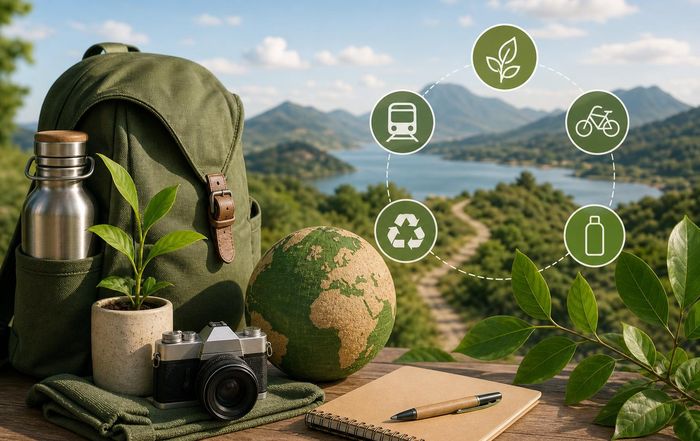
Sustainable Travel Planning for Shorter, Smarter Trips
For many people, the idea of sustainable travel still conjures images of long overland journeys, remote eco-lodges, or expensive "once-in-a-lifetime" trips. Yet a growing body of research suggests that the most powerful lever for cutting tourism's climate impact is simpler: travel less often, stay closer to home, and make each trip count. Shorter, smarter journeys can dramatically reduce emissions, waste, and stress, while often improving the quality of the experience itself.
Grab a seat and some popcorn if you have, and let's think together about how to plan trips that are both climate-conscious and genuinely rewarding, with a particular focus on short breaks and regional adventures rather than far-flung, high-emission holidays.
Why "Shorter and Smarter" Beats "More and Further"
Tourism accounts for an estimated 8-10% of global greenhouse gas emissions when transport, accommodation, and food are included, according to research summarized by the UN World Tourism Organization and UN Environment Programme. A disproportionate share comes from long-haul flights: a single return flight across the Atlantic can emit as much CO₂ per passenger as many people produce from all other activities over several months.
Organizations such as the International Council on Clean Transportation and Our World in Data have highlighted that flying is often the most carbon-intensive activity in an individual's annual footprint, especially in high-income countries. This means that even modest changes in how often and how far people fly can have a large effect. Swapping one long-haul leisure flight for a regional trip by train or coach can sometimes cut travel emissions by 70-90%, depending on the route and mode.
Shorter trips planned more thoughtfully also tend to reduce other environmental pressures. They often involve less frequent linen changes, fewer single-use items, and less resource-intensive infrastructure than large resort complexes. They can channel spending into local, often smaller-scale businesses that keep more value in the community, aligning with the kind of everyday sustainable living choices many readers already make at home. For travellers, shorter, smarter holidays may be easier to fit around work and family, less exhausting, and more focused on meaningful experiences rather than ticking off distant bucket-list destinations.
Rethinking Distance: Choosing Closer, Lower-Carbon Destinations
A sustainable trip usually begins with a map, not a booking engine. Before searching for flights, it helps to ask: "What is the closest place that offers the experience I'm seeking?" That simple question can dramatically shrink a journey's climate impact.
Climate-focused organizations such as Transport & Environment in Europe and the International Energy Agency have repeatedly shown that distance travelled is one of the main drivers of transport emissions. A similar beach climate, hiking landscape, or cultural experience may exist a few hours away by train or bus instead of a continent away by plane. For many travellers in Europe, high-speed rail networks make cities such as Paris, Amsterdam, Berlin, and Barcelona reachable in a day without flying. In parts of Asia, expanding rail options in countries like Japan and China offer similar opportunities, while in North America, regional train and coach routes can connect major cities and nature areas without a car.
Shorter distances also make it easier to integrate low-carbon choices into the rest of the trip. Travellers can more realistically rely on public transport, cycling, or walking once they arrive, rather than renting a car. This aligns naturally with sustainable lifestyle choices and everyday environmental awareness that many people already prioritize at home. For those planning trips around nature or wildlife, closer destinations can also reduce the risks of contributing to overtourism in fragile ecosystems, a concern often highlighted by organizations such as the World Wide Fund for Nature (WWF).
Smarter Itineraries: Slow, Focused, and Less Wasteful
Planning a shorter, smarter trip often means resisting the urge to pack in as many locations as possible. Multi-city "checklist" itineraries might feel efficient, but they usually involve repeated check-ins, transport legs, and disposable items, all of which increase emissions and waste. A more sustainable approach is to choose one base-or at most a couple-and explore in depth.
Slow, place-based itineraries can be especially powerful for sustainable tourism because they reduce the per-day environmental cost of travel. Once the initial journey is made, each additional day spent in the same area adds relatively little extra transport impact, particularly if travellers walk, cycle, or use local buses and trains. This mirrors the logic of sustainable living at home, where small daily choices compound over time.
A "smart" itinerary also pays attention to timing and crowding. Visiting popular areas outside peak season can reduce pressure on local infrastructure and ecosystems, while often improving the experience: fewer queues, more time with guides, and more meaningful interactions with residents. Resources from organizations such as the UN World Tourism Organization and national tourism boards increasingly highlight lesser-known regions and off-peak travel ideas, partly as a response to overtourism in hotspots.
For those interested in the broader climate context, exploring our dedicated climate change coverage can help connect personal travel decisions to global emissions trends and policy debates.
Choosing Transport: Trains, Buses, Shared Rides, and Smarter Flights
Transport is usually the largest part of a trip's carbon footprint, so decisions here matter most. In many regions, trains and coaches are the most efficient options for short and medium distances. Studies referenced by The International Council on Clean Transportation and The European Environment Agency show that, per passenger, rail tends to emit far less CO₂ than flying or driving, especially when powered by relatively low-carbon electricity. Coaches and long-distance buses can also be highly efficient when well occupied.
Where available, night trains can be particularly effective for short, smart trips: they combine travel and accommodation, reduce the need for airport transfers, and free up days for exploration instead of transit. In places without strong rail networks, shared shuttle buses or carpooling can still significantly reduce per-person emissions compared with solo driving.
Flying is sometimes unavoidable, especially for island destinations or intercontinental family visits. When flights are necessary, smarter planning can still reduce impact. Climate-focused organizations such as Atmosfair and Myclimate offer tools to estimate flight emissions and compare routes. Generally, non-stop flights are less carbon-intensive per kilometre than itineraries with multiple connections, because take-off and landing are the most energy-intensive phases. Choosing economy class over premium cabins also reduces per-passenger emissions, as more people share the same space and fuel.
Readers who want to understand how travel fits into broader waste and resource systems may find it helpful to explore our waste and resource section, which discusses how transport choices intersect with materials use and infrastructure.
Accommodation: From Eco-Labels to Everyday Practices
Accommodation choices shape not only energy and water use but also how tourism dollars flow through local economies. Large hotels can be efficient when well managed, but they can also concentrate profits away from communities. Smaller guesthouses, locally owned hotels, and community-based stays often keep more money in the destination, supporting local employment and services.
Several international schemes now certify or label more sustainable accommodation. Organizations such as Green Key, EarthCheck, and Global Sustainable Tourism Council (GSTC) set criteria around energy efficiency, water conservation, waste reduction, and community engagement. While no label is perfect, they can be a starting point when comparing options. National tourism boards and city websites sometimes maintain lists of eco-certified properties as well.
Regardless of where travellers stay, daily habits make a difference. Shorter, smarter trips can be planned around low-impact routines: declining daily linen changes, avoiding disposable toiletries, using refillable water bottles, and minimizing food waste at buffets. These are extensions of the same principles discussed in our sustainable living and personal well-being guides, where small, repeated actions add up in both environmental and personal terms.
Packing Light and Low-Waste: Applying Everyday Sustainable Habits on the Road
Packing decisions influence not only convenience but also emissions and waste. Airlines and transport agencies note that heavier loads require more fuel, so travelling light marginally reduces energy use, especially across many passengers. More importantly, thoughtful packing helps avoid single-use plastic, unnecessary purchases, and disposable items.
Many of the same strategies used for plastic recycling and reduction at home can be adapted for travel. A reusable bottle, compact shopping bag, and lightweight food container can eliminate a surprising number of disposable cups, bags, and snack wrappers. Solid toiletries such as bar shampoo and soap are easier to transport and avoid small plastic bottles. A small repair kit for clothes or gear can extend the life of items during the trip, aligning with circular economy principles promoted by organizations like the Ellen MacArthur Foundation.
For technology-minded travellers, a few digital tools can reduce paper waste and improve planning. E-tickets, offline maps, and digital guidebooks cut down on printed materials. At the same time, it is worth remembering that electronic devices have their own material and energy footprint, so extending the life of phones and tablets, rather than constantly upgrading, is also part of a broader sustainable lifestyle.
Supporting Local Economies and Cultures Responsibly
Shorter, regional trips often make it easier to support local economies in more direct ways. Buying from independent shops, eating at locally owned restaurants, and joining community-led tours can keep more value in the destination. Organizations such as Fair Trade Tourism and community tourism networks in various regions emphasize that how money is spent can be as important as how much.
Responsible cultural engagement is another dimension of "smarter" travel. Shorter distances may reduce language and cultural barriers, making it easier to have genuine conversations with residents. This can deepen understanding of local environmental issues-whether it's coastal erosion, water scarcity, or urban air quality-and help visitors see how their own choices connect with broader global challenges highlighted in our environmental awareness and global sections.
At the same time, it is important to recognize that not all "local" experiences are automatically sustainable or fair. Travellers can look for businesses that demonstrate fair working conditions, transparency about ownership, and respect for local cultures and ecosystems. Guidance from organizations like UNESCO and WWF on responsible cultural and wildlife tourism can help visitors avoid activities that exploit people or animals, even when marketed as eco-friendly.
Technology, Innovation, and Smarter Planning Tools
Digital tools and data are reshaping how people plan and experience travel, with implications for sustainability. Journey planners that compare emissions across modes, such as those inspired by research from the International Transport Forum, can help travellers choose lower-carbon routes. Some booking platforms now display estimated CO₂ emissions for flights and hotels, nudging users toward more efficient options.
Innovation is also emerging in areas such as shared mobility, micro-mobility, and electric transport. E-bike and scooter schemes in many cities make it easier to move around without a car, while growing networks of electric buses and trains, supported by cleaner power grids, gradually reduce the carbon intensity of public transport. Readers interested in how these trends intersect with broader innovation and technology for sustainability can explore our dedicated innovation and technology pages.
However, technology is not a substitute for the basic principles of shorter, smarter travel. A highly optimized app-based itinerary that still involves multiple long-haul flights in a year will almost always have a larger footprint than a simple, nearby trip by train. Tools work best when they support a mindset that already values restraint, sufficiency, and respect for planetary limits.
Balancing Personal Well-Being with Planetary Boundaries
Travel is deeply connected to personal well-being: it can provide rest, inspiration, connection, and perspective. The challenge is to retain those benefits while staying within planetary boundaries. Research summarized by organizations such as the World Health Organization (WHO) suggests that access to green spaces, social connection, and physical activity are central to mental and physical health. Many of these can be found close to home or on short regional trips, without the need for long-distance flights.
Shorter, smarter travel planning can therefore be framed not as a sacrifice, but as a rebalancing. Instead of saving up for a single, high-impact holiday each year, some people may choose more frequent, low-impact breaks nearby-weekend hikes, train trips to neighbouring cities, or visits to regional nature reserves. Others may decide to keep occasional long-haul journeys that are particularly meaningful-such as visiting family abroad-while cutting out less essential flights and enhancing local leisure time.
Our personal well-being content explores how rest, nature, and connection can be integrated into everyday life, which in turn can reduce pressure to use high-carbon travel as the primary route to relaxation or escape.
Integrating Sustainable Travel into Everyday Life
Ultimately, sustainable travel planning is an extension of the same values that guide low-impact living at home: careful use of energy and materials, attention to waste, and respect for communities and ecosystems. Shorter, smarter trips can become a natural part of a broader sustainable lifestyle, rather than an isolated "eco-holiday" that contrasts with the rest of the year.
For individuals and families, a practical approach might involve setting personal guidelines, such as limiting flights to a certain number per decade, prioritizing rail or coach for distances under a set number of kilometres, or allocating a portion of the travel budget specifically to local, community-based businesses. For companies, schools, and organizations, travel policies can encourage virtual meetings where possible and support lower-carbon options for essential trips, aligning with the themes discussed in our sustainable business and business sections.
As climate science from bodies such as the Intergovernmental Panel on Climate Change (IPCC) and policy guidance from agencies like the UN Environment Programme make clear, reducing emissions rapidly is essential. Tourism will need to adapt alongside energy, food, and transport systems. By choosing closer destinations, slower itineraries, low-carbon transport, and community-focused spending, travellers can begin that transition today-one shorter, smarter trip at a time.
